


Why Accounting for Entrepreneurs is Your Secret Weapon for Growth
As an entrepreneur, it’s easy to push accounting to the bottom of your to-do list. But with 60% of small business owners lacking confidence in their financial abilities, this gap can lead to missed tax savings, poor decisions, and stunted growth. The good news is that accounting for entrepreneurs doesn’t have to be overwhelming. When you master the fundamentals, your financial data becomes a powerful tool for growth.
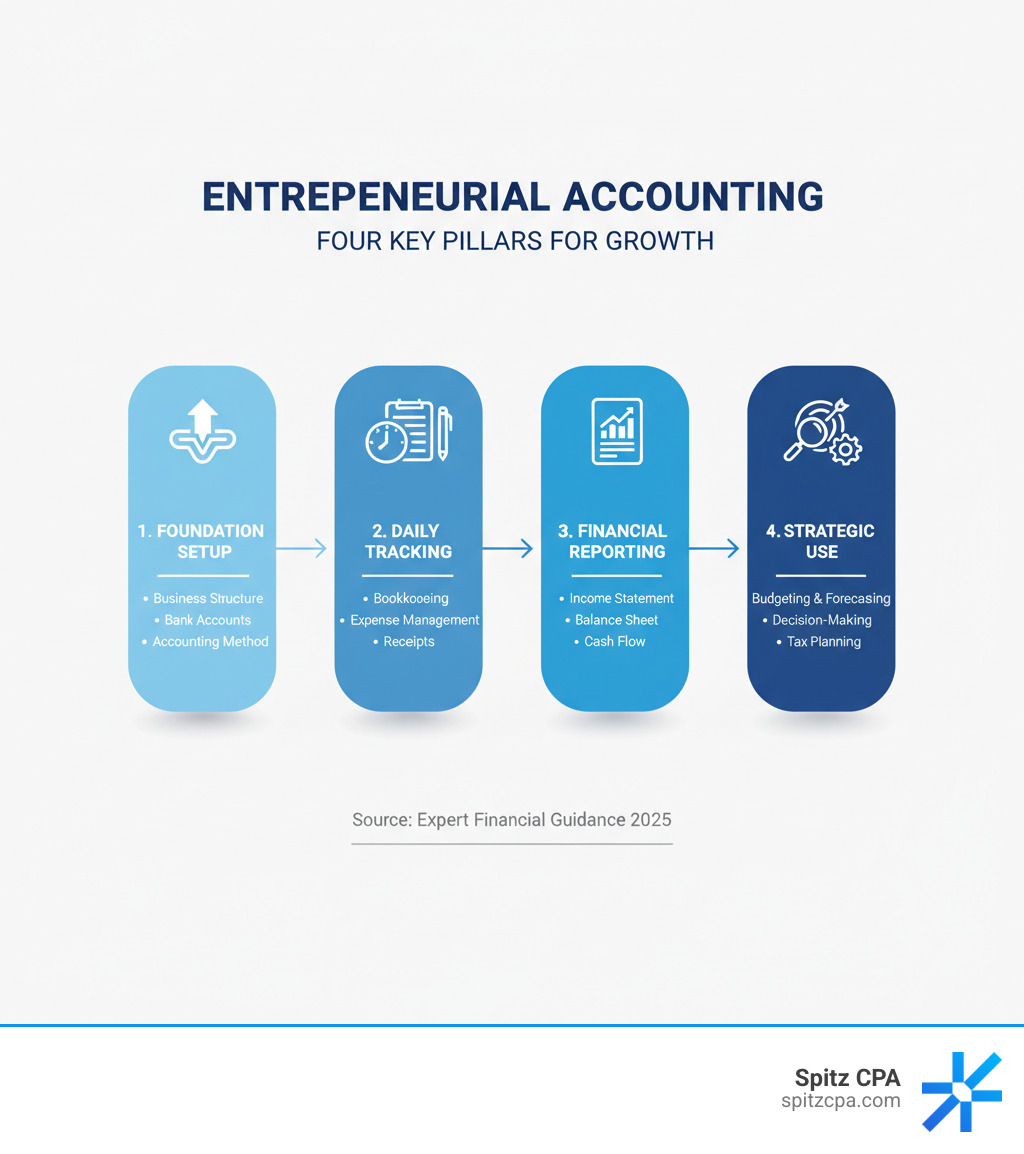
This guide covers the essentials:
- Foundation: Choosing a business structure and accounting method.
- Tracking: Implementing consistent bookkeeping and expense management.
- Reporting: Understanding your Income Statement, Balance Sheet, and Cash Flow Statement.
- Strategy: Using financial data for budgeting, forecasting, and compliance.
With over 15 years of experience in financial modeling, strategic planning, and tax optimization, I’m Michael J. Spitz. I’ve seen how proper financial management transforms ideas into successful companies, and this guide will show you how.
Terms related to accounting for entrepreneurs:
Building Your Financial Foundation: First Steps for Entrepreneurs
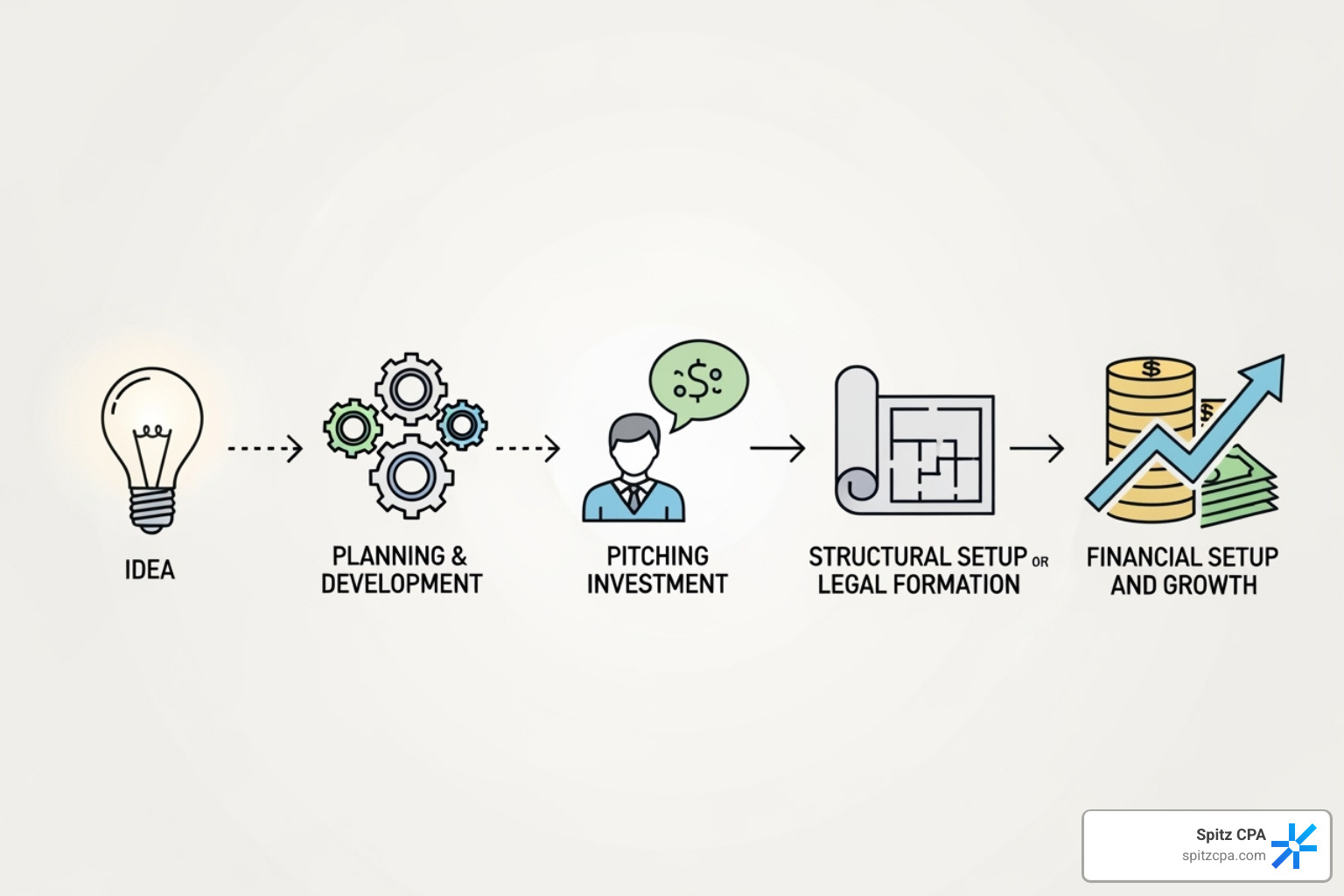
Just like building a house, a business needs a solid foundation. In accounting for entrepreneurs, this means making three key decisions upfront to avoid future headaches: choosing your business structure, registering properly, and picking an accounting method.
Choosing the Right Business Structure
Your business structure affects your taxes, liability, and paperwork. Here’s a quick rundown:
- Sole Proprietorship: The simplest starting point. You and the business are one legal entity, but your personal assets are at risk.
- Partnership: Similar to a sole proprietorship but for two or more owners. A written partnership agreement is crucial.
- Limited Liability Company (LLC): A popular choice that protects your personal assets from business debts. It offers tax flexibility, allowing you to be taxed like a sole proprietorship, partnership, or corporation.
- Corporation (S-Corp or C-Corp): The most complex structure, offering the strongest liability protection. S-Corps allow profits to pass through to owners’ personal returns, avoiding the C-Corp’s “double taxation.” Corporations are best for businesses planning to raise significant capital.
Choosing the right entity is a critical decision. Our business entity formation services can help you decide.
Registering Your Business and Opening Accounts
Once you’ve chosen a structure, register your business with state and local authorities and get a Federal Employer Identification Number (EIN) from the IRS. You can find specific license requirements on the SBA’s business license guide.
Now, follow the golden rule of business accounting: keep personal and business finances completely separate. Mixing them creates bookkeeping chaos, risks your personal liability protection, and can cause you to miss valuable tax deductions. Open a dedicated business bank account and credit card, and use them for all business transactions. This simple step is non-negotiable for financial clarity.
Choosing Your Accounting Method
You have two options for recording transactions:
- Cash-Basis Accounting: You record income when you receive cash and expenses when you pay them. It’s simple and intuitive, making it ideal for most new businesses.
- Accrual-Basis Accounting: You record revenue when it’s earned and expenses when they’re incurred, regardless of when money changes hands. This provides a more accurate picture of financial health and is often required for larger businesses or those seeking investment.
For most new entrepreneurs, cash-basis is a great starting point. The most important rule is to pick one method and stick with it for consistency. These foundational decisions set the stage for your business’s financial success.
The Core of Accounting for Entrepreneurs: Bookkeeping, Reporting, and Analysis

With your foundation in place, the daily rhythm of accounting for entrepreneurs begins. This involves turning transactions into insights that guide your strategy. Accurate records are your business’s memory, revealing what’s working and where opportunities lie.
Essential Bookkeeping Practices
Bookkeeping is the systematic recording of all financial transactions. While 72% of self-employed people handle their own accounting, good practices are non-negotiable. Start with a Chart of Accounts to organize your finances into categories (assets, liabilities, revenue, etc.). Record every transaction and reconcile your books with your bank statements monthly to catch errors and ensure accuracy. Consistency is key. If this feels overwhelming, our Bookkeeping Services can help. For official guidance, consult the IRS guide on record keeping.
Effectively Tracking Expenses and Managing Receipts
Expense tracking is about understanding where your money goes. Common categories include payroll, office expenses, software, and marketing. Instead of a shoebox of receipts, use digital tools to snap photos and categorize expenses on the go. This not only simplifies tax time but also helps you understand and Improve Business Profitability. As a rule, keep all business-related documents for at least six years.
Understanding the Three Key Financial Statements
These three reports tell your business’s complete financial story:
- The Income Statement (P&L): This is your profitability report card for a period (e.g., a month or quarter). It shows Revenue – Expenses = Net Income (or Loss). It answers the question: “Are we making money?”
- The Balance Sheet: This is a snapshot of your financial health at a single point in time. It follows the equation Assets = Liabilities + Owner’s Equity. It reveals what your business owns, what it owes, and its net worth.
- The Cash Flow Statement: This tracks the actual cash moving in and out of your business from operating, investing, and financing activities. It’s critical because you can be profitable on paper but still run out of cash. It answers: “Where is our cash coming from and going?”
Understanding these is the first step of a Business Financial Health Check.
How to Interpret Financials for Strategic Decisions
Financial statements are not just for compliance; they are for strategy. Use them to:
- Analyze trends: Compare reports over several months to spot patterns in revenue and expenses.
- Assess profitability: Identify your most profitable products or services and find areas to cut costs.
- Make informed decisions: Use real data to decide on hiring, purchasing equipment, or launching new products.
Sadly, 70% of business owners don’t know how to analyze financial documents for decision-making. Closing this knowledge gap is how you turn accounting into a strategic advantage.
Leveraging Accounting for Growth and Financial Health

Once you understand your numbers, you can use them to drive growth. This is the shift from reactive accounting (looking backward) to proactive accounting (steering forward). Accounting for entrepreneurs becomes a strategic weapon when you use your data to plan for the future.
Budgeting, Forecasting, and Financial Planning
Your financial statements are the basis for your future.
- Budgeting: Create a financial roadmap by estimating income and planning expenses. Differentiating between fixed costs (rent, salaries) and variable costs (materials, shipping) is key to smart planning.
- Forecasting: Predict future performance based on historical data and market trends to anticipate cash needs and set realistic goals.
- Goal Setting: Set SMART (Specific, Measurable, Achievable, Relevant, Time-bound) financial goals, like “increase revenue by 20% in 12 months.”
This proactive planning is also essential for effective Tax Planning for Entrepreneurs.
Managing Cash Flow and Customer Payments
Profit and cash flow are not the same. A business can be profitable but fail due to poor cash flow. A 12 Month Cash Flow Statement is vital for anticipating shortfalls. To improve cash flow:
- Invoice promptly with clear payment terms.
- Make it easy for customers to pay you online or with credit cards.
- Negotiate favorable payment terms with your suppliers.
- Build a cash reserve equal to 3-6 months of operating expenses.
Using Financial Reports to Attract Investors
For investors and lenders, your financial reports are your most persuasive tool. They want to see more than just profit; they look for key metrics like customer acquisition cost (CAC) and lifetime value (CLTV), a credible path to profitability, and proof of responsible financial management. Clean, transparent reports build the trust needed to secure funding.
Common Accounting Mistakes and How to Avoid Them
Avoid these common pitfalls:
- Mixing personal and business funds: This creates a bookkeeping nightmare and pierces your liability protection. Keep accounts separate.
- Poor record-keeping: Use a consistent system to track all transactions. Don’t wait until tax season to organize receipts.
- Neglecting cash flow: Monitor your cash flow statement as closely as your income statement.
- Misclassifying workers: Understand the difference between employees and independent contractors to avoid costly IRS penalties.
- Ignoring tax deadlines: Set reminders for quarterly estimated tax payments and annual filings to avoid penalties.
If your books are already a mess, our Accounting Clean-Up Services can help you get back on track.
Navigating Taxes, Technology, and Professional Help

Mastering your finances involves three key areas: taxes, technology, and professional help. Understanding these elements makes your accounting journey much smoother.
Key Tax Obligations for Entrepreneurs
Taxes are a reality of business. Key obligations include:
- Self-Employment Tax: Covers Social Security and Medicare for sole proprietors and partners (currently 15.3%).
- Income Tax: Federal and state taxes on your business profits.
- Sales Tax: Collected from customers on taxable goods/services and remitted to the state.
- Estimated Quarterly Taxes: Since taxes aren’t withheld from a paycheck, the IRS requires you to pay them in four installments throughout the year.
- Payroll Tax: If you have employees, you must withhold and match taxes for Social Security, Medicare, and income. Our Payroll Services can manage this for you.
Maximizing Tax Deductions and Credits
Good record-keeping pays off at tax time. Deductions lower your taxable income, while credits reduce your tax bill dollar-for-dollar. You can deduct any “ordinary and necessary” business expense, such as advertising, supplies, and professional services. The home office deduction is valuable but requires a space used exclusively for business.
Don’t overlook powerful opportunities like R&D tax credits, which can provide significant savings for businesses developing new products or software. Our R&D Tax Experts can identify if you qualify. Proactive Business Tax Strategies are key to minimizing your tax burden.
The Benefits of Using Accounting Software
Modern accounting software is a game-changer. It offers:
- Automation: Automatically imports and categorizes bank transactions.
- Accuracy: Reduces human error in calculations.
- Real-time Insights: Provides an up-to-the-minute view of your financial health.
- Scalability: Grows with your business and integrates with other tools.
Look for software with a user-friendly interface, automated bank feeds, and robust reporting capabilities.
DIY vs. Hiring a Pro: Making the Right Choice for Your Accounting
Should you do it yourself or hire help? DIY accounting saves money and gives you an intimate understanding of your finances. However, it’s time-consuming and complex, and you risk making costly mistakes or missing strategic opportunities.
Consider hiring help when:
- You’re drowning in data entry: A bookkeeper can keep your records clean and timely.
- Your business is growing complex: An accountant provides strategic guidance on taxes, growth, and financial health.
- You need high-level strategy without a full-time salary: Outsourcing Services like a fractional CFO provide expert financial leadership on a flexible basis.
Delegating accounting allows you to focus on your strengths and grow your business.
Frequently Asked Questions about Entrepreneurial Accounting
Which financial statement is most important for an entrepreneur?
While all three financial statements—the Income Statement, Balance Sheet, and Cash Flow Statement—are vital for a complete picture, the Cash Flow Statement is often the most critical for day-to-day survival. Profitability on paper doesn’t pay the bills; actual cash does. The Cash Flow Statement shows the real money moving through your business, helping you avoid shortfalls.
The Income Statement shows if your business model is profitable, while the Balance Sheet provides a snapshot of your overall financial health. Effective business accounting requires using all three together to make informed decisions.
How often should I review my business finances?
Consistency is key. A good rhythm is:
- Weekly: A quick (15-20 minute) check on your cash position and sales figures to spot immediate issues.
- Monthly: A thorough review of your Income Statement and Balance Sheet to track profitability and expenses.
- Quarterly: A comprehensive review of all three statements to align with your budget, forecasts, and estimated tax payments.
Regular check-ins empower you to steer your business proactively rather than just reacting to problems.
What is the biggest accounting mistake entrepreneurs make?
The most common and damaging mistake is co-mingling personal and business funds. Using your business account for personal expenses (or vice versa) creates three major problems:
- Bookkeeping Chaos: It becomes nearly impossible to track profitability and find legitimate tax deductions.
- Personal Liability: It can “pierce the corporate veil” of your LLC or corporation, putting your personal assets like your home and savings at risk in a lawsuit.
- IRS Red Flags: It complicates audits and makes it difficult to prove the legitimacy of your business expenses.
The solution is simple: open a separate business bank account and credit card and use them exclusively for business. If you’ve already made this mistake, our Accounting Clean-Up Services can help you get organized.
Conclusion: Turn Your Numbers into Your Greatest Asset
We’ve covered the journey from business setup to strategic financial management. The single most important takeaway is this: accounting for entrepreneurs is not just a compliance chore but a powerful tool for growth. When you understand your financial data, confusion gives way to confidence, and growth becomes predictable.
As an entrepreneur, you started your business to pursue a passion, not to get buried in spreadsheets. At Spitz CPA, Michael J. Spitz and our team are dedicated to helping entrepreneurs in Gilbert, AZ, and beyond turn their financial data into a competitive advantage. We’ve seen businesses achieve remarkable results when they gain the financial clarity to make strategic moves.
Your numbers tell the story of your business—past, present, and future. Don’t let them be a source of stress. Let them be your guide. By taking control of your finances, you take control of your business’s destiny.
Ready to turn your financial data into your greatest asset? Explore our Accounting Services and find how we can help open up your business’s full potential.


