


Understanding the Lifeblood of Your Business
Cash flow improvement is essential for keeping your business running smoothly and positioning it for growth. If you’re looking to strengthen your financial position, here are the most effective strategies:
Quick Cash Flow Improvement Strategies:
- Invoice immediately – Send bills the moment work is completed
- Offer early payment discounts – Provide 1-2% off for payments within 10 days
- Negotiate longer payment terms with suppliers (net 45 or 60 instead of net 30)
- Cut unnecessary expenses – Audit subscriptions and recurring costs
- Build a cash reserve – Aim for 3-6 months of operating expenses
- Use business credit cards – Extend your payment float by 30-45 days
- Clear slow-moving inventory – Free up cash tied to unsold stock
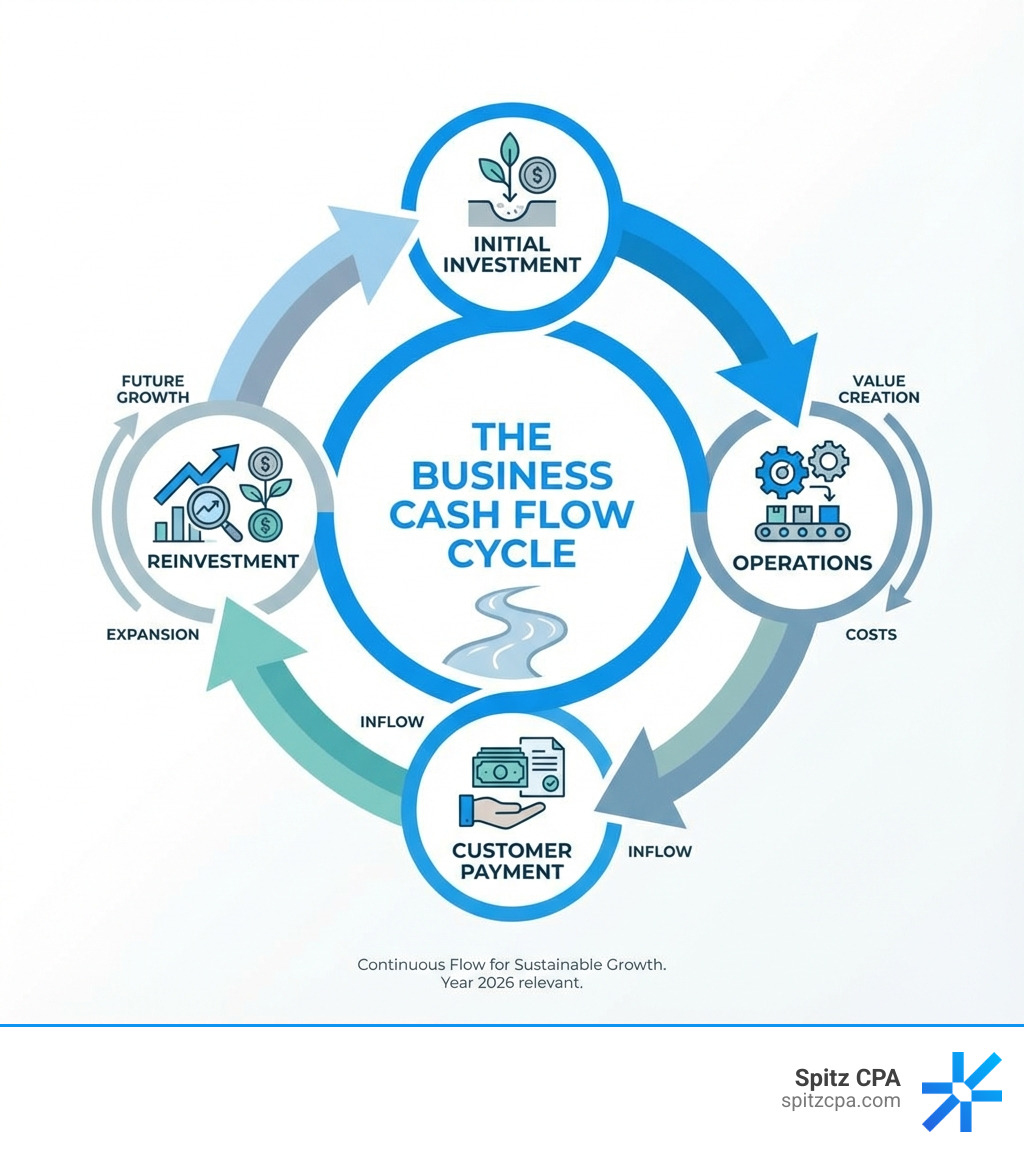
What is cash flow? It’s the net amount of cash moving in and out of your business. While profit measures your overall financial performance on paper, cash flow determines whether you can actually pay your bills, employees, and suppliers right now. This distinction matters because businesses that have poor cash flows will struggle with meeting financial obligations, which could lead to ceasing operations — even if they’re technically profitable.
The most common causes of cash flow challenges include late payments from customers, high overhead costs, and ineffective budgeting or forecasting. When your payables are due before your receivables arrive, you face a liquidity crunch that can strain every aspect of your operations.
I’m Michael J. Spitz, and with over 15 years of corporate accounting experience, I’ve helped businesses implement cash flow improvement strategies across industries from software technology to property management. My expertise in financial modeling, budgeting, and cash management has guided companies through everything from seed fundraising to managing seasonal fluctuations.
Easy cash flow glossary:
Start with a Plan: The Power of Cash Flow Forecasting

When we talk about cash flow improvement, the first step isn’t just about tweaking numbers; it’s about gaining clarity. This is where cash flow forecasting shines. Why does forecasting matter so much? Simply put, it helps us anticipate potential shortfalls before they become crises, allowing for proactive management and strategic adjustments. Imagine knowing exactly when you’ll have extra cash and when things might get a little tight – it’s like having a financial crystal ball!
A popular and highly effective tool we use is the 13-week cash flow forecast model. This model provides a near-term, accurate view of your cash position, offering sufficient visibility to spot upcoming problems. While longer quarterly forecasts have their place, they often miss critical timing issues that appear week to week. By carefully tracking expected income and outflows over a 13-week period, you can identify precisely when funds will enter and leave your business. This level of detail empowers us to make timely decisions, whether it’s timing a major purchase or adjusting operational expenses.
Beyond a single forecast, we advocate for scenario planning. This involves creating best-case, worst-case, and most-likely scenarios for your cash flow, especially important for businesses facing seasonal demand fluctuations. For instance, a business in Gilbert, AZ, dealing with seasonal tourism might develop projections for peak, off-peak, and average periods. This helps us adjust budgets and resource allocation based on these different possibilities, ensuring we’re prepared for whatever comes our way.
To truly master your cash flow, we also track key performance indicators (KPIs). These are like the vital signs of your business’s financial health:
- Cash Conversion Cycle (CCC): This measures how long your cash is tied up in the operating cycle. A shorter CCC means you’re recovering your working capital faster – always a good sign!
- Days Sales Outstanding (DSO): This tells us the average number of days it takes to collect payments after a sale. Lower is better, meaning you’re getting paid more quickly.
- Working Capital Ratio: Calculated by dividing current assets by current liabilities, this ratio is a quick snapshot of your short-term liquidity. A ratio of less than one indicates potential future liquidity problems. However, a ratio between 1.5 and 2 indicates solid financial ground in terms of liquidity. This is a crucial metric for us to keep an eye on.
For a deeper dive into understanding your business’s financial narrative, you can find more on cash flow statements and even see a projection example that illustrates how these forecasts come to life.
Strategies for Rapid Cash Flow Improvement

Now that we understand the importance of planning, let’s roll up our sleeves and explore the actionable strategies to tangibly improve your cash flow. These strategies focus on managing both the money coming into your business (inflows) and the money going out (outflows). We’ll cover everything from speeding up accounts receivable and strategically handling accounts payable to optimizing inventory, trimming unnecessary expenses, and boosting revenue.
1. Accelerate Your Cash Inflows (Accounts Receivable)
Getting paid faster is arguably one of the most direct routes to improving cash flow. Every day an invoice sits unpaid, it’s cash that isn’t working for your business.
- Prompt Invoicing: This might sound obvious, but we often see businesses delay sending invoices. Every day you delay pushes payment further into the future. Our best practice? Send invoices the moment work is done. Better yet, implement automated billing systems that generate and dispatch invoices as soon as a service is complete or a product is shipped.
- Clear Payment Terms: Don’t leave your customers guessing. Clearly state your payment terms (e.g., “Net 30 days”) on all contracts, proposals, and invoices. This clarity minimizes confusion and disputes, paving the way for faster payments.
- Early Payment Discounts: Sometimes, a little incentive goes a long way. Offering a small discount, typically 1-2% off for payments made within 10 days (e.g., “2/10 Net 30”), can motivate reliable customers with large invoices to pay sooner. This accelerated cash inflow often outweighs the cost of the discount.
- Multiple Payment Options: Make it easy for your customers to pay you. This means accepting various forms of payment, including credit cards and online payment solutions. Research shows that 35% of consumers would shop elsewhere if a business didn’t accept credit cards. In fact, 90% of small businesses accept credit cards, with more than half of customers using them for purchases. Providing these options can significantly speed up collections and reduce bad debts. For more insights, check out our details on credit card acceptance.
- Customer Credit Checks: Before extending credit, especially for larger projects or new clients, conducting a customer credit check can save you a lot of headaches (and cash flow woes) down the line. It’s a proactive step to ensure you’re working with reliable payers.
2. Strategically Manage Your Cash Outflows (Accounts Payable)
While getting cash in is vital, managing how cash goes out is equally important for effectively managing your cash flow. This isn’t about avoiding payments, but optimizing their timing.
- Negotiate Longer Supplier Terms: Just as you want customers to pay you quickly, you can seek longer payment terms from your suppliers. Moving from “Net 30” to “Net 45” or even “Net 60” can keep cash in your account longer, providing valuable flexibility. Building strong, friendly relationships with your vendors can make these negotiations much smoother.
- Strategic Payment Scheduling: Use electronic payment systems to your advantage. Schedule payments to go out on their due date, not before. Paying bills too early unnecessarily speeds up cash outflows, reducing your available liquidity.
- Avoid Early Payments (Unless Discounted): Unless there’s a significant early payment discount from a supplier, resist the urge to pay invoices ahead of schedule. Your cash is often better used within your business for other operational needs or earning interest in a high-yield account.
- Use of Business Credit Cards: For recurring vendor payments, software subscriptions, or daily operating expenses, paying with a business credit card can extend your float by 30-45 days. This allows your cash to remain in your bank account for longer, and you might even earn rewards in the process.
- Build Strong Vendor Relationships: Open communication and mutual respect with your suppliers can lead to more flexible terms when you need them most. They’re often willing to work with you if you’ve been a reliable partner.
For more in-depth guidance on managing your outgoing payments, explore our expert accounts payable advice.
3. A Key Tactic for Cash Flow Improvement: Master Your Inventory
For businesses that deal with physical products, inventory is often one of the largest drains on cash flow. Effective inventory management is a critical tactic for improving cash flow.
- Overstocking Risks: Holding too much inventory ties up significant capital that could be used for marketing, new equipment, or simply bolstering your cash reserves. Excess stock also incurs holding costs (storage, insurance, potential obsolescence).
- Slow-Moving Inventory: Regularly review your inventory to identify items that haven’t sold in, say, 60-90 days. These are slow-movers, and they’re eating into your cash.
- Liquidation Strategies: Don’t be afraid to liquidate slow-moving inventory. Even selling it at a discount, or bundling it with faster-selling items, can free up valuable working capital. It’s often better to recover some cash than to let products gather dust indefinitely. As one expert put it, “It’s hard to walk away from products you fall in love with, hoping that someday you’ll magically see heightened demand, but that rarely happens. Be objective, not emotional.”
- Just-in-Time (JIT) Inventory: Implement JIT strategies where possible. This means ordering and receiving inventory only as it’s needed for production or sale, minimizing the amount of stock sitting on your shelves. This significantly reduces holding costs and frees up cash.
- Inventory Management Software: Modern inventory management systems can help track stock levels in real-time, pinpoint stagnant items automatically, and forecast demand more accurately. This prevents over-ordering and ensures you have what customers want, when they want it.
- Inventory Turnover Rates: Monitor this KPI closely. A healthy turnover rate indicates that your inventory is selling quickly, converting into cash efficiently.
4. Trim the Fat: Smart Expense Reduction
Sometimes, the quickest path to cash flow improvement is simply spending less. However, this needs to be done strategically, not haphazardly.
- Audit Recurring Costs: We’ve all signed up for software-as-a-service (SaaS) subscriptions or other recurring services and forgotten about them. Take time to audit all your recurring expenses. Review statements from the past three months, list each tool, its user, and frequency of use. Identify unused or overlapping subscriptions and cancel them. It’s surprising how much cash can be freed up here!
- Unnecessary Spending: Beyond subscriptions, a comprehensive review of all your spending can reveal surprising opportunities. Businesses that thrive don’t just understand these concepts; they integrate them into their operations. Our experience shows that businesses typically identify 3.5% in unnecessary spending within their first month of focused review – money that can immediately strengthen cash reserves or fund growth initiatives.
- Renegotiate Contracts: Don’t assume your current contracts for services like rent, utilities, or even cleaning services are set in stone. Periodically renegotiate these terms. For example, if your business is based in Gilbert, AZ, you might explore new utility plans or renegotiate your office lease. Small reductions across several contracts can add up to significant improvements in cash flow.
- Prioritize Spending: When cutting expenses, always start with non-essential costs (e.g., landscaping, housekeeping, lavish office perks) before looking at core operational costs. Cutting essential elements like marketing or key staff can be detrimental to long-term growth.
Understanding where your money goes is the first step to keeping more of it. For more strategies on how to reduce your tax burden and keep more of your hard-earned cash, explore how we learn to maximize deductions.
5. Boost Revenue Without Breaking the Bank
While cutting costs is effective, increasing revenue is equally vital for sustainably improving cash flow. And you don’t always need to find brand new customers to do it.
- Pricing Strategy Review: When was the last time you truly evaluated your pricing? Experiment with increasing prices, especially for your top sellers or products with less competition. Research suggests customers are more likely to accept a price increase if it comes with an improved experience. In fact, 43% of consumers would pay more for greater convenience, and 42% would pay more for a friendly, welcoming interaction in-store. This means focusing on value and service can justify higher prices, directly boosting your cash inflow.
- Upselling and Cross-selling: It’s often easier and more cost-effective to sell more to existing customers than to acquire new ones.
- Upselling involves encouraging customers to purchase a more expensive or upgraded version of a product or service (e.g., a “premium” package).
- Cross-selling involves offering complementary products or services (e.g., “Would you like fries with that?”). These strategies can significantly increase the average transaction value.
- Revenue Diversification: Don’t put all your eggs in one basket. Explore new markets, add complementary products or services, or even implement recurring revenue models like subscriptions or bundling. This not only creates more predictable income but also reduces your vulnerability to fluctuations in a single revenue stream. For example, a consulting firm in Gilbert, AZ, might offer online training modules as an additional service.
- Customer Experience: As mentioned with pricing, a stellar customer experience can drive loyalty, repeat business, and even justify higher prices. Investing in customer satisfaction is an investment in your future cash flow.
These revenue-boosting tactics, when implemented thoughtfully, can lead to substantial insights on business profitability and overall financial health.
Securing Your Financial Future: Financing and Cash Reserves
Even with the best strategies for managing inflows and outflows, every business will encounter unexpected bumps in the road or exciting opportunities that require capital. This is where strategic financing and robust cash reserves become paramount for improving cash flow and ensuring financial stability.
Building a Safety Net: The Importance of Cash Reserves
Think of your cash reserve as your business’s emergency fund – a financial safety net that provides security and flexibility.
- Emergency Fund: We strongly recommend building a cash reserve equivalent to 3-6 months of your operating expenses. This reserve acts as a buffer, covering essential costs even if sales slow down unexpectedly.
- Stability During Downturns: A healthy cash reserve provides invaluable stability during economic downturns, allowing your business to weather storms without panicking or making drastic, short-sighted decisions. For instance, a business might establish a three-month cash reserve to cover expenses even if sales slow, providing stability and flexibility to respond to market changes.
- Seizing Growth Opportunities: Beyond emergencies, cash reserves empower you to seize unexpected growth opportunities, such as bulk purchase discounts, a sudden expansion opportunity, or investing in new technology. This proactive approach is key for guidance on strategic growth.
A Guide to Financing Options for Cash Flow
Sometimes, even with robust reserves, you might need external capital to bridge gaps or fuel specific initiatives. Understanding your financing options is crucial.
- Business Line of Credit: This is like a flexible loan you can draw from as needed, paying interest only on the amount you use. The best time to activate a low-cost business line of credit is when your cash position is strong, not during a crisis. Lenders offer better rates when you have steady revenue and strong financial statements. It’s an excellent tool to bridge short-term timing differences between accounts receivable and accounts payable.
- Invoice Financing (Factoring): If you have outstanding invoices that are slow to be paid, invoice financing allows you to sell your accounts receivable to a third party (a factor) at a discount. You get immediate cash, and the factor collects the payment from your customer. While it comes with a fee, it can be a rapid way to open up cash tied up in receivables.
- Short-Term Loans: These are traditional loans with shorter repayment periods, often used for specific, immediate needs.
- SBA Loans: Government-backed loans offered through the U.S. Small Business Administration (SBA) often come with favorable terms and lower down payments. They are a great option for businesses that may not qualify for traditional bank loans.
- Benefits and Drawbacks: Each financing option has its pros and cons regarding cost, flexibility, and impact on your balance sheet. The key is to use them strategically, understanding that while they can provide quick cash, they also come with repayment obligations and interest. We always advise securing credit when your business is healthy, ensuring you get the best terms.
For startups looking to manage their finances effectively from the ground up, our CFO services for startups can provide invaluable guidance on these complex decisions.
Frequently Asked Questions about Improving Cash Flow
Let’s address some common questions we hear about improving cash flow.
What’s the difference between being profitable and having positive cash flow?
This is a fundamental distinction that often confuses business owners.
- Profitability refers to your business’s ability to generate more revenue than expenses over a period, typically measured using accrual accounting. It’s about what you earned versus what you spent. A business can be profitable on paper but still not have cash in the bank. For example, you might have made a large sale, but if the customer hasn’t paid yet, that profit isn’t cash.
- Positive cash flow, on the other hand, means you have more cash coming into your business than going out over a given period. This is about the actual money in your bank account. You need positive cash flow to pay your bills, meet payroll, and fund daily operations.
A profitable business can unfortunately fail due to poor cash flow if it doesn’t have enough liquid funds to cover its immediate obligations. This is why managing cash flow is so crucial – it’s the oxygen your business breathes.
How quickly can I see improvements in my cash flow?
The speed of improvement depends on the strategies you implement and the severity of your current situation.
- Quick wins: Strategies like prompt invoicing, offering early payment discounts, and aggressively cutting unnecessary expenses (like unused SaaS subscriptions) can show results within weeks. These are immediate adjustments to your operational rhythm.
- Long-term strategies: Negotiating longer payment terms with suppliers, implementing robust inventory management systems, or building substantial cash reserves are more strategic, long-term efforts that yield benefits over months or even a year.
Consistency is key. Small, consistent changes across multiple areas will accumulate into significant improvements over time.
What is the single most effective strategy for a small business?
While a holistic approach is always best, for many small businesses, the single most effective strategy for rapidly improving cash flow is accelerating accounts receivable. Getting paid faster has a direct and immediate impact on your available cash.
Every day you delay sending an invoice pushes payment further into the future, effectively giving your customers an interest-free loan. By streamlining your invoicing, offering incentives for early payment, and having a clear collection process, you can dramatically shorten the time it takes for money to move from your customers’ hands to your bank account. This immediate influx of cash can alleviate many common liquidity pressures.
Conclusion: Take Control of Your Business’s Financial Destiny
Navigating the financial landscape of a business can feel like a roller coaster, but with a solid understanding of strategies to improve cash flow, you can take control of your destiny. Proactive management, consistent effort, and a willingness to adapt are the cornerstones of financial stability and strategic growth.
Here at Spitz CPA in Gilbert, AZ, we’ve seen how implementing these changes can transform businesses. From gaining financial clarity to achieving significant growth, our personalized guidance empowers entrepreneurs to make informed decisions. We believe that every business, regardless of size, deserves the financial foundation to thrive.
Don’t let cash flow challenges hold your business back. Take the next step towards a more secure and prosperous future. Get expert financial guidance from Michael J. Spitz and our dedicated team at Spitz CPA, and let’s work together to achieve your financial goals.


