


Why Cash Flow Management Matters for Your Business
Cash flow management is the process of tracking money coming into and leaving your business. Here’s what you need to know:
- What it is: Monitoring cash in (sales, loans) and cash out (expenses, debt).
- Why it matters: 80% of businesses fail due to cash flow problems, not a lack of profitability.
- Key difference: Profit is on paper, but cash flow determines if you can pay today’s bills.
- Main goal: Keep enough cash for operations without letting excess money sit idle.
- Core components: Operating, investing, and financing activities.
Cash flow is the lifeblood of a business. While profit measures long-term success, immediate survival depends on having enough cash to meet payroll, pay suppliers, and cover rent. You can show a profit on your income statement but still fail if customers pay late and bills are due first.
Simply put, if more money goes out than comes in, your business won’t survive, regardless of growth projections. Understanding the timing of your cash movements is essential for staying afloat and seizing opportunities.
I’m Michael J. Spitz, and I’ve spent 15+ years in corporate accounting, with experience in cash flow management, financial modeling, and helping businesses with fundraising. I’ve helped companies handle everything from daily cash operations to strategic financial planning.
Understanding the Core Components of Your Cash Flow
Your cash flow statement answers the most urgent question: Do you actually have cash in the bank right now? It reconciles your income statement and balance sheet to reveal your true liquidity, showing if you can make payroll on Friday.
For business owners new to financial statements, the SEC’s Beginners’ Guide To Financial Statement is an excellent resource. I also recommend a regular Business Financial Health Check to catch problems before they become crises.
The cash flow statement is divided into three categories, each telling a different part of your business’s story.
Cash Flow from Operating Activities (CFO)
This is the cash your core business operations generate or consume. A positive number here indicates a healthy business model. Operating cash flow includes cash from customer sales, payments to suppliers, employee wages, and everyday expenses like rent and utilities.
You can be profitable on paper but have negative operating cash flow if customers haven’t paid or cash is tied up in inventory. This section reveals those critical timing mismatches that can sink an otherwise healthy business.
Cash Flow from Investing Activities (CFI)
This section tracks cash used for long-term assets that shape your future. It includes money spent on equipment, machinery, or property, and cash received from selling old assets.
It also covers investments in R&D or other businesses. A negative CFI isn’t always bad; it often signifies investment in growth, like upgrading technology or expanding facilities. The key is whether these investments will generate positive operating cash flow in the future.
Cash Flow from Financing Activities (CFF)
This section shows money flow between your business and its funders. It includes bank loans, investor capital from issuing stock, debt repayment, and dividends paid to shareholders.
Financing activities answer key questions: Are we taking on new debt? Paying down loans? Bringing in investors? These decisions shape your business’s capital structure.
Understanding these three components is the foundation of managing cash wisely. For small businesses in Gilbert and throughout Arizona, solid Small Business Accounting practices are essential for the visibility needed to make smart cash decisions.
Key Strategies to Improve Cash Flow
Effective cash management is about being proactive, optimizing how money moves, and building financial resilience. The strategies below will help you create a business that can thrive, not just survive.

Strategy 1: Accelerate Your Accounts Receivable
Money in your customers’ accounts doesn’t help your business. The faster you collect what you’re owed, the healthier your cash position. The goal is to reduce your Days Sales Outstanding (DSO)—the time it takes to turn a sale into cash.
- Invoice promptly: Send invoices the moment a sale or service is complete.
- Offer early payment discounts: A small discount (e.g., 2% for payment in 10 days) can be a worthwhile trade-off for immediate cash.
- Set clear payment terms: Use straightforward terms like “Net 30 days” on every invoice.
- Use automated reminders: Nudge customers about upcoming or overdue payments professionally and consistently.
- Accept multiple payment types: Make it easy for customers to pay you with online payments, credit cards, or electronic transfers.
Strategy 2: Strategically Manage Accounts Payable
Managing when cash goes out is as important as managing when it comes in. Optimize your outflows without damaging crucial supplier relationships.
- Negotiate payment terms: Ask reliable suppliers to extend terms from Net 30 to Net 45 or 60 days for more breathing room.
- Maintain supplier relationships: A good relationship provides flexibility during tight periods. Communicate openly and pay reliably.
- Schedule payments strategically: Pay closer to the due date to keep cash in your account longer, but always pay on time to avoid late fees and protect your reputation.
- Use early payment discounts wisely: If you have ample cash, taking a supplier’s discount can Improve Business Profitability, but don’t strain your cash position to do so.
Strategy 3: Control Expenses and Build Cash Reserves
Controlling expenses is an ongoing commitment that, combined with a cash reserve, creates a stable financial foundation.
- Conduct regular expense audits: Quarterly, review every line item for unused subscriptions or cheaper alternatives.
- Eliminate non-essential spending: Cut costs that don’t directly drive your business forward, especially in uncertain times.
- Consider leasing vs. buying: Leasing equipment can spread out costs and avoid large upfront cash payments.
- Build a cash reserve: Set aside three to six months of essential operating expenses. This is your financial safety net for unexpected costs or seasonal slowdowns.
This emergency fund not only protects you during downturns but also positions you to seize opportunities, like hiring key talent or acquiring equipment at a discount, without needing immediate financing.
Forecasting, Technology, and Planning for Growth
Looking ahead is what separates thriving businesses from struggling ones. Sound cash management is about anticipating what’s coming. Cash flow forecasting is your financial GPS, helping you spot roadblocks and plan your route.
Growth can be a cash trap; many companies grow themselves out of business by burning through reserves before new revenue arrives. Plan for growth before it happens. A good practice is creating three forecasts: best-case, worst-case, and most likely. This range prepares you for multiple futures. You can see an Example of Cash Flow Projection for 12 Months to understand solid planning.
The Role of Forecasting in Cash Flow Management
Forecasting transforms reactive scrambling into proactive planning. It helps you:
- Anticipate shortfalls: If you foresee a cash crunch, you have months to secure a credit line, delay a purchase, or accelerate collections.
- Plan large expenses: Forecasting tells you when you can afford major investments like new equipment or a marketing campaign without jeopardizing daily operations.
- Secure financing: Approaching a lender with a detailed 12 Month Cash Flow Statement demonstrates financial maturity. Lenders prefer proactive planners over businesses seeking emergency funds.
Leveraging Technology for Better Tracking
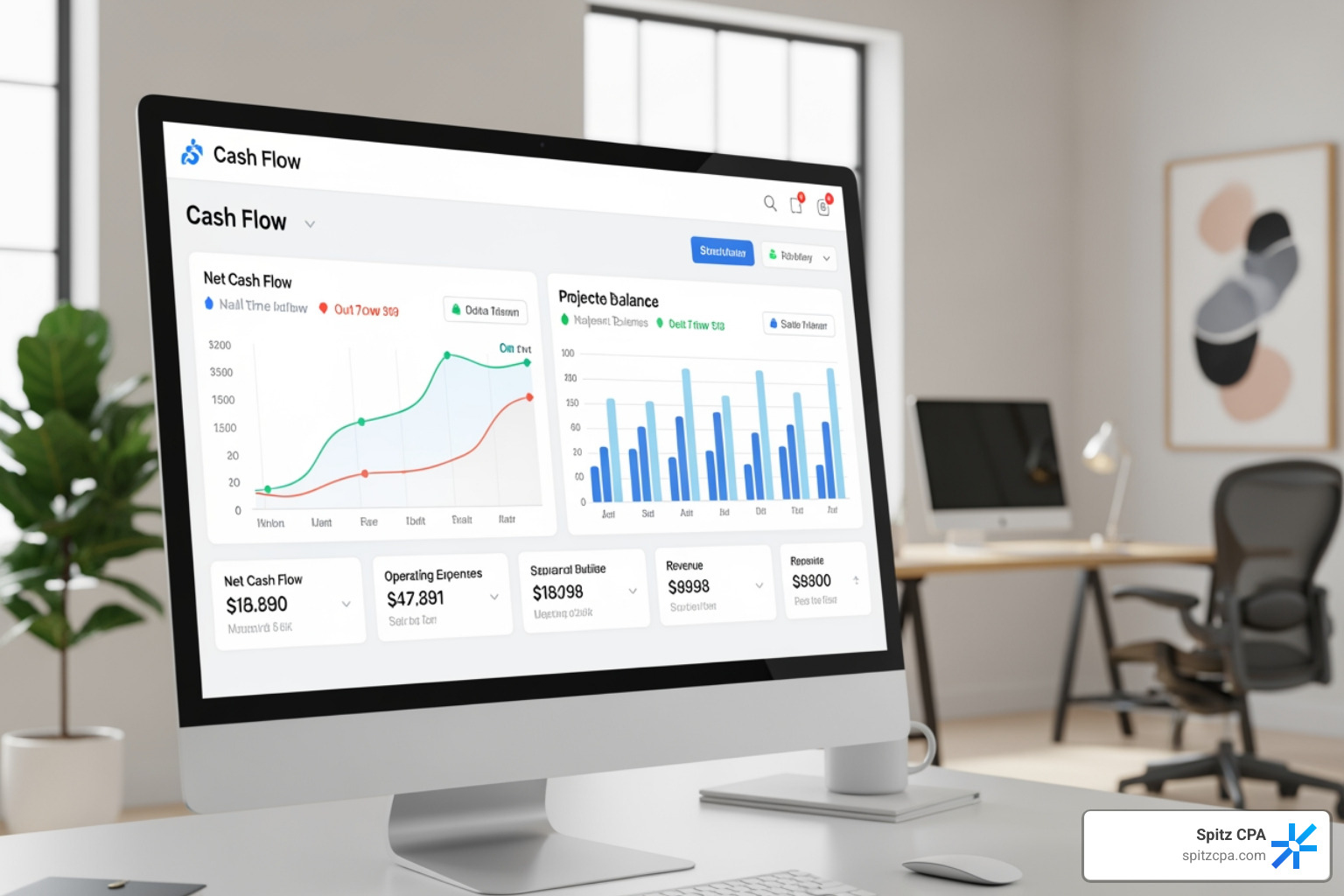
Managing cash flow with spreadsheets is outdated. Modern accounting software and forecasting tools automate data collection, reduce errors, and provide real-time financial visibility.
A 2022 survey found that while 60% of small businesses use two to three cash-flow management products, 84% believe that consolidating to one platform would save them significant time—up to eight hours per week.
However, digital asset security is critical. The 2019 QuadrigaCX case is a sobering reminder of this risk. The cryptocurrency exchange’s CEO died as the only person with the password to $190 million in funds, leading to the company’s bankruptcy. Ensure trusted partners can access critical systems by using a quality password manager. This is responsible business planning.
Evaluating Growth Initiatives and Investments
Growth isn’t free. Every expansion requires upfront cash before you see returns. When considering growth, you must balance short-term cash needs against long-term ROI.
- Funding expansion: A new location requires cash for deposits, build-out, and initial inventory before generating revenue.
- Hiring new staff: Hiring is a deceptively expensive investment. Beyond salary, you have payroll taxes, benefits, equipment, and training costs.
For startups and growing businesses, strategic guidance like that offered by a CFO for Startups is invaluable. We help you determine not just if an opportunity is profitable, but if it’s financially feasible right now. Sustainable growth is planned, forecasted, and deliberately managed.
Overcoming Common Cash Flow Problems
Even with great planning, cash flow challenges are inevitable. Staying on top of cash requires a toolkit you can deploy quickly. Most businesses face similar, predictable challenges with straightforward solutions rooted in financial discipline.
Common Challenges in Cash Flow Management
- Inflation: 84% of small business owners report that inflation is affecting their businesses. When all your costs for inventory, supplies, and wages rise, cash reserves can evaporate quickly.
- Seasonal fluctuations: Many businesses experience seasonal booms and slumps. The challenge is planning for the quiet periods when revenue drops but fixed costs remain.
- Rapid growth: It sounds counterintuitive, but rapid growth can be a cash flow killer. You spend cash now on staff and inventory for a big contract but might not get paid for 60-90 days, creating a temporary cash burn.
- Unexpected expenses: A major equipment failure or legal dispute can trigger a crisis without a financial buffer.
- Poor record-keeping: If you don’t know your current cash position, you can’t forecast. It’s like driving blindfolded. You can’t manage what you don’t measure.
Solutions and Best Practices
- Create a detailed cash flow budget: This is your financial roadmap. It’s a living document you must update regularly to see shortfalls in advance.
- Address inflation: Periodically review your pricing strategy. Raising prices can be uncomfortable but is often necessary to protect your margins and cash flow.
- Build a flexible financial plan: Flexible plans are more resilient. Establish a line of credit before you need it, and maintain relationships with multiple suppliers.
- Use proactive tax planning: Strategic Tax Planning for Entrepreneurs helps you smooth out tax payments, maximize deductions, and avoid surprise bills that drain your reserves.
- Maintain impeccable records: Accurate records are the foundation of all financial management. Use quality accounting software, record transactions promptly, and reconcile accounts regularly.
Frequently Asked Questions about Cash Flow
Here are answers to some of the most common questions we receive at Spitz CPA about managing cash flow.
What is the difference between cash flow, profit, and revenue?
Understanding this distinction is critical.
- Revenue is the total money generated from sales before any expenses are deducted. It’s your top-line number.
- Profit (net income) is what’s left after you subtract all expenses—including non-cash items like depreciation—from revenue. It’s your bottom line.
- Cash flow is the actual movement of cash into and out of your bank accounts. It’s your real-time liquidity.
A business can be profitable yet fail from negative cash flow if customers pay slowly or large expenses drain cash. As we say, profit is an opinion, but cash is a fact. Our Accounting for Entrepreneurs Complete Guide offers a comprehensive look at these concepts.
What are the most common cash flow mistakes business owners make?
These errors are common but avoidable:
- Overspending during high-revenue periods: Failing to save during boom times for the inevitable leaner periods is a classic mistake.
- Not having a cash reserve: Operating without a buffer of three to six months of expenses makes any unexpected cost a potential crisis.
- Failing to forecast: Not looking ahead leaves you reacting to problems instead of preventing them.
- Poor management of receivables: Allowing customers to pay late ties up your cash when you need it most.
- Extending too much credit: Offering credit can boost sales, but extending it without clear terms can create significant cash flow gaps.
How do I know if my business has a healthy cash flow?
A healthy cash flow means you can meet obligations and invest in growth. Here are the signs:
- Positive cash flow from operations: Your core business should generate more cash than it uses. This is the most sustainable sign of health.
- Ability to meet short-term obligations: You can pay bills and payroll on time without stress.
- Growing cash reserves: Your emergency fund and operating cash should be steadily increasing over time.
- A healthy cash conversion cycle: This metric measures how quickly your investment in inventory converts back into cash. A shorter cycle is better.
- Consistent monitoring: Regularly reviewing your cash flow statements and comparing them to your forecast is a sign of a well-managed business.
Take Control of Your Financial Future
My 15+ years of experience have taught me that managing cash flow is the difference between surviving and thriving. It’s about building a business that can weather storms, seize opportunities, and grow with confidence.
We’ve covered the essentials: understanding cash flow components, implementing strategies for receivables and payables, building reserves, and forecasting. These are practical tools to transform your business.
Many business owners in Gilbert, AZ, and throughout Arizona are profitable but stressed about payroll, growing but running out of cash. They know something is wrong but aren’t sure how to fix it.
The truth is, proactive cash planning is crucial and achievable. It starts with understanding your numbers and getting the right guidance to make informed decisions. You don’t need to be a financial expert—you just need to know when to ask for help.
At Spitz CPA, we specialize in helping businesses gain financial clarity. I’ve personally helped companies increase their value tenfold by cleaning up their accounting, optimizing their cash flow, and providing strategic financial guidance. We partner with you to create a roadmap to your goals.
Your business deserves a financial foundation that supports your vision. Let us help you build it.


