


Why Employee Benefits Administration Matters More Than Ever
Employee benefits administration is the process of designing, implementing, and managing a company’s employee benefits programs. This critical function involves selecting health insurance, managing retirement accounts, ensuring regulatory compliance, and helping employees use their benefits effectively.
Key Components of Employee Benefits Administration:
- Program Design – Creating competitive benefits packages.
- Vendor Management – Communicating with insurance carriers and administrators.
- Enrollment Management – Handling new hire and open enrollment.
- Compliance Tracking – Adhering to regulations like ERISA, ACA, and COBRA.
- Employee Education – Helping staff maximize their benefits.
- Ongoing Administration – Managing life events, claims, and updates.
Getting benefits administration right is crucial. Research shows that 80% of employees would prefer better benefits to a pay increase, making your benefits package a powerful tool for attracting and retaining top talent. However, many business owners are overwhelmed by the complexities of managing health plans, retirement accounts, and compliance.
Understanding the fundamentals of benefits administration can transform how you attract talent, control costs, and support your team, whether you’re a startup or an established company.
I’m Michael J. Spitz. With over 15 years in corporate accounting, I’ve helped businesses steer the financial complexities of employee benefits administration, ensuring seamless payroll integration and compliance. My expertise ranges from strategic planning to implementing benefits programs that align with your company’s financial goals.
Related content about Employee benefits administration:
What is Employee Benefits Administration and Why is it Crucial?
Employee benefits administration is more than paperwork; it’s the strategic backbone for creating a workplace where people want to build their careers. Done right, it’s a powerful tool for attracting talent, retaining employees, and building a culture that drives results.
A surprising 80% of employees would prefer better benefits to a pay increase. This statistic highlights what your team values. In a competitive job market, salary isn’t enough; top candidates evaluate the entire package, from health coverage to retirement plans.
When employees feel supported with solid health insurance, retirement contributions, and well-being initiatives, they become more loyal and productive. They experience less stress, take fewer sick days, and are more invested in the company’s success. This engagement is a direct result of thoughtful employee benefits administration.
Strong benefits programs lead to lower turnover, reducing recruiting and training costs. Employee morale improves, creating a positive atmosphere that attracts more great people. This cycle can genuinely improve business profitability while making your workplace somewhere people love to be.
The Strategic Value of a Strong Benefits Package
A well-designed benefits package is an investment. Attracting top talent is easier when you offer comprehensive coverage. The best employees seek employers who demonstrate their value through meaningful benefits.
Building employee loyalty occurs naturally when people feel cared for. Investing in their health and future makes them more likely to stay long-term. This loyalty also translates into reduced absenteeism, as employees with good benefits take better care of themselves and have less financial stress.
Your benefits package also improves your employer brand. Companies known for taking care of their people develop strong reputations that make recruiting easier.
Most importantly, comprehensive benefits provide financial security for employees. This safety net allows your team to focus on their work instead of worrying about medical bills or retirement.
Core Components of Benefits Management
Effective employee benefits administration requires attention to several key areas:
Program design starts with understanding employee needs and balancing them against your company’s budget. It’s about creating a plan that fits your unique workforce.
Vendor communication involves building strong relationships with insurance carriers and administrators for better rates and service.
Enrollment management covers guiding new hires and existing employees through enrollment periods, making the process clear and accessible.
Compliance tracking is critical for navigating evolving federal and state regulations, protecting your company and employees from costly issues.
Employee education ensures your investment pays off by helping your team understand and use their benefits effectively.
Payroll integration ties everything together, ensuring benefit deductions and contributions are handled accurately. At Spitz CPA, our expertise in human capital management payroll helps ensure this integration works flawlessly.
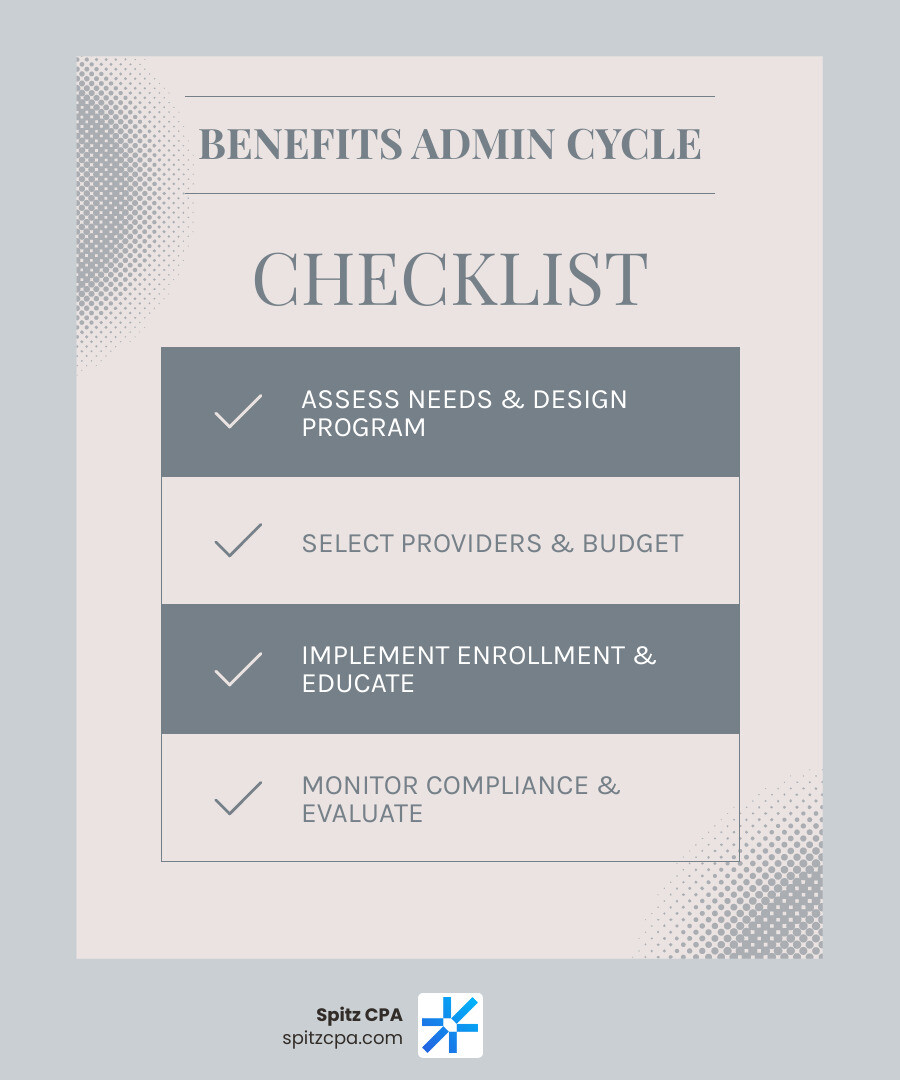
A 5-Step Guide to Effective Employee Benefits Administration

Creating an effective employee benefits administration system requires a clear, step-by-step approach. This roadmap can transform benefits from a source of stress into a strategic advantage.
Step 1: Assess Needs and Design Your Program
A common mistake is assuming you know what employees want without asking. Start with employee surveys to get direct feedback on what benefits they value most, such as flexible work arrangements or mental health support.
Next, analyze your workforce demographics. A team of recent graduates will have different priorities than employees nearing retirement. In Gilbert, Arizona, I work with diverse companies, and the benefits strategy for each is unique.
Also, perform competitor benchmarking to ensure your offerings are competitive, but focus on what matters most to your specific team rather than matching every perk.
Before creating a wish list, establish a realistic budget analysis. I help clients view benefits spending as an investment in retention and productivity, not just an expense.
For common employee benefits, consider these essentials:
- Health insurance (medical, dental, vision)
- Retirement plans like 401(k)s
- Paid time off (PTO), which 37% of employees value more than a pay raise
- Life and disability insurance
- Wellness programs and flexible spending accounts
Step 2: Budget, Select Providers, and Ensure Compliance
This step is where your financial planning takes shape. Setting a realistic budget means understanding the ROI you expect from happier, more loyal employees.
When negotiating with insurance carriers, shop around and ask questions. Bundling services can often lead to better deals.
If vetting third-party administrators, choose carefully. They become an extension of your team, so look for industry experience, strong technology, and a compatible service philosophy.
Understanding legal requirements is critical. The regulatory landscape, including ERISA compliance, ACA requirements, and EBSA regulations, is complex and non-negotiable. Violations can be costly. This is why I emphasize proper financial planning in my small business accounting 101: a guide for new entrepreneurs approach.
Step 3: Implement and Manage Enrollment

The open enrollment period is the critical time when employees select their benefits, usually once a year.
Your new hire onboarding process must seamlessly integrate benefits enrollment. Make it as smooth as possible with clear explanations and simple steps.
Benefits administration software is invaluable here. It automates tasks, provides self-service options for employees, and reduces errors.
Your system must also efficiently handle managing qualifying life events, such as marriage or the birth of a child, in compliance with regulations.
Step 4: Communicate and Educate Your Team
A benefits package is only valuable if your employees understand it. I’ve seen companies invest in premium benefits only to have employees feel they lack value.
Develop a clear communication strategy that provides education year-round. Use various formats to reach different learning styles.
Create readable benefits handbooks that avoid jargon and use plain English with relatable examples.
Host Q&A sessions or webinars to allow employees to ask specific questions and address gaps in understanding.
Ensure you’re providing accessible resources, like an online portal or dedicated HR contact, so employees can find answers anytime.
Most importantly, focus on explaining the value of each benefit. Help employees see their health insurance as protection against major medical bills or an HSA as a tax-advantaged savings tool. When employees understand their benefits, they appreciate them more, which turns your program into a competitive advantage.
Overcoming Common Challenges with Technology and Best Practices

Employee benefits administration can be complex, but proven solutions can transform this challenge into a competitive advantage. Recognizing common pain points early and implementing the right mix of technology and best practices is key.
Common Challenges in Employee Benefits Administration
- Administrative Burden: Managing enrollment forms, employee questions, and carrier communications can feel like a full-time job, especially for smaller businesses.
- Keeping Up with Changing Regulations: The landscape of rules like ERISA and ACA is constantly shifting. Staying compliant is essential to avoid costly penalties.
- Managing Costs: Healthcare costs continue to rise, making it difficult to balance competitive benefits with a sustainable budget.
- Low Employee Engagement: A great benefits package has little ROI if your team doesn’t understand or use it. This means employees aren’t getting the full value you provide.
- Ensuring Data Accuracy: Juggling spreadsheets and multiple systems that don’t communicate can lead to errors in payroll and compliance.
The Role of Technology in Modernizing Employee Benefits Administration
Modern benefits administration software revolutionizes how businesses manage their programs.
Automation of tasks is a key benefit, streamlining new hire and open enrollments and handling life event changes with minimal manual effort.
Employee self-service portals empower your team to access their benefits information, make changes, and find answers 24/7, reducing your administrative workload.
Data analytics and reporting capabilities offer valuable insights into benefit utilization and costs, enabling data-driven decisions for program design and renewals.
For businesses I work with at Spitz CPA, seamless integration with payroll systems is crucial. It eliminates manual reconciliation and ensures accurate deductions and compensation.
Current Trends and Best Practices
Staying ahead of benefits trends can give your business a competitive edge.
- Focus on Mental Health Support: This has become essential. 94% of large businesses have improved their mental health benefits in the past three years, and smaller businesses are following. This includes insurance coverage, EAPs, and stress management resources.
- Demand for Flexible Work and PTO: Remote work, flexible schedules, and generous time-off policies are often more valued than traditional perks.
- Personalized Benefits Packages: Forward-thinking companies offer cafeteria-style benefits, allowing employees to choose what matters most, from student loan assistance to comprehensive family health coverage.
- Financial Wellness Programs: Offering budgeting tools, financial counseling, and debt management resources can significantly reduce employee stress and increase loyalty.
- Regular Program Review: Your benefits package requires annual reviews. Gather employee feedback, analyze utilization data, and make adjustments to keep your program competitive and relevant.
As Michael J. Spitz, I’ve helped businesses steer these challenges by finding the right balance of technology, communication, and strategic planning.
Frequently Asked Questions about Benefits Administration
As an accounting professional, I frequently encounter the same questions about employee benefits administration. Here are some insights from my 15+ years of experience.
What are the essential skills for a benefits administrator?
A skilled benefits administrator needs a diverse skill set to handle the role’s varied challenges.
- Strong communication is vital for explaining complex insurance terms to employees, negotiating with vendors, and updating management.
- Attention to detail is critical to prevent costly errors in enrollment data or compliance deadlines.
- Negotiation skills can save thousands of dollars annually by securing better rates and terms from carriers.
- Analytical abilities are needed to interpret utilization data, spot cost trends, and identify opportunities for program improvement.
- A thorough understanding of HR laws and regulations like ERISA, ACA, COBRA, and HIPAA is essential for protecting your business.
Given this specialized skill set, the average annual salary for a Benefits Administrator is around $62,000. The investment in quality talent pays for itself through better compliance and cost management.
What is the role of the Employee Benefits Security Administration (EBSA)?
The Employee Benefits Security Administration (EBSA) is a federal agency under the Department of Labor that acts as a watchdog for employee benefits. Its primary job is to enforce the Employee Retirement Income Security Act (ERISA), which sets rules for most private-sector retirement and health plans.
For your business, EBSA protects employee rights by ensuring you meet your obligations as a plan sponsor. The agency provides extensive information and compliance assistance to help employers and employees understand the rules. While EBSA offers correction programs for mistakes, it also handles enforcement for serious violations.
The key takeaway is that EBSA aims to help you administer benefits correctly. You can sign up for updates from EBSA to stay informed about regulatory changes.
Should a small business outsource benefits administration?
For most small businesses, outsourcing benefits administration is highly beneficial. Small business owners wear many hats, and adding complex benefits management can detract from core operations.
Key advantages of outsourcing include:
- Access to expert knowledge: Professionals stay current on constantly changing benefits regulations.
- Compliance assurance: Outsourcing helps you avoid severe penalties from benefits violations.
- Time savings: Freeing up hours spent on benefits administration allows you to focus on growing your business.
- Improved benefits offerings: Professional administrators often have access to better rates and more sophisticated platforms than a single small business could secure.
- Better employee experience: Outsourcing provides polished support, clear communication, and responsive service for your team.
While there is a cost, the return on investment from time savings, reduced compliance risk, and improved employee satisfaction often makes outsourcing a financially sound decision. As someone who helps businesses optimize their financial operations, I’ve seen this decision transform a business owner’s quality of life while improving their benefits program.
Conclusion
We’ve covered the essentials of employee benefits administration, from its strategic importance (remember, 80% of employees prefer better benefits over a pay raise) to a practical five-step guide.
Effective employee benefits administration is a strategic advantage that improves employee satisfaction, retention, and workplace culture. While challenges like changing regulations and rising costs are real, a modern approach using technology can streamline processes and reduce errors.
At Spitz CPA, we know that integrating benefits costs with your overall financial strategy is critical for growth. The numbers must work together, from payroll deductions to budget planning. This is where an experienced financial partner becomes invaluable.
Michael J. Spitz and our team specialize in helping businesses gain the financial clarity needed to make smart benefits decisions. We help you optimize your benefits spending while ensuring smooth integration with your payroll systems, ensuring every dollar delivers value for your employees and your bottom line.
Ready to turn your benefits administration into a competitive advantage? Let’s create a benefits strategy that supports your team and drives your business forward. Explore our comprehensive payroll services to see how we can provide the clarity and expertise your business needs to thrive.


