


Why Your Business Needs Strategic Employee Benefits Guidance
Employee benefits consulting helps businesses design, manage, and optimize their benefits packages to attract top talent, reduce costs, and ensure compliance. Here’s what you need to know:
Key Services Include:
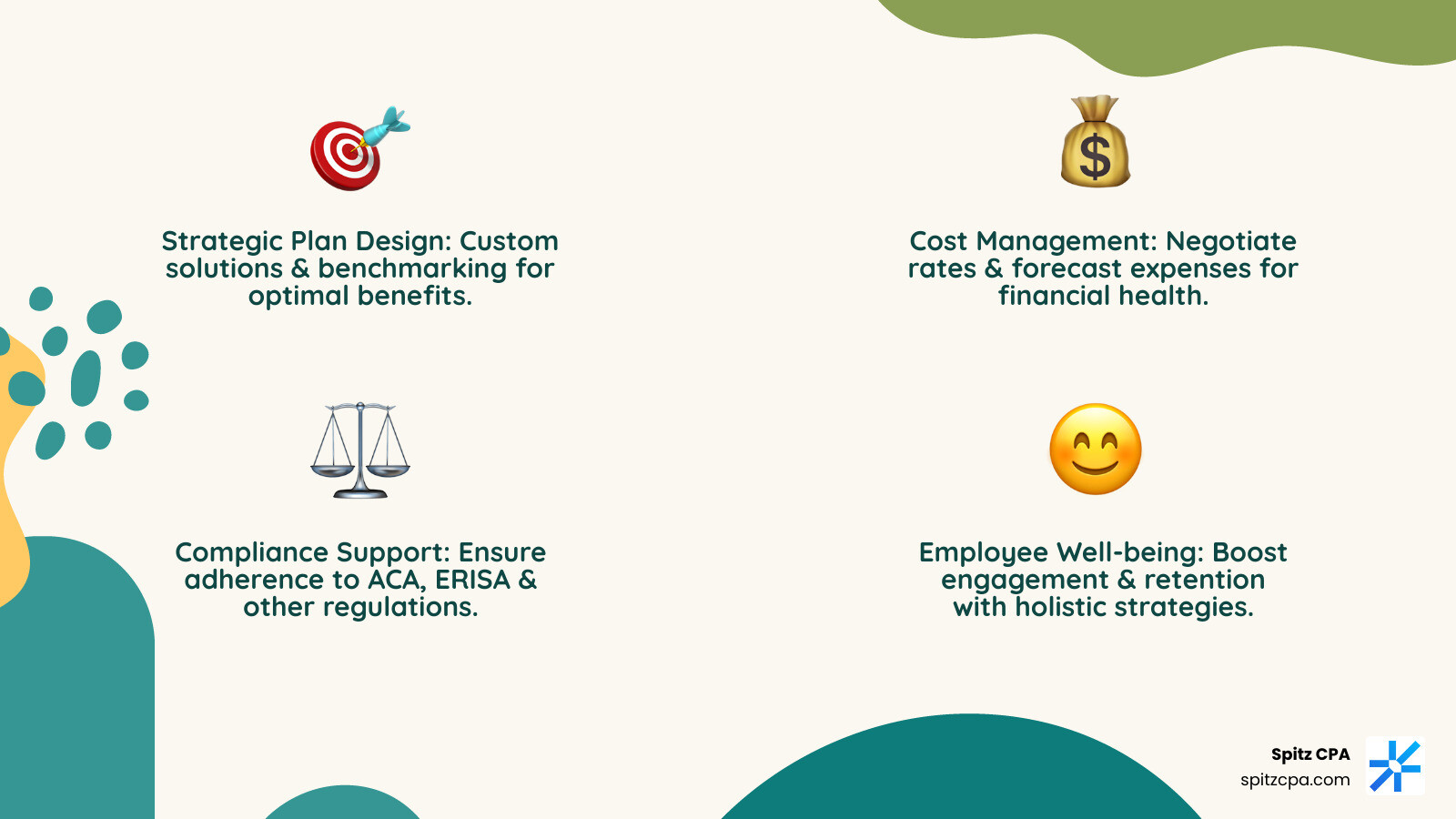
- Strategic Plan Design – Custom benefits aligned with your business goals
- Cost Management – Negotiating better rates and controlling expenses
- Compliance Support – Staying current with regulations like ACA and ERISA
- Analytics & Insights – Data-driven decisions for maximum ROI
- Communication Strategy – Helping employees understand their benefits
Why It Matters: Three out of four employees (76%) won’t take a job without health benefits, and businesses partnering with professional consultants see 7-9% faster growth with 10-14% lower turnover.
As a business owner, your benefits package can make or break your ability to compete for talent. The landscape is complex, with changing regulations, rising costs, and a multi-generational workforce expecting personalized options. Millennials may want flexible work, while Gen X focuses on retirement and Baby Boomers on health coverage.
The good news? You don’t have to steer this maze alone. Smart business owners turn to employee benefits consultants who act as strategic partners, helping design programs that boost employee satisfaction while managing costs effectively.
I’m Michael J. Spitz, and with over 15 years of corporate accounting experience, I’ve seen how strategic employee benefits consulting can transform a company’s financial performance and talent retention. My background in payroll, insurance negotiations, and financial modeling gives me unique insight into how benefits decisions impact your bottom line and long-term growth.
What is Employee Benefits Consulting and Why Is It a Game-Changer?
Think of employee benefits consulting as having a trusted advisor who understands both benefits design and your unique business needs. It’s a strategic partnership that aligns your benefits with your company goals while navigating the complex world of regulations, costs, and employee expectations.
This matters because three out of four plan members (76%) agree that they would not move to a job that did not include a health benefit plan. That statistic is a reality check about how critical benefits are in today’s job market.
Managing benefits has grown exponentially more complex. Between changing regulations, rising healthcare costs, and a multi-generational workforce, many business owners feel overwhelmed. That’s where the expertise of a benefits consultant becomes invaluable.
As Michael J. Spitz, I’ve seen how the right benefits strategy can transform a company’s ability to attract talent and control costs. It’s about turning benefits from a necessary expense into a competitive advantage that drives real business results.
For businesses looking to integrate benefits with broader HR strategies, our Human Capital Management & Payroll Services can provide additional insights into creating comprehensive workforce solutions.
The Core Purpose: Creating a Comprehensive Roadmap
Effective benefits consulting creates a comprehensive roadmap for both immediate decisions and long-term planning. Your benefits strategy must reflect your corporate philosophy. If you value innovation and flexibility, your benefits should mirror that. If you prioritize work-life balance, your package should support those goals.
We focus on boosting employee wellbeing while maintaining financial sustainability. This means designing programs that improve your team’s quality of life without breaking your budget. It’s about finding the sweet spot where generous benefits meet smart financial planning.
Standing out in today’s market requires more than matching what others offer. The best benefits programs make employees feel they can’t imagine working anywhere else. That loyalty and engagement translate directly into better business performance.
The Impact on Talent Attraction and Retention
In today’s knowledge-based economy, your benefits package is often the deciding factor for a top candidate. Managing a multi-generational workforce adds another layer of complexity, as each generation has different priorities:
- Baby Boomers might prioritize comprehensive health coverage and retirement security.
- Gen X employees often focus on family benefits and long-term financial planning.
- Millennials typically value flexibility, mental health support, and student loan assistance.
- Gen Z workers look for benefits that align with their values and support their overall wellness.
A well-designed benefits program can address all these needs, becoming a powerful tool for reducing employee turnover and strengthening your employer brand. Companies that get this right don’t just fill positions—they attract people who become long-term contributors. The ripple effects are significant: lower hiring costs, better team continuity, and higher productivity.

Key Services Offered by Employee Benefits Consultants

When you partner with employee benefits consultants, you gain access to a comprehensive suite of services. Think of us as your benefits quarterback, coordinating all the moving parts so you can focus on your business. The core services revolve around five key areas: plan design, brokerage services, administration support, compliance management, and cost containment.
This approach is effective because we act as an extension of your HR team. Many businesses lack the internal expertise to handle modern benefits, so we bring years of specialized knowledge to help you make smart decisions.
Strategic Plan Design and Brokerage
Creating the right benefits plan requires a solid blueprint. We start by diving deep into your current offerings and understanding your employees. A tech startup with twenty-somethings needs different benefits than a manufacturing company with a multi-generational workforce.
We benchmark your business against industry standards, using data to see how your benefits stack up against competitors. This ensures you’re competitive enough to attract talent without overspending.
After evaluating your current offerings, we design a custom plan. This involves negotiating with multiple insurance carriers to find the best combination of coverage and cost. We aren’t tied to any single provider, so we can shop around and integrate carrier solutions that work together seamlessly.
Our brokerage services leverage long-standing industry relationships, often giving us access to rates and options unavailable to the public. For businesses looking to streamline operations further, our Outsourcing Services can help manage these complex processes.
Cost Management and Compliance
Benefits costs are a major concern. That’s why managing benefits spend is a crucial part of what we do. We don’t just find cheaper options; we find smarter ones.
Long-term cost forecasting is where we add significant value. We analyze industry trends and your employee demographics to help you understand what your benefits might cost in three to five years, allowing you to budget properly and avoid surprises.
Minimizing risk goes hand-in-hand with cost management. We help you understand which plan features provide real value and which are just expensive add-ons. Sometimes a higher deductible can save thousands in premiums, or an investment in wellness programs can lower claims costs.
Compliance is critical. We ensure you meet all regulatory requirements for laws like the ACA and ERISA, avoiding substantial penalties. We handle complex paperwork, including ACA reporting, and ensure your employee communication and claims processes follow federal guidelines. Our expertise in this area extends beyond benefits—check out our Tax Services to see how we help businesses stay compliant across all financial areas.
You don’t have to become an expert in any of this. We handle the technical details so you can focus on running your business.
Current Trends Shaping the Future of Employee Benefits
The world of employee benefits consulting is shifting toward smarter, more personalized approaches. Gone are the days of one-size-fits-all benefits packages that nobody understood or appreciated. This change is driven by technology, data analytics, and a multi-generational workforce that expects more from employers.
Successful companies are embracing data-driven approaches to take the guesswork out of benefits design. Instead of assuming what employees want, we can now track what they actually use. Holistic strategies are also becoming the norm, creating integrated programs that support employees’ complete well-being.
Industry-specific plans are another game-changer. A tech startup’s benefits needs are vastly different from a manufacturing company’s, and modern consulting reflects these realities. This personalized approach ensures your investment in benefits improves employee satisfaction and retention.
The Role of Data, Technology, and AI
Analytics for insights has become essential for benefits programs. We can track everything from which benefits employees use most to how different programs affect productivity and turnover. This isn’t just number-crunching; it’s about making smart, evidence-based decisions.
Tracking effectiveness has never been more important. We monitor absence rates, claims patterns, and engagement levels to see which parts of your benefits package are working. This ongoing analysis means your program improves over time.
AI in administration is streamlining processes that used to consume HR’s time. Instead of manually processing enrollment forms or answering repetitive questions, AI can handle routine tasks, freeing your team for strategy and employee support.
Online enrollment platforms have made benefits selection as easy as online shopping. Employees can compare options, see real-time costs, and make informed decisions. Perhaps most importantly, personalized employee communication allows us to reach employees in their preferred format, whether it’s a detailed PDF, a quick video, or a simple text summary.

The Most Sought-After Employee Benefits
After years of working with businesses, I’ve seen patterns in what employees value most. While every workforce is unique, these five benefits appear on virtually every “must-have” list:
Comprehensive Health Insurance (Medical, Dental, Vision) – This is the foundation. Employees need to know they’re covered for everything from routine check-ups to emergencies.
Flexible Paid Time Off (PTO) – Old “use it or lose it” policies are dying out. Employees want the freedom to recharge when they need it.
Retirement & Financial Wellbeing Plans (401(k), RRSP) – With pensions disappearing, employees look for employers who will help them build financial security. Matching contributions are now an expectation.
Mental Health and Wellness Programs – The stigma around mental health support has faded. Proactive wellness programs that address both physical and mental health are becoming standard.
Flexible Work Arrangements – Remote work, flexible schedules, and hybrid models have moved from pandemic necessities to permanent expectations.
Modern benefits consulting helps you design programs that hit these key areas while staying within your budget and reflecting your company culture.
A Holistic Approach: Improving Well-being and Employee Experience
Think of employee benefits consulting as building a foundation for your company’s future. When you invest in your workforce’s health and welfare, you’re making a smart competitive move. It’s about creating an environment where employees feel supported, valued, and excited to contribute.
A truly holistic approach weaves together health, wellness, and financial planning into a seamless experience. Instead of offering disconnected perks, you’re building an ecosystem that addresses the real needs of your multi-generational workforce, from Gen Z’s desire for mental health resources to a Gen X team member’s focus on retirement planning.
When employees feel this comprehensive support, their engagement and loyalty deepen. This isn’t just theory—it’s a proven business strategy. Happier employees provide better customer service, stay longer, and attract other talented people to your organization, building your reputation as an employer of choice.
For a deeper dive into your company’s overall health and how benefits fit into your broader financial strategy, consider our Business Financial Health Check.
Partnering with a PEO for HR and Benefits
Managing HR and employee benefits can be overwhelming, especially for small to medium-sized businesses. This is where partnering with a Professional Employer Organization (PEO) becomes a game-changer.
A PEO acts as your co-employer, handling administrative tasks like payroll, benefits, and compliance while you maintain control over daily operations. Think of it as having a dedicated HR department without the overhead.
The primary advantage is access to large-group benefits. PEOs pool employees from many companies, giving your small team the same purchasing power and access to quality health insurance and retirement plans as a Fortune 500 company.
PEOs also handle payroll processing, tax filings, workers’ compensation, and regulatory compliance—freeing you to focus on growing your business. The numbers tell an impressive story: SMBs that partner with a PEO grow 7-9% faster, experience 10-14% lower employee turnover, and are 50% less likely to go out of business. These statistics represent real businesses that found stability and growth through strategic partnerships.
If you’re considering this path, we can help you assess your needs and find the right PEO fit for your company’s culture and goals.
How to Choose the Right Employee Benefits Consultant
Choosing the right employee benefits consultant is about finding a strategic partner who understands your business vision, not just someone to handle paperwork. The right consultant becomes an extension of your business, helping you attract talent, control costs, and stay compliant.
When evaluating consultants, focus on key areas: industry expertise, client retention rates, technology offerings, personalized service, cost-effectiveness, and legal compliance knowledge.
Evaluating a Consultant’s Expertise and Approach
Before signing, dig into how a consultant works. Do they start with comprehensive benchmarking to see how your benefits stack up? Or do they jump straight to a sales pitch?
Market access is crucial. A consultant with access to dozens of insurance carriers can find better deals than one limited to a few. Ask if they handle work in-house, as this often means better accountability. Don’t be shy about requesting case studies or references from businesses similar to yours.
Look for consultants who can explain complex insurance jargon in plain English. If they can’t make it simple for you, it will be confusing for your employees.
Aligning on Goals and Communication
The best consulting relationships start with clear expectations. First, define what success looks like for your business. Are you trying to reduce costs, improve employee satisfaction, attract new talent, or ensure compliance?
Once you know your goals, ensure your consultant understands them. They should ask thoughtful questions about your company culture, employee demographics, and long-term plans. A good consultant doesn’t just sell a benefits package—they help you build a strategic tool for growth.
Communication style also matters. Decide whether you want detailed monthly reports or a more hands-off approach. The right consultant should feel like a trusted advisor who proactively brings you new ideas and market insights. This relationship will likely last for years, so choose someone you enjoy working with.
Frequently Asked Questions about Employee Benefits Consulting
I get asked these questions all the time by business owners trying to figure out if employee benefits consulting is right for them. Here are straight answers to the most common concerns.
What is employee benefits consulting?
Employee benefits consulting means partnering with experts to design, manage, and optimize your company’s benefits package. They act as strategic guides, aligning benefits with your business goals, whether you want to attract top talent, retain your team, or control spending. The process involves evaluating your current offerings, negotiating with providers for better deals, and recommending improvements that fit your unique situation. They handle the complexity so you can focus on your business.
What are the top 3 most sought-after employee benefits?
Three benefits consistently rise to the top of every employee’s wish list:
Comprehensive health insurance is number one. This includes medical, dental, and vision coverage. Many candidates won’t consider a job without it.
Generous paid time off comes in a close second. In today’s always-on world, PTO for vacation, sick leave, and personal time is a lifeline for maintaining work-life balance.
Robust retirement savings plans round out the top three. This means 401(k)s or RRSPs, especially with employer matching contributions. It shows employees you’re invested in their long-term financial future.
How do consultants help businesses manage costs?
Smart consultants use several proven strategies to get you more for your money without cutting valuable benefits. Plan design analysis is the starting point, ensuring you’re not overpaying for coverage you don’t need. For example, a high-deductible health plan paired with a Health Savings Account can significantly reduce premiums.
The real value comes from carrier negotiations. Consultants leverage their market knowledge and relationships to secure better rates than you could on your own. Benchmarking compares your costs against similar businesses, so you know if you’re on track. Finally, wellness programs are a smart investment; healthier employees file fewer claims, which lowers costs over time.
Conclusion
Strategic employee benefits consulting has become a business necessity. In today’s talent-driven economy, your benefits package is a powerful tool for attracting great people, keeping them happy, and building a thriving company culture.
Partnering with the right benefits consultant gives you a strategic ally who transforms complex insurance jargon and regulatory headaches into clear, actionable plans. Instead of wrestling with compliance or decoding carrier proposals, you get expert guidance that turns benefits management into a competitive advantage.
The numbers don’t lie. Businesses that take a strategic approach to benefits see 7-9% faster growth and 10-14% lower turnover. This is the direct result of investing thoughtfully in your workforce.
At Spitz CPA, Michael J. Spitz and our team understand that every dollar you spend on benefits should work harder for your business. Our approach goes beyond just finding cheaper insurance rates. We focus on providing the financial clarity you need to make smart decisions that fuel long-term strategic growth.
Your employees are your greatest asset. When you provide benefits that show you value their contribution, you create a positive cycle of productivity and loyalty.
Ready to turn your benefits program into a strategic advantage? We’re here to help you steer every step of the process.
Take control of your HR and benefits strategy with expert payroll guidance


