


Your Business’s Financial Roadmap: An Example of Cash Flow Projection for 12 Months
Understanding your money flow is critical for any business. This guide provides an example of cash flow projection for 12 months to help you see exactly where your cash goes and where it comes from.
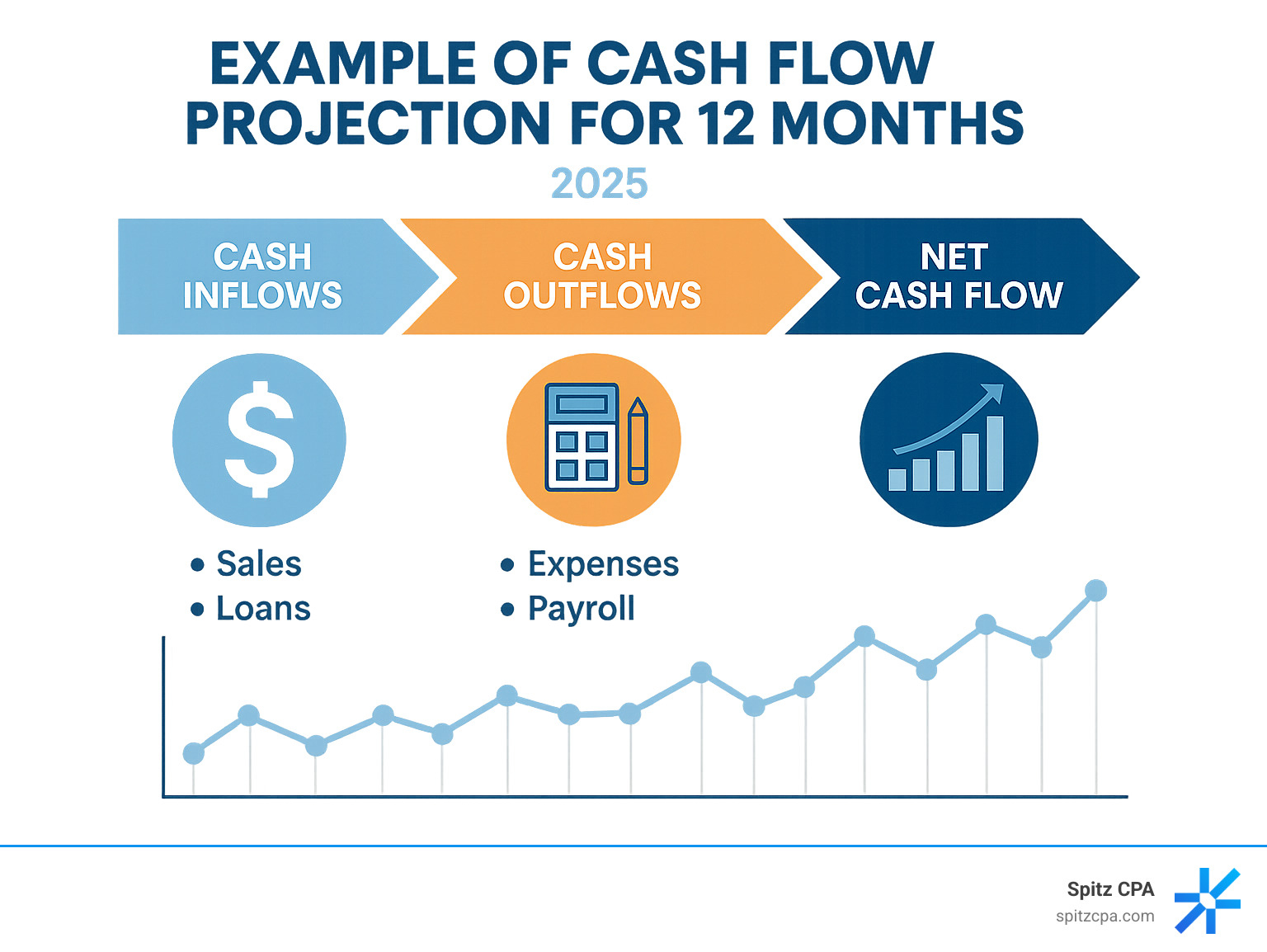
A 12-month cash flow projection tracks your business’s money in and out over a year. It includes:
- Opening Cash Balance: Your starting cash each month.
- Cash Inflows: Sales revenue, loan proceeds, and other income.
- Cash Outflows: Costs of goods sold (COGS), operating expenses (rent, marketing), payroll, taxes, loan payments, and capital expenditures.
- Net Cash Flow: Total Inflows minus Total Outflows.
- Closing Cash Balance: Opening Balance plus Net Cash Flow, which becomes the next month’s opening balance.
Cash flow is the lifeblood of your business. A staggering 30% of business failures stem from running out of money. A strong cash flow projection acts as a financial roadmap, helping you see upcoming cash shortages or surpluses so you can plan ahead.
I’m Michael J. Spitz. With over 15 years in corporate accounting and financial modeling, I’ve helped countless businesses optimize their money flow. My expertise includes creating detailed financial plans, like this example of cash flow projection for 12 months, to guide strategic decisions. Let’s explore how you can build this powerful tool.
What is a 12-Month Cash Flow Projection and Why is it Crucial?
Think of a 12-month cash flow projection as a financial planning tool that estimates money flowing into and out of your business over the next year. Unlike a profit and loss statement, this projection focuses on actual cash—the money you use to keep your doors open.
This projection is crucial for liquidity management, ensuring you have enough cash when bills are due. A solid projection helps you avoid becoming one of the 30% of businesses that fail from running out of money. It also empowers smart strategic decisions, showing you if and when you can afford to hire new staff, buy equipment, or expand.
For securing loans or attracting investors, a well-prepared example of cash flow projection for 12 months is essential. It demonstrates you understand your business and have a plan. For new entrepreneurs, our guide on Small Business Accounting 101 covers how projections fit with other core financial statements.
The Difference: Projection vs. Forecast vs. Statement
These terms are often confused, but they have distinct meanings:
- A Cash Flow Statement looks backward. It’s a historical record of how cash moved during a past period.
- A Cash Flow Forecast is short-term and tactical, covering the next few weeks or months using real-time data for day-to-day management.
- A Cash Flow Projection is a long-term strategic tool, looking 12 months or more ahead based on historical data and assumptions to guide major planning and budgeting.
Simply put: statements show what happened, forecasts predict what will happen soon, and projections envision what could happen long-term.
Key Benefits of a 12-Month Outlook
A full-year view of your cash flow transforms how you run your business:
- Annual Planning: Align your financial resources with your business goals.
- Seasonality: Spot sales patterns early, so you can save during good months to cover lean periods.
- Capital Needs: Plan for major investments like equipment purchases without straining cash flow.
- Investor Confidence: Presenting a detailed projection makes you a more attractive prospect for loans or investment.
As each month passes, you can add a new month to the end, creating a rolling forecast that keeps your projections fresh. This long-term view is essential, especially for new businesses. Organizations like SCORE recognize this and provide a helpful resource for new businesses from SCORE to help you start.
An Example of Cash Flow Projection for 12 Months: A Step-by-Step Guide
Now, let’s dive into creating an example of cash flow projection for 12 months. It might seem complex, but it’s a manageable and insightful process.
At its core, a projection tracks five key items monthly: your opening balance (starting cash), cash inflows (money in), and cash outflows (money out). The difference is your net cash flow. Add that to your opening balance to get your closing balance, which becomes the next month’s starting point.
To get started, Download your free cash flow forecast template [Excel] and follow along.
Step 1: Forecast Your Cash Inflows
Cash inflows are all the money flowing into your business. It’s crucial to be realistic here to avoid problems later.
- Sales Revenue: This is your main income source. Base your estimates on historical data, market trends, and competitor analysis. Don’t just guess; make educated estimates based on expected sales volume and pricing.
- Accounts Receivable (AR): If customers pay later, project when the cash will actually arrive, not just when the sale is made. A sale in January with “net 30” terms means cash arrives in February.
- Other Income: Include Loan Proceeds if you’re taking out a loan, cash from Asset Sales (like old equipment), interest earned, tax refunds, or owner investments.
Remember to account for seasonality. If you sell seasonal products, your projection must reflect these predictable sales fluctuations.
Step 2: Estimate Your Cash Outflows
Now for the money going out. Underestimating expenses is as risky as overestimating income.
- Cost of Goods Sold (COGS): These are direct costs of your product or service, like raw materials or direct labor.
- Operating Expenses: These are the regular costs of running the business. Some are fixed (rent, insurance, software subscriptions), while others are variable (utilities, marketing, travel).
- Payroll: This includes salaries, wages, payroll taxes, and employee benefits. It’s often a major outflow, so accuracy is key. We offer Expert help with Payroll to make it much simpler for our clients.
- Taxes: Plan for estimated income taxes, sales taxes, and other fees, which can be large, infrequent expenses.
- Loan Payments: Include both principal and interest.
- Capital Expenditures (CapEx): These are large, one-time purchases like new equipment or renovations. Plan for them well in advance.
- Owner’s Draw: If you pay yourself from the business, include this as a regular outflow.
Use past bills and statements to estimate recurring expenses and get quotes for new costs.
Step 3: Putting It All Together to Create an example of cash flow projection for 12 months
This is where we combine your forecasts to see the complete picture. Here’s the monthly calculation:
- Opening Cash Balance: Your starting cash. For months after the first, it’s the prior month’s closing balance.
- Total Cash Inflows: Sum of all cash expected in.
- Total Cash Outflows: Sum of all cash expected out.
- Net Cash Flow: Total Inflows – Total Outflows.
- Closing Cash Balance: Opening Balance + Net Cash Flow.
Let’s look at a simplified 3-month example for “Spitz Solutions”:
| Month | Opening Balance | Cash Inflows | Cash Outflows | Net Cash Flow | Closing Balance |
|---|---|---|---|---|---|
| January | $10,000 | $8,000 | $5,000 | $3,000 | $13,000 |
| February | $13,000 | $7,500 | $6,000 | $1,500 | $14,500 |
| March | $14,500 | $9,000 | $10,000 | -$1,000 | $13,500 |
| … (continues for 12 months) |
In this example, Spitz Solutions starts January with $10,000, has a positive net cash flow of $3,000, and ends with $13,000. This becomes February’s opening balance. In March, a larger outflow results in a negative net cash flow, reducing the closing balance. This is the kind of early warning a projection provides.
By extending this for 12 months, you get a clear picture of your cash position all year, allowing you to plan for both surpluses and shortfalls.
Avoiding Common Pitfalls for an Accurate Projection
Creating an example of cash flow projection for 12 months is an art and a science. It’s easy to fall into common traps that undermine its accuracy. Let’s steer clear of them.

- Unrealistic Assumptions: Overly optimistic sales forecasts or underestimated expenses are the biggest culprits. Ground your projection in realism.
- Overestimating Collections: Failing to account for customer payment terms (accounts receivable) can lead to cash shortfalls.
- Underestimating Expenses: Don’t forget infrequent but significant costs like annual software renewals, insurance, or quarterly taxes.
- Ignoring Seasonality: Many businesses have cyclical patterns. Your projection must reflect these seasonal dips and spikes.
- Inaccurate Payment Timing: Project cash movement based on when money actually enters or leaves your account, not on invoice dates.
Best Practices for High-Accuracy Forecasting
To ensure your example of cash flow projection for 12 months is a reliable roadmap, follow these best practices:
- Use Historical Data: Your past performance is the best guide for future forecasts.
- Scenario Planning: Create best-case, worst-case, and moderate scenarios to prepare for different outcomes.
- Implement Rolling Forecasts: Continuously update your projection. As one month passes, add a new one to the end to keep it relevant.
- Regular Reviews: Compare your actuals against projections monthly. Analyze variances to refine your assumptions over time.
- Contingency Planning: Build in a buffer, like an emergency fund or line of credit, to prepare for unexpected events.
Our Professional Bookkeeping services ensure your financial data is clean and accurate, providing a solid foundation for reliable projections.
How to build a reliable example of cash flow projection for 12 months
Building a reliable projection involves leveraging the right data and tools:
- Comprehensive Data Sources: Gather information from all relevant sources: accounting systems, bank statements, payroll records, and CRM tools.
- Accounting Software Integration: Use tools like Xero to streamline data extraction and reduce manual errors.
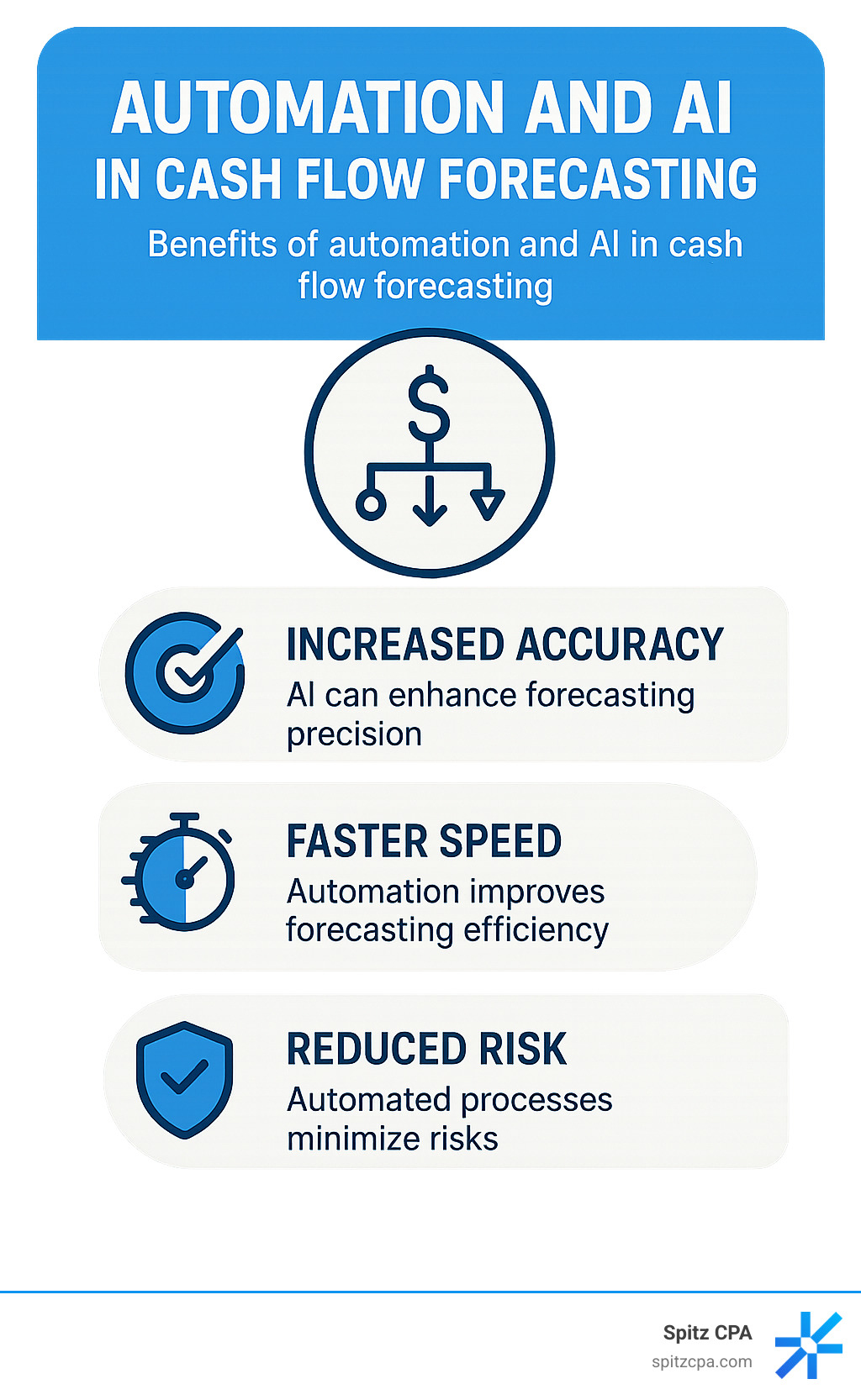
- The Power of Automation: Automation can make projections 40% faster and mitigate risks by ensuring data consistency and real-time integration.
- The Rise of AI in Forecasting: AI can offer up to 95% accuracy for cash flow insights by analyzing vast amounts of data and identifying complex patterns. This technology delivers real-time data to fuel smarter forecasts and faster decisions, which is critical since 70% of CFOs say poor cash forecasting limits strategic agility.
Embracing these technologies can transform your cash flow projection from a tedious task into a dynamic, insightful tool.
Frequently Asked Questions about 12-Month Cash Flow Projections
Here are answers to the most common questions business owners have about financial planning.
What’s the difference between a cash flow projection and a cash flow statement?
This is a key distinction. A cash flow statement is a historical report showing what actually happened with your cash in a past period (like last month or last quarter). A cash flow projection, like the example of cash flow projection for 12 months in this guide, is a forward-looking estimate of what you expect to happen with your cash. In short: statements look to the past, while projections plan for the future.
How often should I update my cash flow forecast?
Your projection isn’t a “set it and forget it” document. I recommend a monthly review at minimum. Compare your actual results to your projections and update the forecast for the remaining months. This creates a “rolling forecast” that keeps your 12-month view current. You should also update your projection immediately following any significant business event, such as landing a large contract, losing a major client, or planning a major purchase.
What should I do if my projection shows a negative cash flow?
Don’t panic. A projected negative cash flow is an early warning, which is precisely why you create the projection. First, understand the cause. Is it a temporary dip from a large one-time expense, or a recurring issue?
- For temporary shortfalls: Try to accelerate income by offering early payment discounts or following up on overdue invoices. You can also try to delay non-critical payments.
- For persistent challenges: Look at reducing non-essential expenses or negotiating better terms with suppliers.
- Consider financing: A business line of credit can bridge temporary gaps. Your detailed projection will be a valuable tool when speaking with lenders.
The key is to act on the information your projection provides, giving you time to make thoughtful decisions instead of desperate ones. At Spitz CPA, we help business owners steer these challenges and find opportunities for improvement.
Conclusion: Turn Your Projection into a Powerful Business Tool
In business, cash is king. Managing your cash flow isn’t just about survival; it’s about open uping your business’s potential for growth. Creating an example of cash flow projection for 12 months is more than a financial exercise—it’s a strategic imperative.
A 12-month projection is your financial roadmap, helping you anticipate needs, identify trends, and make informed decisions. It allows you to be proactive, addressing potential shortfalls before they become crises and capitalizing on surpluses for strategic investments.
At Spitz CPA, we believe every business deserves financial clarity. We offer comprehensive accounting, tax, and financial advisory services to help you understand and dramatically improve your cash flow. Our personalized guidance helps businesses in Gilbert AZ, Arizona, and beyond achieve significant growth.
Don’t let cash flow be a source of uncertainty. Take control of your finances and pave the way for sustainable success.

Ready to transform your financial future? Take control of your finances with our expert Financial Services.


