


Why HR for Small Businesses is More Than Just Paperwork
HR for small businesses is often dismissed as mere paperwork, but its impact is profound. With 88% of small-business employees having worked without an HR department—and half citing a harmful workplace as a result—it’s clear that people management directly affects your bottom line, risk, and growth.
What small business HR actually covers:
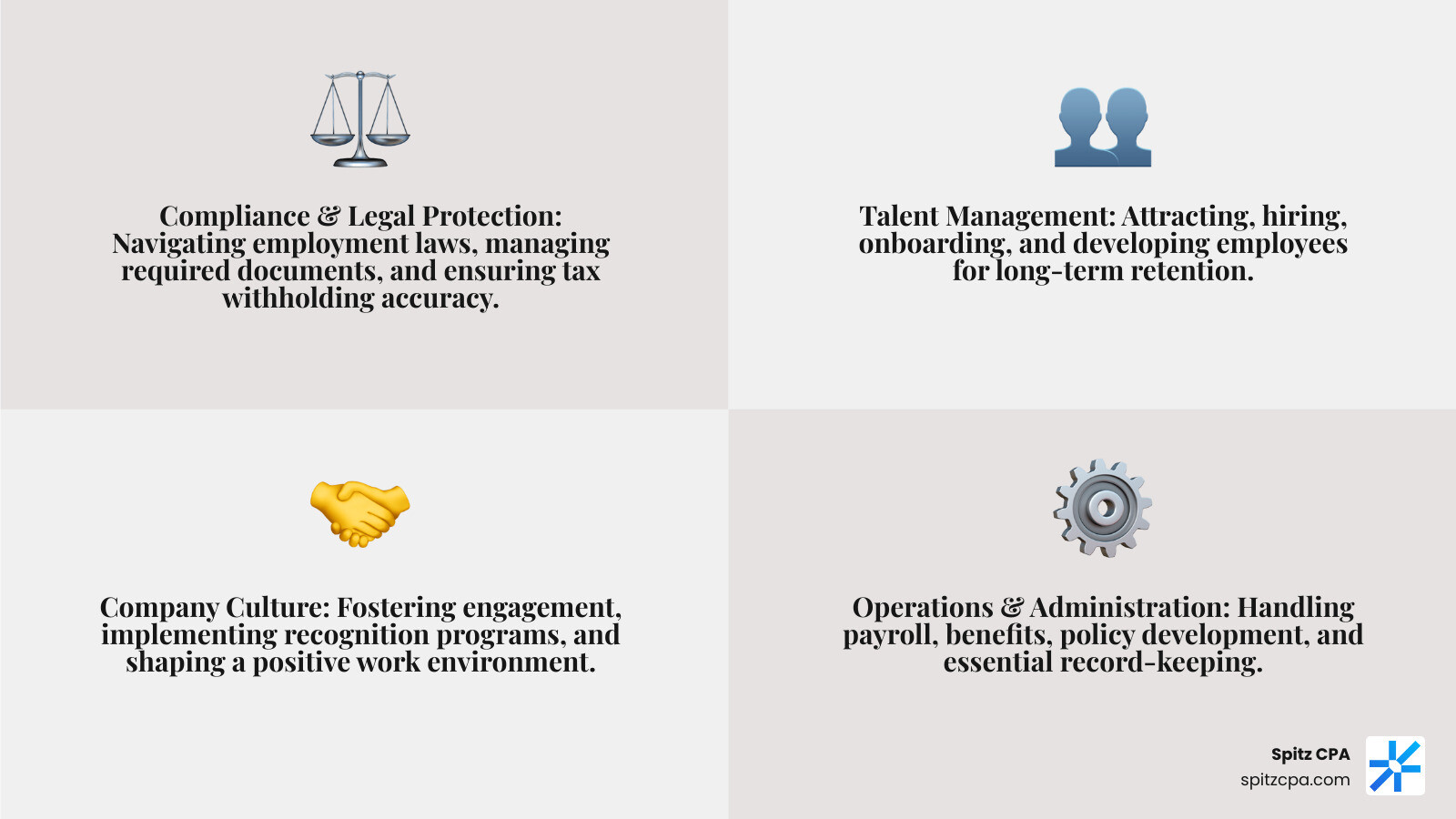
- Compliance & Legal Protection – Employment laws, required posters, employee files, tax withholding.
- Talent Management – Recruiting, hiring, onboarding, performance reviews, and retention.
- Company Culture – Employee engagement, recognition programs, and workplace environment.
- Operations & Administration – Payroll processing, benefits administration, policy development, and record-keeping.
A solid HR foundation protects you from fines, helps you retain top talent, and lets you focus on running your business.
I’m Michael J. Spitz, and with over 15 years in corporate accounting and business operations, I’ve seen how HR directly supports financial health. At Spitz CPA, I help business owners streamline the entire employee lifecycle, ensuring compliance and confidence.
Simple guide to small business HR terms:
Why HR is a Strategic Partner for Growth
The moment you hire your first employee, you’re in the HR business. The good news is that HR for small businesses isn’t just about avoiding problems; it’s a powerful tool for growth.

Mitigating risk and avoiding costly fines is the most immediate benefit. Employment law is complex, and one mistake in classification, posters, or termination can lead to serious penalties. Smart HR practices protect your business from legal and financial setbacks.
Beyond risk, HR builds value. Building a positive company culture improves employee engagement, and the numbers prove it. Companies with highly engaged employees see 81% less absenteeism and 23% higher profitability. Engaged employees are more connected, less likely to burn out, and more likely to recommend your workplace. This culture is built through intentional HR practices like clear communication and fair policies.
Increasing retention and driving profitability also go hand in hand. High turnover drains resources through recruiting costs, training time, and lost productivity. Investing in keeping your best people builds a stable, experienced team that drives real results.
As SHRM states, “Implementing proven human resources practices is critical to small business growth…” Treating HR as a strategic partner is a direct investment in your company’s success and one of the most effective ways to improve business profitability.
Core HR Functions Every Small Business Needs
Even with a small team, managing people requires covering several core functions. The key is to understand what matters most and build from there. Here are the seven interconnected pillars of small business HR:
- Recruitment and Hiring: Attracting, screening, and hiring the right people who align with your values.
- Onboarding and Training: Integrating new hires into your culture and providing opportunities for growth.
- Compensation and Benefits: Offering fair pay and benefits that show appreciation and attract talent.
- Performance Management: Setting clear expectations and providing regular feedback to help employees flourish.
- Employee Relations: Fostering a positive workplace by resolving conflicts and encouraging open communication.
- Legal Compliance: Adhering to all employment laws to protect your business from costly risks.
- Policy Development: Creating clear guidelines, like an employee handbook, to set expectations.
Managing these functions is easier when other areas, like Small Business Accounting, are in order, freeing up mental energy for these critical people matters.
Prioritizing Your HR Efforts
You don’t have to tackle all seven functions at once. Start with the essentials and scale as you grow. For businesses with fewer than 50 employees, three elements are non-negotiable:
- Proper Employee Files: Maintain accurate, confidential records, including separate files for I-9 forms, general employment documents, and private medical information. This is often a legal requirement.
- An Employee Handbook: This document sets expectations, outlines policies, and protects your business. It’s a reference guide that prevents misunderstandings and demonstrates professionalism.
- Required Workplace Posters: Federal and state laws mandate that specific labor law notices be visible to all employees. Failing to post them can result in fines.
Focus on compliance first to protect your business from immediate risks. Then, scale other functions as your business grows, gradually adding more sophisticated systems for performance, training, and benefits. The key is to be proactive.
A Practical Guide to HR for Small Businesses
Knowing HR matters is one thing; implementing it is another. This section provides actionable steps for managing the core areas that keep you compliant and competitive.

Mastering Compliance with Employment Laws
Compliance is essential. Investing time here prevents costly fines and lawsuits.
- Employee Files: Maintain three separate, secure files for each employee: one for I-9 forms (eligibility to work), one for general files (applications, reviews), and one for highly confidential medical files (doctor’s notes, health info).
- Employee Handbook: This rulebook protects you and your employees. Following employee handbook guidance from the SBA, include anti-discrimination policies, safety and security policies (including OSHA compliance), and details on compensation and benefits. Make it easy to read and require a signed acknowledgment.
- Required Workplace Posters: Display legally mandated federal and state labor law posters in a visible area to avoid fines.
Best Practices for Recruiting and Hiring Top Talent
A strong team starts with a great hiring process.
- Write clear job descriptions specifying responsibilities and required skills.
- Use effective interviewing techniques, like behavioral questions, to assess fit.
- Conduct background checks to verify qualifications and protect your business.
- Screen social media carefully. About 53% of employers do, but be aware of state laws and never ask for passwords.
- Make a competitive offer that includes salary, benefits, and growth opportunities.
- Structure a smooth onboarding process to integrate new hires and reduce early turnover.
Managing Payroll and Employee Benefits
Getting payroll and benefits right is mission-critical, as it’s often your largest expense.
- Compensation Strategy: Implement intentional and fair pay practices to comply with wage and hour laws.
- Tax Withholding: Accurately withhold and remit federal, state, and local taxes to avoid penalties.
- Payroll Processing: Ensure employees are paid accurately and on time, whether you do it manually, use Payroll Processing Software and Support, or partner with a professional. Spitz CPA offers comprehensive Payroll Services and Support to handle this for you.
- Benefits: Provide legally required benefits (Social Security, Medicare, etc.). Consider offering competitive health insurance and retirement plans to attract and retain top talent, as 40% of employees would leave for better benefits.
Managing these details is complex. As Michael J. Spitz notes, financial clarity on people costs helps you make smarter decisions across your business, including those related to human resources.
Nurturing Your Team from Onboarding to Offboarding
Managing the employee lifecycle—from their first day to their last—is where HR for small businesses transforms from paperwork into relationship-building. It’s about supporting the people who invest their talent in your vision.
Fostering a Positive Culture and Improving Engagement

Company culture is the personality of your business. You can build it by:
- Defining company values to guide decision-making.
- Encouraging open communication to build trust.
- Implementing employee recognition programs to show appreciation.
- Organizing team-building activities to strengthen bonds.
The results are tangible: companies with high engagement see 81% less absenteeism and up to 43% less turnover. Engaged employees are more likely to stay, recommend your workplace, and avoid burnout.
Employee Development and Performance Management
Investing in your team’s growth is an investment in your company’s future.
- Offer training and skill-building opportunities. With 87% of Gen Z graduates valuing skill-building, this is key for attracting talent.
- Provide regular, constructive feedback to help people improve.
- Conduct regular performance reviews to discuss goals and progress collaboratively.
- Set clear expectations and goals to eliminate confusion and focus energy.
Preparing for and Managing Employee Departures
Handling departures professionally and with dignity is crucial.
- Manage voluntary and involuntary departures with care, ensuring smooth handovers and adhering to legal requirements.
- Conduct exit interviews to gather honest feedback and identify areas for improvement.
- Follow final paycheck regulations for your state to avoid penalties.
- Handle COBRA administration if applicable, offering continued health coverage.
- Document the entire process to protect everyone. The CFIB offers guidance on end of employment discussions.
How you handle departures reflects on your business and maintains important relationships.
Leveraging Technology and External Support
As a small business owner, you can’t do it all. Technology and external support are lifesavers that free you to focus on growth instead of getting bogged down in HR paperwork.
How HR Software and Professional Support Can Streamline Your Processes
The right tools can transform HR for small businesses from a burden into a smooth process.
- Cloud-based HR apps provide a central hub for time tracking, scheduling, and benefits administration, accessible from anywhere.
- Modern payroll software automates tax calculations, direct deposits, and compliance reporting, dramatically reducing common and costly errors.
- Human Capital Management Payroll systems integrate HR, payroll, and talent management for a complete view of your workforce.
When software isn’t enough, expert payroll and HR support from trusted professionals is invaluable. Partnering with a firm like Spitz CPA fills knowledge gaps and provides peace of mind. With only 27% of companies using small business HR software, adopting these tools gives you a competitive edge.
Key Resources and Support for Small Business HR
You’re not alone. A whole ecosystem of resources exists to help you succeed.
- Society for Human Resource Management (SHRM): An encyclopedia of practical articles on compliance and talent management.
- U.S. Department of Labor (DOL): The authoritative source for federal labor law compliance.
- Local Small Business Development Centers: Offer free or low-cost counseling and training custom to small businesses.
- Industry-Specific Associations: Provide HR guidance customized to your field.
For comprehensive help, professional HR and Payroll Support Services can manage the entire process, ensuring accuracy and compliance while you focus on strategy. Leveraging these resources turns HR into a competitive advantage.
Frequently Asked Questions about Small Business HR
Here are answers to common questions about managing your team.
What are the most common HR mistakes small businesses should avoid?
Avoiding these common HR mistakes can save you significant time and money:
- Improper Employee Classification: Misclassifying an employee as an independent contractor can lead to severe back taxes and penalties. Follow strict IRS and Department of Labor guidelines.
- No Performance Documentation: Without a paper trail, it’s difficult to address performance issues or defend a termination. Remember: “If it’s not documented, it didn’t happen.”
- Ignoring Employment Laws: Ignorance of complex laws regarding minimum wage, overtime, or discrimination is not a defense in court. Staying informed is essential.
- Rushing the Hiring Process: A bad hire costs more than an open position. Take the time to find the right person for your team.
- No Clear Job Definitions: Employees perform better when they know what’s expected. Clear definitions prevent confusion and guide performance.
When should a small business hire an HR person?
There’s no magic number, but consider hiring help when:
- Time Commitment: You spend over 10-15 hours a week on HR tasks instead of core business operations.
- Complexity of Issues: You face thorny employee relations, frequent legal questions, or overwhelming benefits administration.
- Approaching 50 Employees: This is a common benchmark where many federal and state employment laws kick in, making compliance more complex. A part-time consultant might be a good start, moving to a full-time generalist as you grow.
Can I handle HR myself or should I seek professional support?
The right approach depends on your team’s size, your expertise, and your risk tolerance.
- DIY: Feasible for very small teams (1-5 employees) but requires significant time and carries risk.
- Software Solutions: HR apps can automate routine tasks and offer a great middle ground.
- HR Consultants: Provide expert guidance on an as-needed basis for specific projects or issues.
- Payroll and Accounting Professionals: Firms like Spitz CPA offer integrated services that handle financial and human capital management, ensuring compliance and freeing you to focus on your business.
As Michael J. Spitz advises, understanding your numbers helps you decide where to invest resources, including in your human resources functions.
Conclusion: Making HR Your Competitive Advantage
HR for small businesses is not a cost center; it’s a strategic investment in your company’s foundation. By prioritizing HR, you avoid costly legal mistakes, attract top talent, and build a culture where employees feel valued. This leads directly to lower turnover and higher productivity—companies with engaged employees see 23% higher profitability.
However, effective human resources management requires financial clarity. Understanding your numbers is essential for making smart decisions about compensation, benefits, and hiring. As Michael J. Spitz often says, financial clarity allows you to build a stronger foundation for every part of your business, including how you manage your team.
At Spitz CPA, we provide the accounting services that empower you to grow confidently. We connect the dots between financial performance and people management, because managing your greatest asset—your people—requires both heart and smart financial planning.
Ready to transform your HR from a challenge into a competitive advantage? Take control of your payroll and HR with our expert services and find how integrated support can free you to focus on growing your business.


