


Why Understanding HR Payroll Benefits is Critical for Business Success
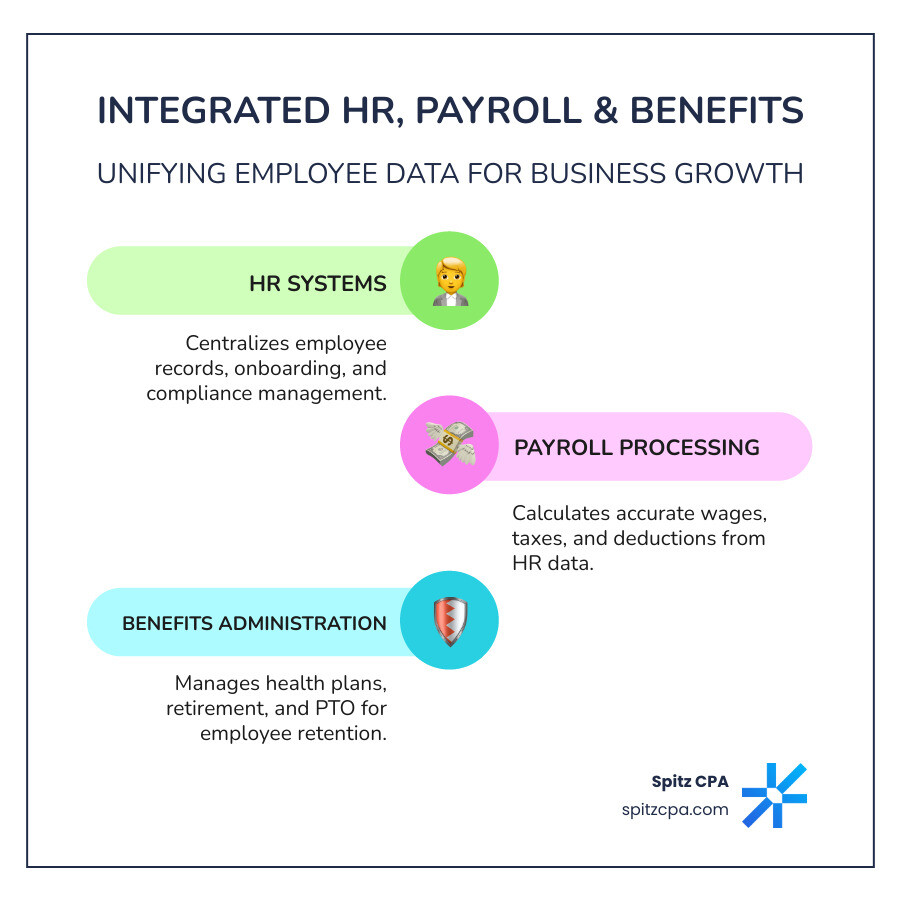
HR payroll benefits refer to the integrated management of human resources, payroll, and employee benefits. When these functions work together, they drive organizational success. This involves HR functions like recruitment and compliance, payroll processing like wage calculation and tax withholding, and benefits administration for health insurance and retirement plans.
Why does this integration matter? Poor integration costs 57% of companies up to $500,000 annually, and traditional payroll systems have error rates of 1-8%. With nearly 40% of small businesses facing IRS penalties for payroll mistakes, and just two errors prompting employees to seek new jobs, the stakes are high.
Companies that treat HR, payroll, and benefits as interconnected systems gain a significant competitive advantage. Businesses with highly engaged employees have almost three times more revenue, and a happy workforce can increase productivity by 31%. Effective management of HR, payroll, and benefits is a strategic business driver.
I’m Michael J. Spitz, and with over 15 years of corporate accounting experience, I’ve helped businesses transform these functions from operational burdens into strategic advantages.
Related definitions:
The Core Components: HR, Payroll, and Benefits Explained

Human Resources, Payroll, and Benefits are three foundational business functions that support your entire organization. While many owners treat them as separate departments, their true power is open uped when they work together seamlessly, becoming a strategic asset that drives both employee satisfaction and operational efficiency.
What is Human Resources (HR)?
Human Resources orchestrates the entire employee experience. This includes attracting and onboarding new talent, managing employee relations to foster a positive culture, and overseeing performance management to align individual goals with company objectives. HR also ensures legal compliance with labor laws and provides training and development opportunities, which are crucial for employee retention.
The Essentials of Payroll Processing
Payroll is the metronome of your business, ensuring employees are paid accurately and on time. This involves calculating wages (including hours, overtime, and bonuses), withholding federal, state, and local taxes, and deducting for benefits like health insurance and retirement contributions. Payroll is also responsible for issuing payments via direct deposit or other methods and handling all necessary tax reporting to government agencies. As Michael J. Spitz, I’ve seen how proper reporting prevents costly penalties. For more on this, see our payroll best practices guide.
Understanding Employee Benefits
Employee benefits are the non-wage compensation that helps you attract and retain top talent. These include mandatory benefits required by law—such as Social Security, Medicare, unemployment insurance, and workers’ compensation—and voluntary benefits that make your company stand out. Voluntary offerings like health insurance, retirement plans, paid time off, and wellness programs are powerful tools for boosting morale and productivity. Research shows 63% of job seekers evaluate benefits before accepting an offer, making a strong package a critical investment in your workforce.
The Power of Integration: Unifying HR, Payroll, and Benefits
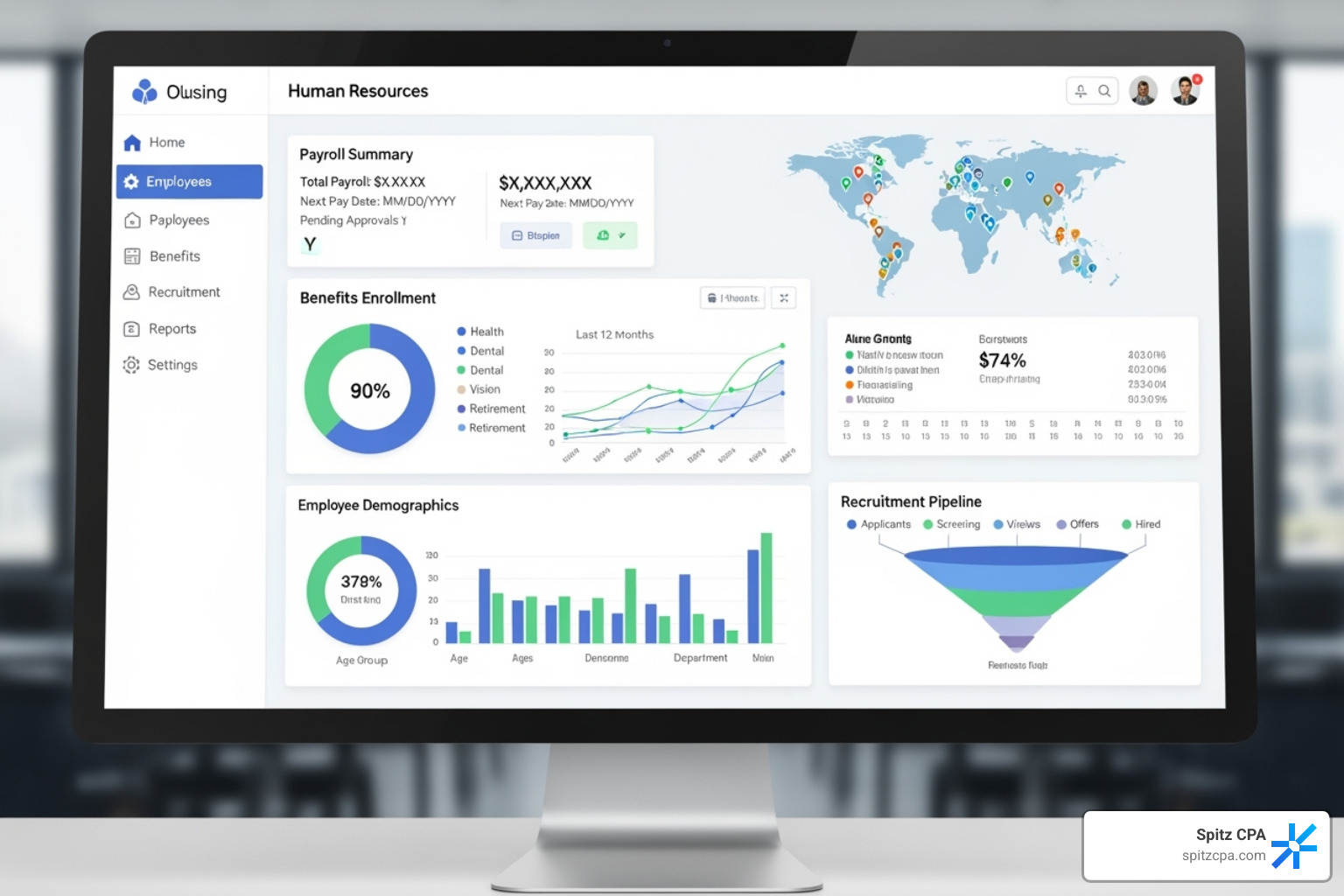
Operating HR, payroll, and benefits in separate silos is inefficient and error-prone. The solution is integration, often called Human Capital Management (HCM). When your systems communicate, you eliminate redundant data entry, reduce errors, and free up time to focus on growing your business.
What is Human Capital Management (HCM)?
Human Capital Management is a strategic approach that treats employees as valuable assets, managing them through a unified ecosystem. HCM connects recruitment, payroll, performance management, and benefits administration into a seamless hire-to-retire experience. For example, when a new hire’s information is entered once, it automatically populates their HR record, payroll profile, and benefits enrollment. This transforms administrative tasks into strategic opportunities. Learn more in our guide on Human Capital Management & Payroll.
Creating a ‘Single Source of Truth’ for Employee Data
Integrating your HR, payroll, and benefits systems creates a “single source of truth”—a centralized database for all employee information. When an employee updates their information in one place, it automatically flows to all connected systems. This real-time update capability eliminates data silos and ensures everyone works with accurate, current information. It dramatically reduces the 1-8% error rate common in manual data transfers and improves security by consolidating sensitive data into one protected system.
Key advantages of integrated HR, payroll, and benefits systems
As Michael J. Spitz, I’ve seen companies transform their efficiency through smart integration. The key advantages include:
- Efficient Reporting: Instantly generate reports on labor costs, compensation trends, and more without manually compiling data from multiple sources.
- Streamlined Workflows: Automate processes like new hire setup, where employee information automatically triggers payroll and benefits enrollment.
- Simplified Compliance: Integrated systems often include automatic updates to help you stay current with changing tax laws and regulations, which is vital considering nearly 40% of small businesses face IRS penalties for payroll mismanagement.
- Employee Self-Service: Empower employees to access pay stubs, update personal information, and manage benefits through a single portal, reducing the administrative burden on your HR team.
- Cost and Time Savings: By eliminating inefficiencies, you convert losses from poor integration—which can cost companies up to $500,000 annually—into savings that boost your bottom line.
A Comprehensive Look at Employee Payroll Benefits

Your employee benefits package is a powerful tool for building an incredible team. It signals that you care about your employees’ well-being beyond their work output. A competitive salary is important, but with 63% of job seekers evaluating benefits before accepting a role, a strong benefits package is essential for attracting top talent.
Furthermore, employees who are satisfied with their benefits are 27% more likely to be motivated at work. When people feel secure about their health and future, they perform better. This makes benefits a strategic investment, not just an expense.
Mandatory Payroll Benefits in the U.S.
These are the benefits you are legally required to provide, forming a critical safety net for your employees and business.
- Social Security and Medicare (FICA): You must withhold these taxes and match employee contributions.
- Unemployment Insurance (FUTA/SUTA): These employer-paid taxes provide a cushion for employees who lose their jobs.
- Workers’ Compensation: This insurance covers medical expenses and lost wages for on-the-job injuries.
- Family and Medical Leave Act (FMLA): For eligible employers, this provides unpaid, job-protected leave for specific family and medical reasons. Learn more about the Family and Medical Leave Act.
- Minimum Wage and Overtime: You must comply with federal and state laws regarding fair compensation.
Competitive Payroll Benefits to Attract and Retain Talent
Voluntary benefits are where you can truly differentiate your company and create a desirable workplace.
- Health Insurance: Comprehensive medical, dental, and vision coverage is often the most valued benefit.
- Retirement Plans: Offering a 401(k) with a company match is a powerful tool for long-term retention.
- Paid Time Off (PTO): Generous vacation, sick, and personal day policies help prevent burnout and improve focus.
- Disability and Life Insurance: These provide crucial financial protection for employees and their families.
- Wellness Programs: Gym memberships or mental health support show you care about overall well-being.
- Tuition Assistance: Investing in employee growth fosters loyalty and improves skills within your company.
As Michael J. Spitz has noted, it takes just two payroll errors for an employee to start job hunting. A comprehensive and well-managed benefits package builds the trust and loyalty needed to retain your best people.
Mastering the Payroll Process for Flawless Execution
Getting payroll right is about building trust, ensuring compliance, and creating a stable foundation for your business. After managing complex payroll for over 15 years, I can attest that a flawless process is one of the smartest investments a company can make. When your payroll and benefits management stumbles, it creates stress for everyone.
Essential Steps in the Payroll Cycle
The payroll cycle is a sequence of critical steps. Missing one can lead to unhappy employees and costly penalties.
- Setup and Data Collection: Obtain an Employer Identification Number (EIN) and set up federal and state tax accounts. Gather accurate employee data, including Form W-4, direct deposit details, and Form I-9.
- Establish a Schedule: Decide on a pay frequency (weekly, bi-weekly, etc.) and payment method (direct deposit, checks).
- Calculate Pay: Determine gross pay by tracking hours, overtime, salaries, and bonuses. Then, subtract pre-tax deductions (health insurance, 401k), withhold taxes (federal, state, FICA), and handle post-tax deductions (garnishments) to arrive at net pay.
- Distribute and Remit: Pay employees on schedule and remit withheld taxes and other deductions to the appropriate government agencies and benefits providers on time.
- Maintain Records: Keep meticulous payroll records for at least three years and tax records for four years, as required by federal law. This is crucial for audits and resolving disputes.
Common Payroll Errors and How to Avoid Them
Preventable mistakes can lead to fines and legal headaches. Here are the most common pitfalls:
- Employee Misclassification: Incorrectly classifying an employee as an independent contractor or as exempt vs. non-exempt can lead to significant back pay and tax liabilities.
- Incorrect Tax Withholding: Errors in calculating federal, state, or FICA taxes can cause issues for both the company and the employee. Use reliable payroll software to automate these calculations.
- Missing Deadlines: Late payroll tax deposits trigger steep IRS penalties. Nearly 40% of small businesses face an average of $845 yearly in penalties for this. Use automated reminders or a payroll service to stay on track.
- Inaccurate Time Tracking: Poor tracking of hours, breaks, or overtime leads to payment disputes. Implement a robust timekeeping system.
- Incomplete Record-Keeping: Disorganized records become a major problem during audits. Integrated systems for HR, payroll, and benefits are excellent for maintaining organized, accessible records. For more tips, see our guide on how to do payroll and avoid mistakes.
Choosing Your Payroll Solution: In-House or Professional Services?
Your choice depends on your business size, complexity, and budget.
| Feature | Manual Processing | Payroll Software | Professional Services |
|---|---|---|---|
| Cost | Low upfront investment | Moderate setup costs | Higher recurring fees |
| Time Investment | Very high daily commitment | Moderate oversight needed | Minimal time required |
| Error Risk | High (1-8% error rates) | Lower with automation | Lowest with expert handling |
| Compliance Management | You handle everything | Software assists compliance | Provider ensures compliance |
| Growth Flexibility | Becomes unmanageable | Scales reasonably well | Excellent scalability |
While manual processing is cheap, it’s time-consuming and error-prone. Payroll software is a good middle ground, but professional services offer the most strategic advantage by handling all processing, tax filings, and compliance. At Spitz CPA, our professional payroll services are customized to ensure accuracy and give you peace of mind.
The Strategic Impact of Effective HR Payroll Benefits Management
Effective management of HR, payroll, and benefits is more than an administrative task—it’s a strategic powerhouse that can transform your business. The data is clear: businesses with highly engaged employees generate almost three times more revenue, and a happy workforce can boost productivity by 31%. These outcomes are directly tied to how well you manage your human capital.
As Michael J. Spitz, I’ve seen companies that treat these functions as a strategic asset gain significant competitive advantages. They attract and retain better talent by creating an environment where people feel valued and secure.
How effective HR, payroll, and benefits management improves company culture
Company culture is built on trust, and nothing builds it faster than reliable payroll and benefits. While no one thanks you for a correct paycheck, research shows that just 2 payroll errors can prompt an employee to start job hunting. Accurate management of payroll and benefits is fundamental to a positive culture.
When employees know their pay is accurate and their benefits are dependable, they feel secure. This security fosters loyalty and reduces financial stress, which is critical when many Americans live paycheck to paycheck. A company that invests in its employees’ well-being through competitive, well-managed benefits sends a clear message of value, reducing costly turnover.
Enhancing Decision-Making with Accurate Data
When your systems are integrated and your data is clean, you generate business intelligence that guides major decisions. Effective management of these areas provides critical insights for:
- Labor Cost Analysis: Accurately track expenses across departments to make informed decisions about resource allocation.
- Budgeting and Forecasting: Use reliable salary, benefits, and tax data to create data-driven budgets and plan for growth. For more on financial planning, explore our business tax strategies.
- Compensation Trends: Analyze which benefits employees value most to make strategic adjustments and stay competitive in the talent market.
- Compliance Insights: Proactively monitor compliance data to spot potential issues before they become expensive problems.
By viewing HR, payroll, and benefits as an interconnected system, you transform an administrative burden into a strategic asset that drives business success.
Frequently Asked Questions about HR, Payroll, and Benefits
Business owners often have questions about managing HR, payroll, and benefits. Getting it right is crucial for building trust and ensuring smooth operations. Here are answers to the three most common questions I encounter.
What are the core functions of HR and payroll that can be integrated?
Integration works best where HR and payroll functions overlap, which is primarily around shared employee data. Key areas for integration include:
- Employee Data Management: New hires, salary changes, and terminations entered by HR automatically update payroll records, eliminating duplicate entry.
- Time and Attendance: Approved time-off requests and tracked work hours flow directly from the timekeeping system into payroll for accurate calculations.
- Benefits Administration: Employee benefit selections and contribution amounts are automatically synced with payroll for correct deductions.
- Compliance Reporting: Integrated systems can pull data from both HR and payroll to generate comprehensive reports for government agencies without manual compilation.
Why is a ‘single source of truth’ important for employee data?
A ‘single source of truth’ means all employee information is stored in one centralized system, ensuring everyone works from the same up-to-date data. This is important for several reasons:
- Error Reduction: It eliminates manual data entry between systems, which is a primary cause of payroll errors (which can have a 1-8% rate in traditional systems).
- Improved Accuracy: Real-time updates ensure that payroll, benefits, and HR records are always synchronized, preventing discrepancies.
- Improved Security: Centralizing sensitive data in one robust system improves security and control over who can access information.
- Efficient Reporting: It allows for quick and easy generation of accurate reports for strategic analysis and decision-making.
What are the most common payroll errors small businesses make?
In my experience, most payroll errors are preventable. The most common mistakes include:
- Employee Misclassification: Incorrectly classifying workers as independent contractors or as exempt from overtime, leading to significant tax and wage liabilities.
- Tax Errors: Miscalculating tax withholdings or, even more commonly, missing tax deposit deadlines. Nearly 40% of small businesses face IRS penalties for late payments.
- Overtime Miscalculations: Failing to correctly calculate overtime pay, especially for employees with variable rates or bonuses, which damages employee trust.
- Poor Record-Keeping: Not maintaining organized and complete payroll records, which can become a major headache during an audit or employee dispute.
- Ignoring State-Specific Laws: Assuming federal laws are sufficient and overlooking unique state requirements for minimum wage, final pay, and breaks.
Conclusion
We’ve explored the landscape of HR, payroll, and benefits, from its core components to the transformative power of integration. The conclusion is clear: managing HR, payroll, and benefits is a strategic imperative that directly impacts your business’s success. Effective management builds trust, reduces employee financial stress, and fosters loyalty.
The numbers prove it. Companies with highly engaged employees see almost three times more revenue, and happy workforces are 31% more productive. Integration is the key, creating a “single source of truth” that eliminates costly errors—a critical advantage when just 2 payroll errors can cause an employee to leave and nearly 40% of small businesses face yearly IRS penalties.
The path forward involves prioritizing accuracy, ensuring compliance, and enhancing the employee experience through well-managed systems for these functions. These are not just operational tasks; they are strategic advantages.
You don’t have to steer these complexities alone. As Michael J. Spitz, I’ve spent over 15 years helping businesses turn payroll and benefits challenges into competitive advantages. At Spitz CPA, we understand that time spent on payroll compliance is time taken away from growing your business.
Whether you’re just starting or looking to optimize, we provide expert guidance to ensure your payroll and benefits administration supports your business goals.
Ready to transform your management of HR, payroll, and benefits from a headache into a strategic advantage? Learn more about our expert Payroll services and find how we can help you focus on what you do best: growing your business.


