


Why Human Capital Management Payroll Integration is Essential for Modern Businesses
Human capital management payroll is the strategic integration of workforce management with compensation, turning payroll from an administrative chore into a core business driver. This unified approach connects the entire employee lifecycle—from recruitment to retention—with accurate, compliant payroll processing.
Key Aspects of HCM Payroll Integration:
- Strategic Workforce Management: Aligning talent strategy with payroll data.
- Unified Data Platform: A single source of truth for all HR and compensation data.
- Automated Compliance: Built-in tax calculations and regulatory updates.
- Employee Self-Service: Direct access to pay stubs, benefits, and HR info.
- Real-Time Analytics: Data-driven insights for workforce planning and cost control.
Industry research shows that a majority of top-performing companies have adopted integrated HCM solutions. The shift from disconnected HR systems to unified platforms addresses critical challenges like data silos, manual process errors, and compliance risks.
As one HR professional noted, “Few areas of an organization collect as much data as payroll, human resources, and finance.” When these functions are isolated, businesses miss opportunities for strategic decisions and face higher operational costs.
I’m Michael J. Spitz, and with over 15 years of corporate accounting experience, I’ve seen how human capital management payroll integration transforms businesses. It eliminates redundant tasks and provides the financial clarity needed for strategic growth. My expertise in payroll management and financial planning helps businesses steer modern workforce complexities while optimizing financial performance.
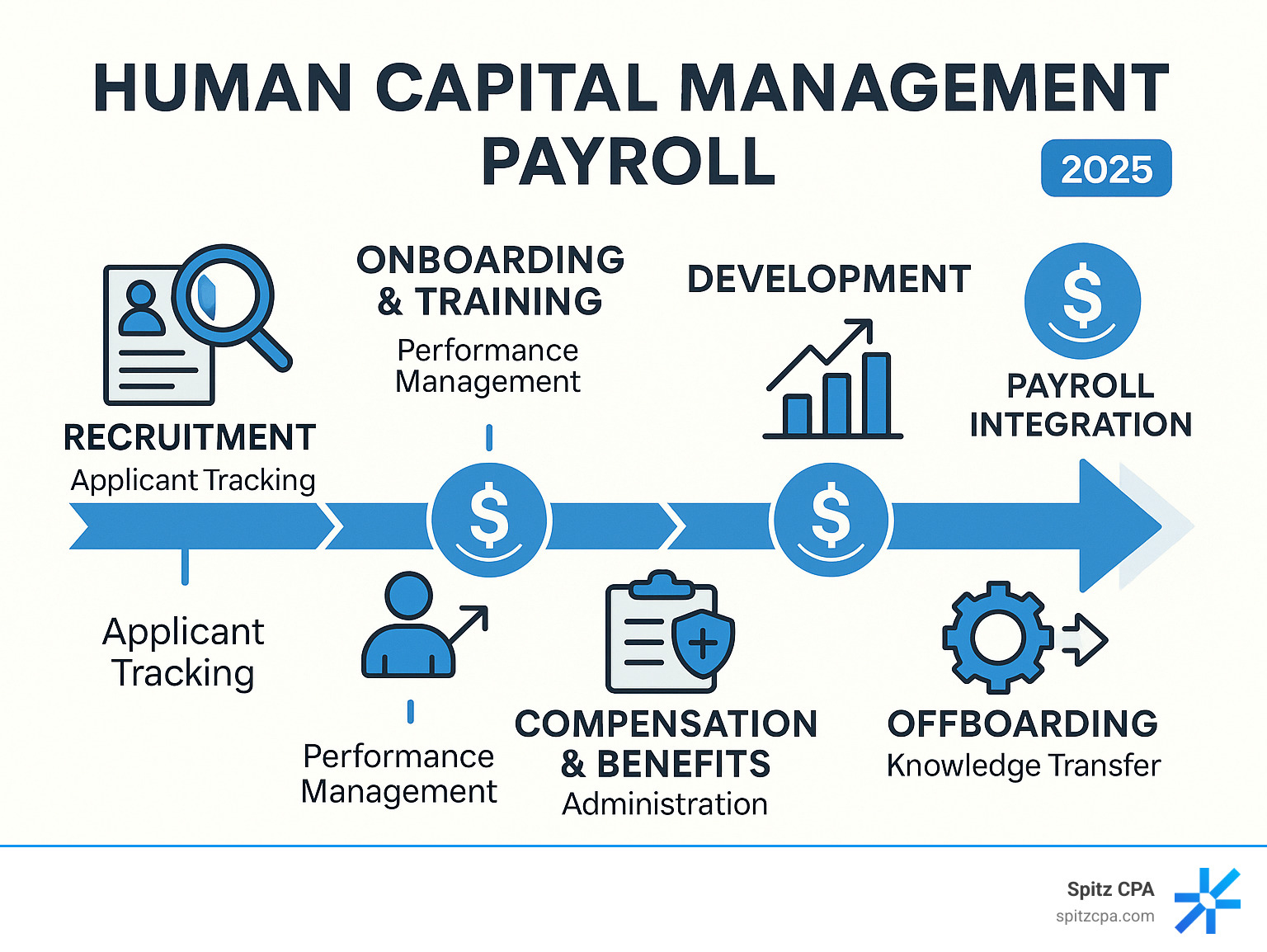
What is Human Capital Management and Its Connection to Payroll?
Think of traditional HR as basic maintenance, like watering plants. Human capital management (HCM) is like having a master plan for your entire garden, understanding how every element works together to thrive. HCM is a complete strategy that treats employees as your most valuable investment—your “human capital.” It focuses on developing talent, optimizing productivity, and aligning your workforce with business goals.
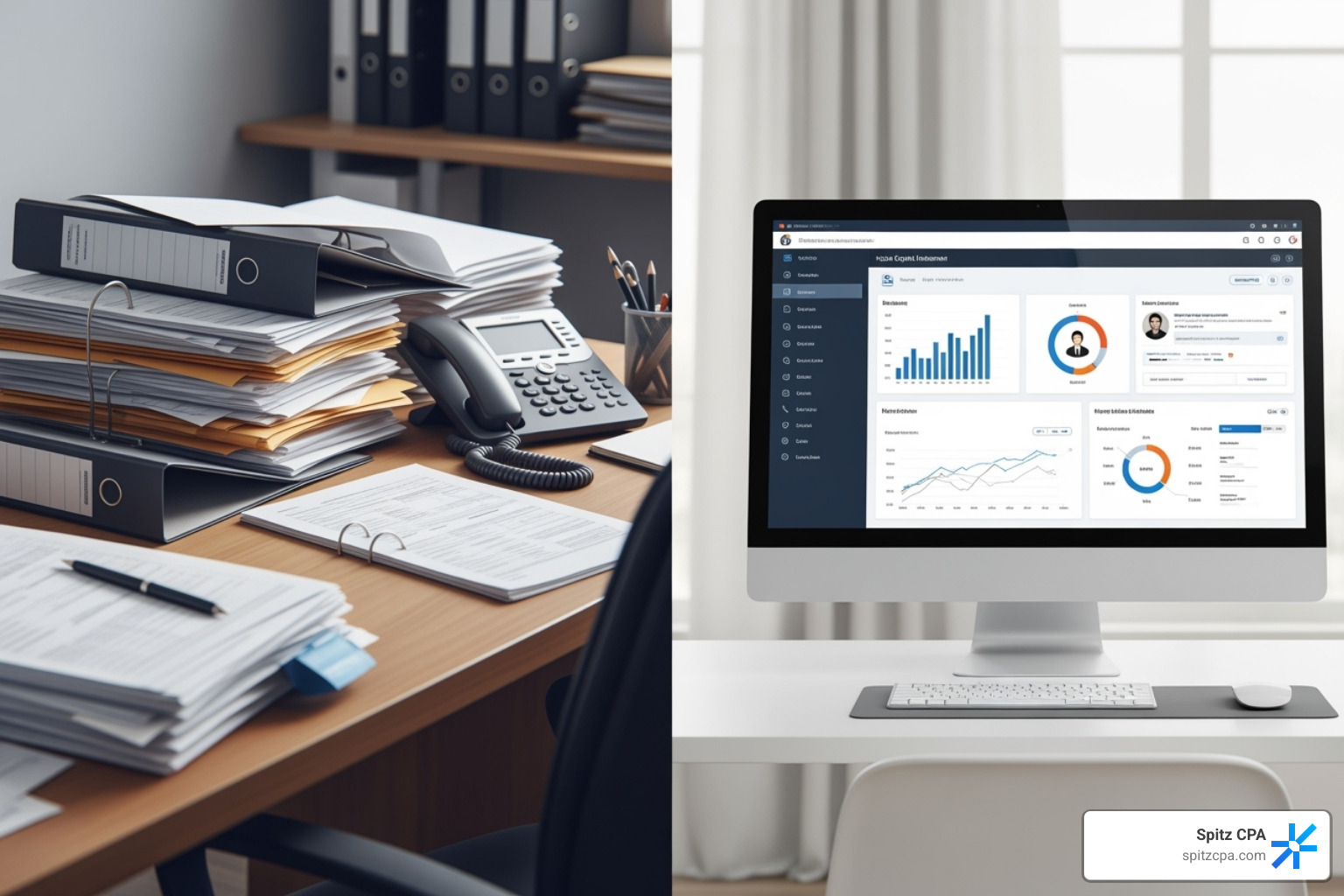
The magic happens when HCM creates a single source of truth for all employee data. This eliminates duplicate entries and ensures your payroll data matches HR records, giving you a clear picture for smart workforce decisions.
The Evolution from Administrative HR to Strategic HCM
HR has evolved from a back-office function focused on paperwork to a strategic powerhouse. Traditional HR handled administrative tasks like W-2s and filing. Today’s strategic HCM sees employees as investments to nurture. It looks at the entire employee journey, from application to career development and performance tracking.
This shift makes workforce planning proactive. Instead of scrambling to fill roles, HCM helps you anticipate needs, develop internal talent, and create career paths that keep your best people engaged.
How Payroll Fits as a Core Pillar of HCM
Most people see payroll as a transactional function, but in an HCM system, it’s the foundation. Human capital management payroll integration means compensation, benefits, and tax compliance work together seamlessly. When an employee gets a raise, the information automatically flows to payroll and benefits calculations. No manual updates, no errors, and no frustrated employees.
Modern compensation management also offers flexibility, like early access to earned wages or transparent views of total compensation. This integration boosts employee morale because they can trust that their pay is accurate and timely. For business owners, it provides incredible visibility into workforce costs, enabling informed decisions. For more on gaining this clarity, explore our Accounting and Bookkeeping services.
The Core Components and Benefits of an Integrated HCM Payroll System
An integrated human capital management payroll system is the central nervous system of your business, unifying HR and payroll into a single, efficient operation. When everything connects, you build a foundation that can transform how your organization runs.

Core Components of a Unified HCM Platform
A strong HCM platform brings all workforce management tools under one digital roof, centered around a core HR database. Key modules include:
- Recruiting and Onboarding: Applicant data flows smoothly from application to hire, automatically populating payroll and benefits systems.
- Time and Attendance: Hours, time off, and overtime feed directly into payroll calculations.
- Performance Management: Link compensation decisions to performance data.
- Compensation and Benefits: Manage salaries, bonuses, and benefits in one place.
- Analytics and Reporting: Turn workforce data into actionable business insights.
- Employee Self-Service: Give your team direct access to their pay stubs, benefits info, and personal details, reducing the HR workload.
Key Benefits for Business Efficiency and Cost Reduction
The financial impact of an integrated system is significant. By eliminating duplicate data entry and manual processes, companies dramatically cut administrative costs and reduce errors.
Automated workflows handle routine tasks like tax calculations and direct deposits, freeing your team for strategic work. Streamlined compliance is another major benefit, as the system stays updated with changing tax laws, protecting you from penalties. With better access to information, you can make smarter decisions about staffing and compensation. These savings can be redirected toward revenue-generating activities. Our Tax Planning for Entrepreneurs services can help you maximize these gains.
Enhancing the Employee Experience
Employees immediately notice the difference. Employee self-service and mobile access put them in control of their information, allowing them to handle HR tasks from anywhere. Modern systems also offer pay transparency and flexible payment options, which build loyalty.
Faster onboarding creates a positive first impression, as new hires can complete paperwork digitally. When employees feel supported by efficient systems, they are more engaged and productive, creating a foundation for long-term growth.
Overcoming HR & Payroll Challenges with Technology
Managing HR and payroll can feel like solving a puzzle with scattered pieces. You face data silos, time-consuming manual processes, and ever-changing regulatory changes. Add global payroll complexities and security risks, and it’s easy to feel overwhelmed. Fortunately, modern human capital management payroll technology is designed to turn this chaos into clarity.
Addressing Common Pain Points with Automation
Automation is your most reliable employee. It revolutionizes operations by:
- Automating tax filing: The system calculates and files payroll taxes, generating accurate reports and ensuring you stay on top of regulations.
- Reducing errors: When time and attendance data flows directly into payroll, paycheck mistakes and costly corrections become rare.
- Integrating time tracking: Automated time tracking improves productivity and feeds seamless data into your payroll system.
- Updating for compliance: The HCM solution automatically updates to reflect the latest local, state, and federal laws, reducing the risk of penalties.
- Minimizing manual data entry: Workflows like applicant screening and mobile self-service replace tedious tasks, cutting administrative costs.
The Advantages of Cloud-Based HCM and Payroll
Cloud-based solutions offer flexibility that grows with your business. Scalability means the system adapts as you hire more employees, without expensive hardware investments. Accessibility allows your team to work from anywhere, on any device.
You get real-time data for immediate insights, lower IT overhead since the provider handles maintenance, and automatic updates that keep your system current. Plus, robust disaster recovery protocols keep your sensitive HR and payroll data safe.
Managing Global Payroll and International Compliance
Managing employees in different countries introduces staggering complexity, from multi-country regulations to currency conversions and local tax laws.
Advanced HCM solutions address this with global capabilities. They can process payroll compliantly across dozens of countries, handling statutory deductions and social insurance contributions. They provide unified global reporting with centralized oversight, giving you complete visibility into international operations. This streamlines management and reduces compliance risks, providing peace of mind that your global payroll is handled correctly.
For additional resources, you might find value in connecting with A community for Finance, HR and Payroll professionals.
How to Choose the Right Human Capital Management Payroll Solution
Choosing the right human capital management payroll solution is like finding a key business partner—one who is reliable, efficient, and can grow with you. The right choice will shape your operations for years, so it’s crucial to get it right.
Essential Features to Look for in a Human Capital Management Payroll Software
The best systems are a command center for people management. Look for these non-negotiable features:
- Robust Reporting & Analytics: Go beyond basic reports to get predictive insights for smarter budgeting and resource allocation.
- Compliance Management: Automate tax calculations and regulatory updates to avoid costly mistakes.
- Seamless Integrations: Ensure the system works with your existing accounting and ERP software to eliminate data silos.
- Intuitive User Interface (UI): Choose a clean, simple design that your team will actually use, reducing training time.
- Strong Data Security: Prioritize multi-layered security to protect sensitive employee information.
- Mobile Capabilities: Allow employees to access pay stubs, request time off, and update info from their phones.
- Employee Self-Service Portals: Empower employees to manage their own information, freeing up your HR team for strategic work.
Unified vs. Best-of-Breed: Which Model is Right for You?
Should you choose one comprehensive system or combine specialized tools?
| Feature/Aspect | Unified HCM Solutions | Best-of-Breed Systems |
|---|---|---|
| Integration | Seamless data flow on one platform | Requires complex integrations |
| Vendor Management | Single point of contact | Multiple vendors to manage |
| Functionality | Broad functionality | Deep specialization |
| Cost Structure | Single subscription, often lower cost | Multiple fees plus integration costs |
| Simplicity | Simpler to implement and manage | More complex implementation |
Unified solutions work best for most businesses by eliminating the headaches of managing multiple vendors. The streamlined approach typically costs less and delivers results faster. Best-of-breed systems make sense only for highly specific needs that a unified system can’t meet.
Key Steps to Evaluating an HCM Partner
Finding the right partner requires a structured approach:
- Define Your Requirements: List your essential features, pain points, and business goals.
- Budget Accordingly: Consider the total cost of ownership, including implementation, training, and support.
- Request Proposals (RFPs): Be specific about your needs so vendors can tailor their responses.
- Attend Vendor Demos: Ask vendors to show you how their system handles your specific workflows.
- Check References: Speak with similar businesses to get the real story on implementation and support.
- Evaluate Implementation Support: Choose a partner with a clear plan for training and post-launch support.
You’re not just buying software; you’re choosing a partner. Take the time to find the right fit, and your human capital management payroll solution will become a valuable business investment.
The Future of HCM: AI, Automation, and Strategic Insights
The landscape of human capital management payroll is rapidly evolving, driven by technology. Artificial Intelligence (AI), machine learning, and advanced analytics are turning HR from a reactive function into a strategic powerhouse.
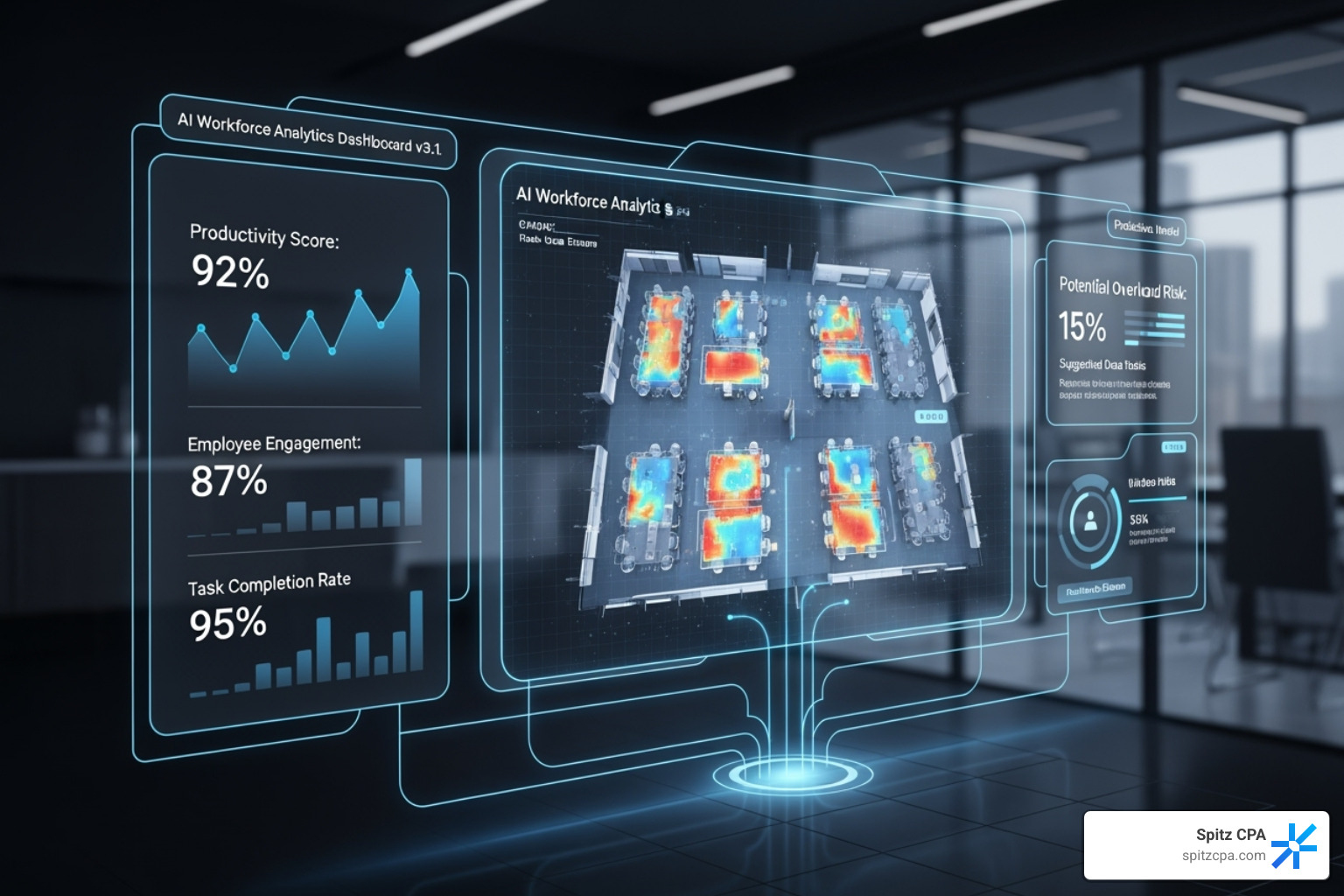
This shift is about reimagining how businesses approach their people. The future of HCM is about creating intelligent systems that predict workforce needs, prevent problems, and provide insights that inform critical business decisions.
How AI is Reshaping Payroll and HR
AI is actively changing how we manage HR and payroll, but human oversight remains essential for accuracy and a personal touch. Key applications include:
- Automated Anomaly Detection: AI systems scan payroll records to identify unusual patterns that could indicate errors or fraud.
- Chatbots for HR Queries: AI-powered assistants provide 24/7 support, instantly answering routine employee questions about benefits or policies.
- Predictive Staffing Models: AI analyzes historical data to forecast future hiring needs, identify turnover risks, and optimize schedules.
- Personalized Employee Experiences: AI can create custom learning paths and suggest career development opportunities to improve engagement and retention.
- Streamlined Recruitment: AI helps with automated applicant screenings, allowing recruiters to focus on the most promising candidates.
Shifting from Transactional Tasks to Strategic Workforce Planning
The greatest impact of AI and automation is liberating HR professionals from routine tasks, empowering them to become strategic partners. When systems handle repetitive work, HR teams can focus on people strategy.
This means using data-driven insights to inform business decisions. Instead of chasing timesheets, HR can analyze workforce trends, identify skill gaps, and develop talent strategies aligned with business goals. Talent forecasting and skill gap analysis become proactive tools for building the capabilities needed for future growth.
This evolution allows HR to focus on people, not paperwork. When technology handles the administrative burden, HR professionals can invest their time in building relationships, coaching managers, and creating engaging workplace experiences. To steer this shift successfully, it’s important to learn how to avoid common payroll mistakes as you implement new technologies.
Frequently Asked Questions about HCM and Payroll
Here are answers to the most common questions we hear from business owners about human capital management payroll solutions.
What is the difference between HCM, HRMS, and HRIS?
Think of them as levels of sophistication.
- HRIS (Human Resource Information System) is a digital filing cabinet for basic employee data.
- HRMS (Human Resource Management System) adds more robust features like payroll processing, time tracking, and benefits administration.
- HCM (Human Capital Management) is the most comprehensive, strategic approach. It covers the entire employee lifecycle, from talent management to advanced analytics, treating employees as valuable assets.
While the terms are often used interchangeably, HCM software typically represents the most complete suite for strategic workforce management.
How does an integrated HCM payroll system improve compliance?
An integrated system acts as a 24/7 compliance expert. It uses automated calculations for federal, state, and local taxes, drastically reducing human error. It maintains a single, updated record for each employee, so changes in pay or benefits flow seamlessly and accurately. Most importantly, vendors provide regular updates to reflect the latest regulations, helping you avoid costly penalties.
Can small businesses benefit from HCM technology?
Absolutely. Modern cloud-based HCM solutions are scalable, with flexible pricing models that work for businesses of any size. Small businesses can compete for top talent by offering the same sophisticated employee experience as larger companies, including self-service portals and mobile access.
The compliance benefits are especially valuable, as the system automates complex regulations. This frees up owners and managers from administrative burdens so they can focus on growing the business. The ROI is often fast due to immediate time savings and error reduction.
Conclusion
Human capital management payroll is more than just a way to cut costs or reduce errors. It’s a strategic advantage that fuels growth in today’s competitive marketplace.
When your HR and payroll systems work together, you create a foundation for better decision-making, happier employees, and sustainable growth. Your team spends less time on paperwork and more time on work that moves your business forward. This shift from disconnected systems to a unified, automated platform enables the workforce optimization and financial clarity every business owner needs.
At Spitz CPA, we’ve seen how optimizing human capital management becomes a catalyst for significant growth. Our expertise goes beyond the numbers; we understand that your payroll data is a roadmap for success when integrated with your broader financial strategy.
The future of workforce management is accessible to businesses of all sizes. Don’t let outdated systems hold you back.
Ready to transform your HR operations from a headache into a strategic advantage? Explore our expert Payroll Services to streamline your operations and find how we can help you achieve the seamless integration and robust financial health your business deserves.


