


Find a Qualified Tax Accountant for Your Business
To find a qualified tax accountant, start by confirming they have an active IRS Preparer Tax Identification Number (PTIN), then verify relevant credentials such as CPA or Enrolled Agent status. For a business owner, the right professional should do more than file returns: they should understand your entity structure, keep records compliant, help you plan ahead for tax obligations, and explain how their fees, security practices, and year-round support work before you sign an engagement agreement.
A tax accountant can bring order to complicated tax filings, bookkeeping clean-up, payroll issues, cash flow questions, and strategic decisions that affect both current tax liability and long-term business value. Credentials matter, but so does fit: ask about experience with businesses like yours, IRS representation rights, continuing education, secure document-sharing practices, and whether the professional will personally review and sign the return.
I am Michael J. Spitz, and I bring more than 15 years of corporate accounting experience to the work of a tax accountant, including financial modeling, budgeting, cash management, payroll, compliance, and complex financial reporting. This guide will help you assess qualifications, spot warning signs, and choose support that fits your business’s real needs.
Understanding Professional Qualifications and Scope of Services
Navigating the landscape of tax services requires understanding the precise licensing standards and ongoing education that separate casual filers from verified accounting experts. Anyone can claim to prepare a tax return, but genuine proficiency involves rigorous study, formal state or federal oversight, and adherence to strict ethical codes. When selecting an advisor, reviewing regulatory benchmarks such as those outlined by state agencies, including the guidance on Selecting a Tax Preparer | Arizona Department of Revenue, helps ensure your financial records remain in fully compliant hands. True professionals commit to continuous learning to keep up with dynamic tax legislation, ensuring that your enterprise benefits from every applicable deduction while avoiding costly statutory penalties.
Core Differences Between a Tax Preparer and a Tax Accountant
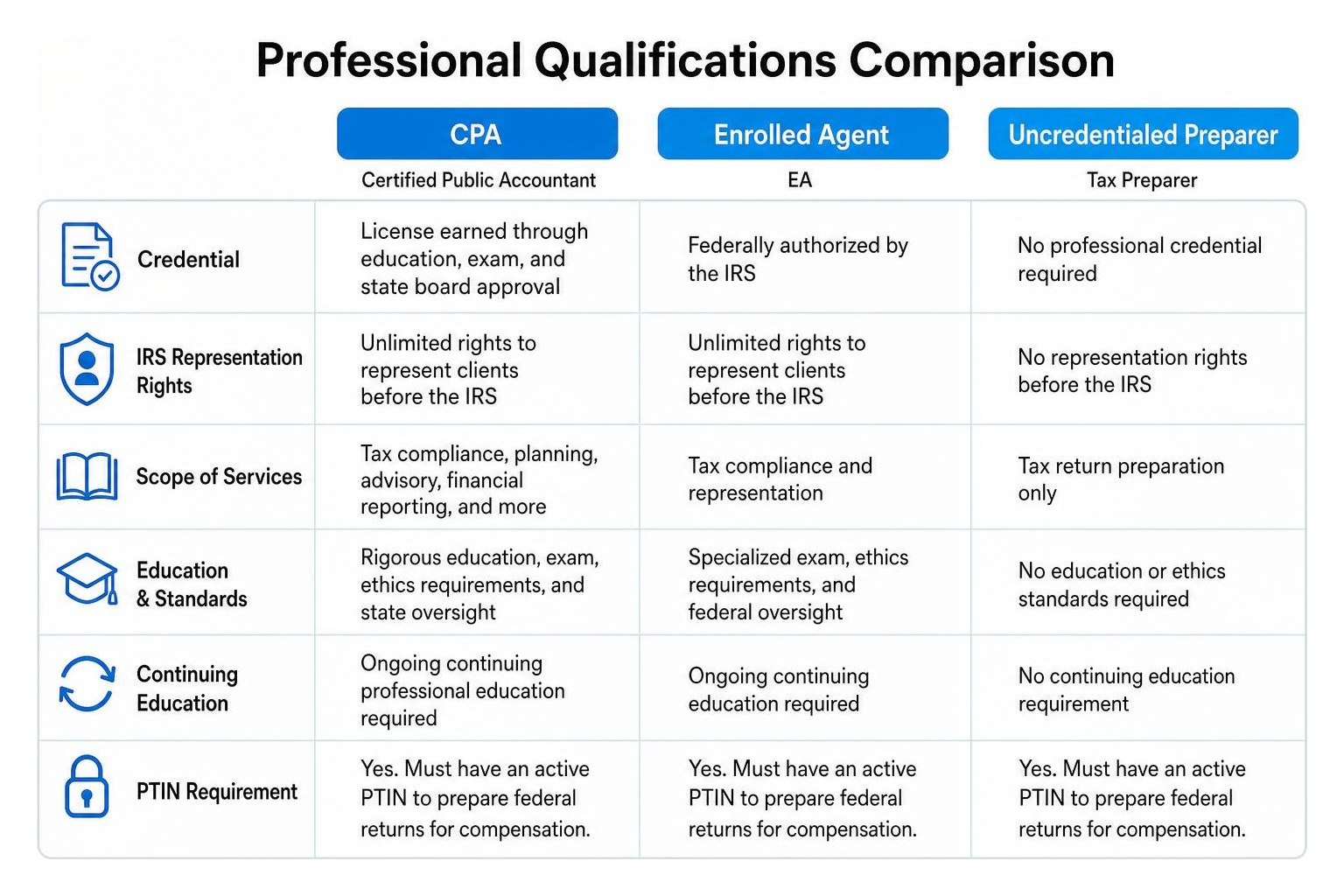
The fundamental distinction between a seasonal preparer and an experienced accounting professional lies in the depth of analysis, strategic insight, and statutory authorization provided throughout the year. While a basic preparer focuses merely on inputting historic numbers into software forms during tax season, a dedicated accountant evaluates how every financial transaction influences your wider operational strategy and balance sheet health. Under federal rules, any individual who prepares federal tax returns for compensation must possess an active IRS Preparer Tax Identification Number. However, holding this identification alone does not grant comprehensive audit representation rights or signify advanced accounting expertise, which is why foundational disciplines like small business accounting require a far broader technical skillset than simple form filing.
Professional Credentials: CPAs, Enrolled Agents, and Uncredentialed Preparers
Professional credentials determine the scope of work an advisor can perform and how effectively they can advocate on your behalf before revenue authorities. A Certified Public Accountant earns a state-issued license after completing 150 college credit hours, passing a comprehensive 16-hour examination, and meeting strict annual continuing professional education requirements of 40 hours per year. In contrast, an Enrolled Agent earns federal licensure directly from the Internal Revenue Service by passing a rigorous three-part test or demonstrating five years of relevant agency experience, maintaining 72 hours of continuing education every three years. Unenrolled preparers might participate in the voluntary Annual Filing Season Program with 18 hours of annual coursework, but only CPAs and Enrolled Agents possess unlimited representation rights before the IRS to defend your filings, resolve disputes, and apply advanced strategies detailed in the ultimate guide to tax deductions.
What Does a Professional Tax Accountant Do?
Modern accounting services extend significantly beyond historical recordkeeping to encompass holistic financial leadership, proactive cash management, and entity governance. Rather than simply calculating what you owe after the year concludes, an accomplished advisor works collaboratively with you in real time to optimize revenue streams, manage operational expenses, and ensure clean financial reporting. By leveraging robust advisory frameworks, businesses can leverage dedicated cpa services for businesses to gain financial clarity, streamline bookkeeping, and identify growth opportunities that can scale overall enterprise valuation by ten times or more.

Strategic Advisory, Business Tax Strategies, and Year-Round Planning
Forward-looking advisory transforms standard tax compliance from a reactive annual chore into a dynamic driver of business longevity and profitability. Integrating structured tax planning strategies allows entrepreneurs to forecast quarterly liabilities, structure capital investments efficiently, and optimize executive compensation before the tax year closes. Developing tailored business tax strategies ensures that your enterprise captures eligible deductions, research credits, and favorable depreciation schedules while maintaining liquid reserves. For growing ventures, comprehensive tax planning for entrepreneurs safeguards personal assets, mitigates self-employment liabilities, and harmonizes entity cash flow with long-term wealth preservation goals.
Audit Representation and Entity Compliance
Managing entity compliance requires an intimate understanding of distinct filing mandates across various business formations and individual tax profiles. Whether your company files Form 1065 for a partnership, Form 1120S for an S-Corporation, Form 1120 for a C-Corporation, or Form 1040 for personal returns, accurate statutory reporting prevents costly red flags and audit triggers. If the IRS or state authorities question a return, having an authorized representative ensures that formal communications, document requests, and dispute negotiations are managed with procedural precision. Partnering with a skilled gilbert az tax preparer gives local business owners direct access to seasoned advocates who protect their rights throughout every stage of regulatory examination.
How to Evaluate, Verify, and Choose the Right Professional
Selecting an accounting partner requires comprehensive due diligence that balances technical credentials, industry specialization, communication style, and security infrastructure. Because you are entrusting this advisor with your company’s most confidential financial data, verifying professional standing through official regulatory databases is an indispensable first step. The right professional welcomes thorough inquiries regarding their background, demonstrates transparent billing, and maintains modern technological safeguards to protect your records from unauthorized disclosure.

Key Questions to Ask When Vetting a Tax Accountant
When interviewing prospective candidates, initiate discussions around their experience with your specific industry, business structure, and revenue scale. Ask about their continuing education habits, their experience handling IRS examinations, and whether they manage returns personally or delegate work to staff without direct supervisory review. Inquiring about service scope, communication turnaround times, and fee arrangements helps establish clear expectations from the beginning. Business owners seeking reliable local accountants near me should always confirm that the candidate signs every completed return and provides transparent, proactive support throughout the entire calendar year.
Red Flags, Fee Structures, and Data Security Standards
Taxpayers must remain vigilant against unethical practices, particularly ghost preparers who charge fees to prepare returns but refuse to sign their name or enter their PTIN on the document. Be wary of any individual who promises an unusually large refund before examining your records, bases their billing on a percentage of your refund, or refuses to provide a written engagement agreement. Professional accounting firms utilize transparent billing methods, such as flat fees or clear hourly rates, and implement bank-grade encryption protocols, secure client portals, and multi-factor authentication to protect your Social Security numbers, payroll ledgers, and corporate bank records.
Comparing Local Advisory and Remote Accounting Solutions
Modern accounting often combines local advisory insight with efficient remote production workflows to deliver exceptional service quality. Local advisors possess specialized knowledge regarding municipal ordinances, regional business trends, and localized state tax obligations, making dedicated tax services gilbert az ideal for hands-on, geographically tailored collaboration. Concurrently, firms frequently collaborate with skilled global accounting professionals, such as Crizza Jeanille Duriguez, who provide meticulous bookkeeping clean-up, software integration, and detailed workpaper preparation within standardized cloud environments. This blended delivery model provides businesses with continuous operational efficiency alongside authoritative local leadership.
Frequently Asked Questions About Tax Professionals
When Should I Hire a Professional Instead of Using Free Programs Like VITA?
Free initiatives like the Volunteer Income Tax Assistance program and AARP Foundation Tax-Aide, which has helped over 82 million taxpayers since 1968, provide valuable basic filing support for individuals with disabilities, adults aged 60 or older, and taxpayers earning $69,000 or less. However, these volunteer programs are strictly designed for simple returns involving standard employment wages. As soon as you launch a business, manage rental properties, receive equity compensation, or require strategic tax reduction, hiring a dedicated accounting professional becomes essential to navigate complex regulations and maximize deductions.
How Can I Verify an Accountant’s PTIN and Disciplinary Record?
You can verify an advisor’s professional standing by searching the IRS Directory of Federal Tax Return Preparers with Credentials and Select Qualifications, which confirms their active status and credential type. For CPAs, you can review state licensing boards or check the national CPAverify database to inspect license validity and confirm whether any formal disciplinary sanctions have been issued. Furthermore, the IRS Office of Professional Responsibility publishes public records of disciplinary actions, allowing you to ensure your chosen professional maintains an unblemished record of compliance.
How Much Does Hiring a Tax Professional Typically Cost?
The cost of hiring an accounting professional varies based on return complexity, entity type, bookkeeping quality, and whether year-round strategic advisory is included. The nationwide median annual salary for a tax accountant stands at $79,500, with entry-level professionals averaging around $51,000 and credentialed Enrolled Agents frequently commanding higher compensation due to their specialized tax focus. When engaging a firm, expect flat-rate pricing for standard entity returns or transparent hourly billing for complex advisory, always documented clearly within a signed engagement letter.
Conclusion
Securing an accomplished accounting partner provides the foundation for long-term operational stability, reduced tax burdens, and measurable enterprise growth. Under the leadership of Michael J. Spitz, our team at Spitz CPA delivers the strategic financial clarity, comprehensive bookkeeping clean-up, and proactive advisory guidance necessary to elevate your business performance. If you are ready to streamline your compliance and implement growth-focused strategies, reach out to our dedicated tax accountant gilbert az team today to schedule your comprehensive consultation.


