


Why Partnering with a Payroll and Benefits Provider is a Game-Changer
Payroll and benefits companies handle the complex tasks of processing payroll, filing taxes, and managing employee benefits so you don’t have to. Top providers offer automated payroll, HR tools, benefits administration, employee self-service portals, and expert support.
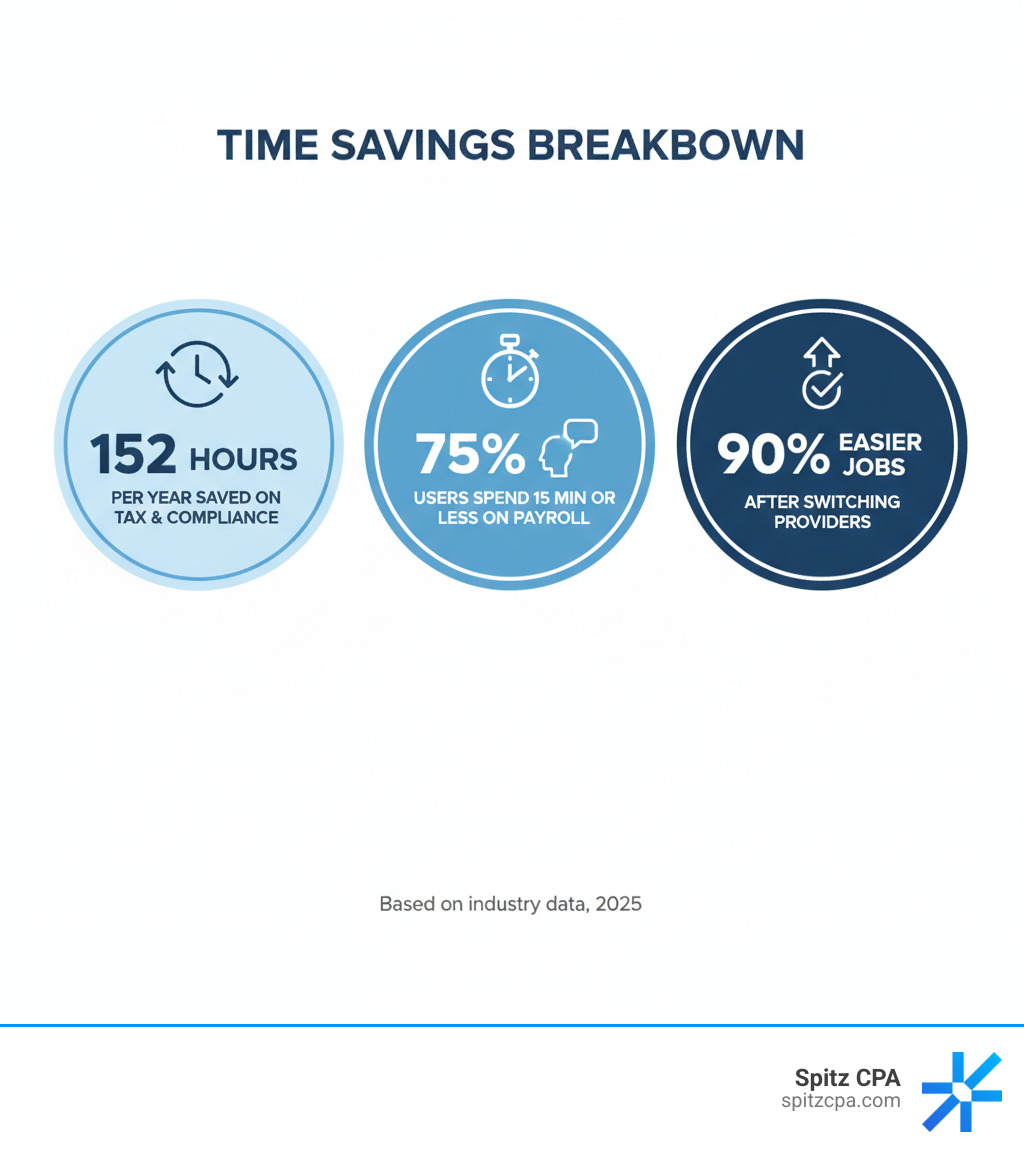
Business managers today are responsible for accurate payroll, complex tax compliance, and competitive benefits—all while trying to run their actual business. The good news is you don’t have to do it all yourself. Outsourcing these tasks can save significant time and money. Industry data shows businesses save an average of 152 hours per year on tax and compliance alone, and three out of four customers spend 15 minutes or less running payroll on modern platforms.
With hundreds of providers available, choosing the right one depends on your business size, budget, and specific needs. As Michael J. Spitz, I’ve spent over 15 years managing corporate accounting, payroll, and benefits, helping businesses select the right provider. This guide will walk you through everything you need to know to make an informed decision.
Terms related to payroll and benefits services:
Core Services: What to Expect from Top Payroll and Benefits Companies
When evaluating payroll and benefits companies, it’s important to understand the core services. The best providers act as a partner in managing your workforce, handling everything from tax filings to employee onboarding. This integrated approach, known as Human Capital Management & Payroll (HCM), covers the full employee lifecycle.
Let’s break down what you should expect.

Automated Payroll Processing
Modern payroll systems automate nearly every step of paying your team. Direct deposit ensures employees are paid on time, while pay cards offer a secure alternative for those without bank accounts. The software automatically handles complex wage calculations, including overtime, bonuses, and commissions, as well as garnishments and deductions for benefits.
Integrating your time tracking system with payroll eliminates manual data entry and reduces errors. Many platforms also offer mobile payroll access, allowing you to run payroll from anywhere in minutes. Look for providers that offer unlimited payroll runs at no extra charge, which is useful for off-cycle payments like bonuses or final paychecks.
For a deeper look at how these services can streamline your operations, visit our Payroll Services page.
Tax Calculation and Compliance
This is where these providers provide immense value. They handle automated tax filing, calculating and remitting the correct amounts to federal, state, and local government agencies on your behalf. You no longer need to track filing deadlines or steer complex forms.
The system manages federal tax compliance, including quarterly Form 941 and annual Form 940 filings. It also handles the complexities of state and local tax laws, which is critical if you have remote employees in different jurisdictions. At the end of the year, the provider generates and files your year-end forms like W-2s and 1099s automatically.
This automation significantly reduces your penalty risk by ensuring taxes are calculated correctly and filed on time, helping you avoid costly IRS notices.
If you want to learn more about how providers can represent you to the IRS, check out the official guidelines on Authorizing a Reporting Agent with the IRS.
Integrated HR and Onboarding Support
Modern payroll platforms have evolved into full HR management systems. Employee self-service portals are a key feature, allowing team members to view pay stubs, download W-2s, and update personal information on their own. This reduces your administrative burden.
For new hires, onboarding checklists create a streamlined workflow for digital forms, direct deposit setup, and benefit enrollment. PTO tracking is also automated, letting employees request time off and managers approve it with a click, while the system tracks accruals and balances.
Some providers also assist with background checks and offer digital document management to securely store employee files. This integration is especially valuable for businesses without a full-time HR staff, providing support similar to Employee Outsourcing Companies.
6 Key Features to Look for When Choosing a Provider
Choosing the right payroll and benefits company is a critical decision that impacts your efficiency, compliance, and employee satisfaction. It’s about finding a partner that supports your entire workforce strategy and can grow with you. The difference between success and struggle often comes down to six essential features.
When evaluating providers, use this table to compare them on technology, scalability, support, benefits, security, and pricing. For additional guidance, our resources on Payroll Processing Software can help you compare options.
| Feature | What to Look For | Why It Matters |
|---|---|---|
| Technology | All-in-one platform, cloud access, integrations with accounting and POS systems | Saves time and reduces errors from manual data entry |
| Scalability | Solutions that grow from small business to enterprise level | Avoids costly provider switches as you expand |
| Support | Dedicated advisors, 24/7 access, HR and compliance expertise | Gets you help when you need it most |
| Benefits | Health insurance, 401(k), workers’ comp, life insurance options | Helps you attract and retain top talent |
| Security | Data encryption, secure servers, role-based permissions | Protects sensitive employee information |
| Pricing | Clear base fees, per-employee costs, no hidden charges | Lets you budget accurately without surprises |
1. Unified Technology and Software
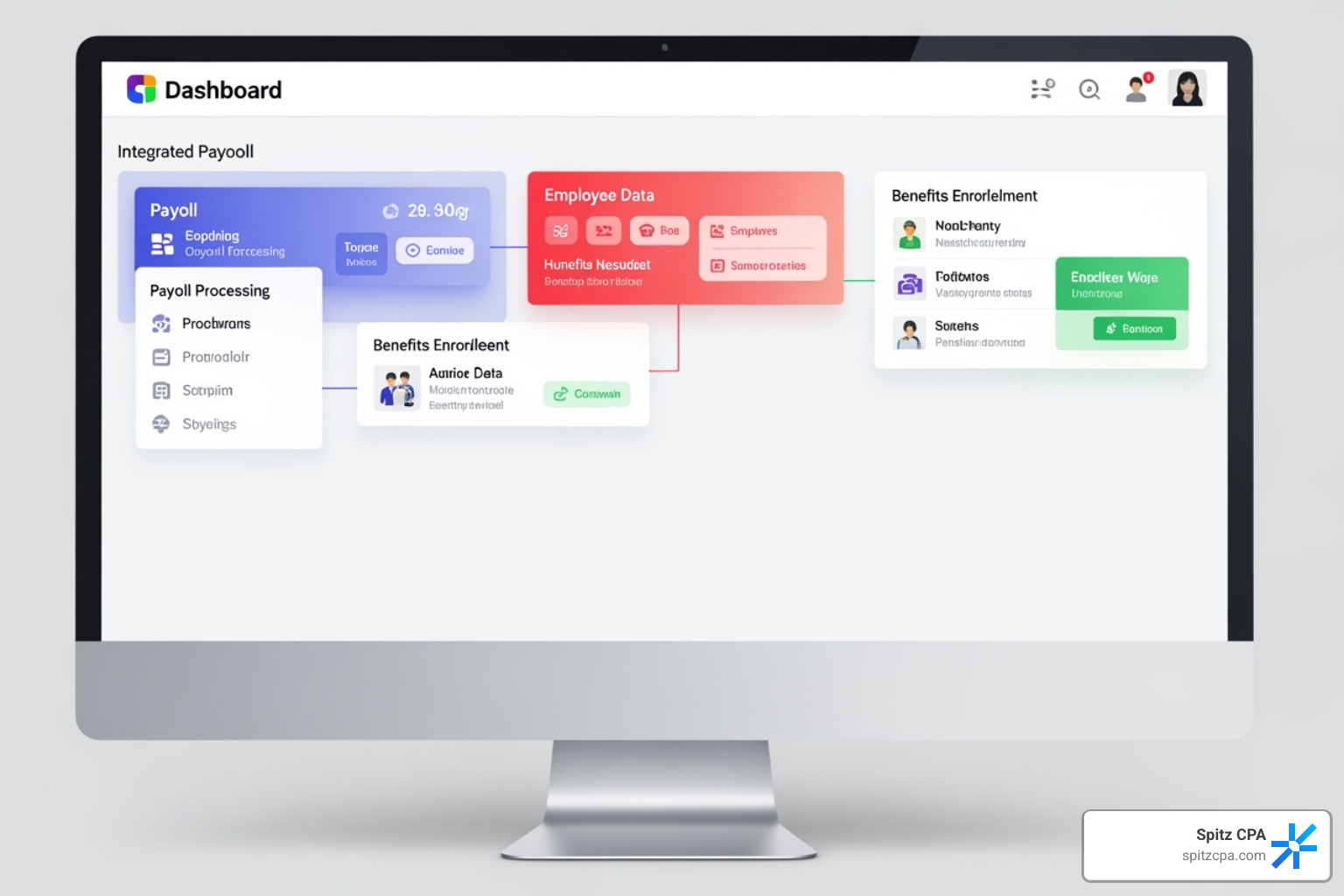
Juggling multiple software systems for payroll, HR, and benefits is inefficient and prone to errors. The best payroll and benefits companies offer a unified all-in-one platform that brings everything into a single, cohesive system. This means one central hub for all your workforce management tasks.
Cloud-based access is non-negotiable, allowing you to manage payroll and HR data anytime, anywhere. A unified system should also provide seamless software integrations. Your payroll platform needs to communicate with your other business tools to ensure data flows naturally between different parts of your operation.
Accounting software sync is a game-changer, eliminating double-entry and providing real-time financial data for better cash flow management. For retail or hospitality businesses, POS system integration can automatically feed time and sales data directly into payroll. Finally, real-time data access ensures you are always working with up-to-the-minute information, empowering you to make faster, more informed decisions.
An integrated approach reduces errors, saves time, and frees up your team to focus on growing the business, not wrestling with administrative tasks. For more insights on choosing the right technology, check out our guide on Payroll Processing Software.
2. Scalability for Different Business Sizes
Your business will grow, and your payroll provider must be able to grow with you. The right payroll and benefits companies offer solutions that scale, preventing you from having to switch providers during a period of expansion.
For solopreneurs and small businesses, the focus is on simplicity and affordability. Look for straightforward payroll processing and contractor-only payment options without the complexity of enterprise-level features. Many providers offer plans designed specifically for small businesses navigating their early financial transitions.
As you grow into a mid-size business (typically 50-350 employees), your needs become more complex. You’ll require more nuanced features for managing multiple departments, benefits packages, and stricter compliance. The ideal solution for this stage offers a balance of robust features without being overwhelming.
Enterprise-level capabilities are for large, distributed workforces. These platforms provide advanced reporting, customized workflows, and robust security protocols to manage operations at scale. A truly scalable solution evolves with your business, whether you’re adding your fifth employee or your five-hundredth.
At Spitz CPA, we understand that financial systems must grow with your business. Our Small Business Accounting services help ensure your payroll and benefits strategy aligns with your growth trajectory.
3. How to evaluate payroll and benefits companies for your small business
When choosing from payroll and benefits companies, the quality of customer support is essential. Excellent support is not a luxury; it’s a necessity when payroll deadlines are on the line.
The best providers offer dedicated support, assigning you an account specialist who knows your business and its unique needs. This means you’re not starting from scratch with every call. Since issues can arise outside of business hours, 24/7 customer service is invaluable, ensuring help is available whenever you need it.
Beyond availability, look for expertise. You need access to HR professionals and compliance experts who can answer complex questions about regulations and employment law. Having payroll specialists on your team is also critical for navigating complicated wage calculations or multi-state tax issues. This level of personal service from experienced professionals transforms overwhelming tasks into manageable ones.
This kind of support is a key element of sound Human Capital & Payroll Best Practices and ensures you’re never alone when challenges arise.
4. Comprehensive Benefits Administration
In today’s job market, a strong benefits package is crucial for attracting and retaining talent. Payroll and benefits companies help you build and manage a complete program that makes your business a more attractive place to work.
A good provider levels the playing field, giving you access to group rates and expert guidance that are typically out of reach for small businesses.
Health insurance is the cornerstone. Many providers act as brokers to help you find competitive group health, dental, and vision plans. Some include administration at no extra cost and provide licensed experts to guide you.
Setting up a 401(k) retirement plan can be complex. The right provider handles the heavy lifting, from setup to ongoing administration, so your employees can save for the future without you drowning in compliance paperwork.
With workers’ compensation, many providers can negotiate significant premium discounts, saving you 5% to 25%. They also manage claims, taking that burden off your plate. Adding benefits like life insurance further demonstrates your investment in your employees’ long-term financial security.
Comprehensive benefits administration shows your team you’re invested in their well-being, which is key to retaining great employees. For more guidance, the Department of Labor offers valuable Information on Health and Retirement Plans for Small Businesses.
5. The security protocols of leading payroll and benefits companies
When you entrust a provider with your employees’ sensitive data, security is paramount. With 50% of confirmed data breaches targeting small businesses, you cannot afford to overlook a provider’s security protocols.
Leading payroll and benefits companies use multiple layers of security. Data encryption is essential, scrambling information so it’s unreadable whether it’s stored or in transit. Data should be housed on secure servers in facilities with physical security measures like biometric access and 24/7 monitoring.
Review a provider’s privacy policies to ensure they are transparent about how they handle data and demonstrate compliance with data protection laws like GDPR and HIPAA. Within the platform, role-based permissions should limit data access, ensuring employees only see information relevant to their roles.
Reputable providers also conduct regular security audits and updates, including penetration testing, to identify and fix vulnerabilities. When evaluating providers, ask detailed questions about their security measures. Protecting your business and employee data is a fundamental responsibility.
6. Transparent Pricing and Cost Structures
When evaluating payroll and benefits companies, their pricing structure must be crystal clear. The best providers are upfront about costs and don’t hide fees in the fine print.
Most providers charge a monthly base fee plus a per-employee fee, allowing costs to scale with your team. Many also offer tiered packages (e.g., Basic, Plus, Premium) with different feature sets, so you only pay for what you need. Look for providers who are upfront about what’s included and what costs extra.
Some providers sweeten the deal with free setup or a free initial consultation. Understanding your costs upfront is about building a partnership based on trust. We recommend a Business Financial Health Check to determine your budget and ensure your chosen provider aligns with your financial goals. The right solution should help your bottom line, not drain it.
How the Right Partner Impacts Employee Satisfaction and Retention
The right payroll and benefits company does more than process payments; it can transform your workplace culture and become a powerful tool for retention.
Accurate and on-time pay is about respect. When employees can count on their paycheck without worry, it removes a fundamental source of stress and builds trust. Leading providers understand this and focus on creating a reliable, positive payroll experience.
Beyond the basics, competitive benefits are a deciding factor for top talent. Offering quality health insurance, a solid 401(k) plan, and other perks shows your team you are invested in their well-being. The right partner helps you deliver modern benefits that support employee satisfaction.
Employee self-service portals make a huge difference. When team members can access pay stubs, check PTO balances, or review benefits on their own, they feel empowered, and your administrative team is freed up for more strategic work. A smooth, digital onboarding experience also sets a positive tone from day one.
Some providers even offer financial wellness tools to help employees with savings and financial education. By choosing a provider that prioritizes the employee experience, you build a foundation for a workplace where talented people feel valued and choose to stay.

Conclusion: Integrating Your People and Financial Strategy for Growth
Choosing the right payroll and benefits company is a strategic decision that can transform how your business operates. By partnering with the right provider, you gain a strategic advantage that frees you to focus on your core business—serving clients, developing products, and building a great company culture.
This shift has a real financial impact. Streamlined processes and reduced compliance risks lead to improved profitability and greater financial clarity. Outsourcing payroll and HR gives businesses access to best-in-class technology, allowing them to focus on core operations and drive growth.
Your people strategy and financial strategy are two sides of the same coin. When employees are paid accurately, have access to competitive benefits, and enjoy a smooth onboarding process, it’s not just good HR—it’s good business. Engaged employees drive revenue and innovation, and that stability shows up on your bottom line.
At Spitz CPA, we’ve spent over 15 years helping businesses understand that managing human capital is a growth driver. When your payroll and benefits systems work seamlessly with your financial strategy, you turn administrative headaches into engines of sustained success.
For expert guidance on aligning your financial strategy with your operational needs, Michael J. Spitz and the team at Spitz CPA can help. We ensure your payroll and benefits solutions are perfectly custom to support your business’s unique trajectory.
Ready to transform your back-office operations into a strategic advantage? Get expert payroll and advisory services from Spitz CPA and start focusing on what really matters—growing your business.


