What Are Payroll Training Services — and Which One Is Right for Your Team?
Payroll training services come in several forms, and the right fit depends on your team’s experience level and goals. Professional certification programs, such as industry-recognized credentials like the Fundamental Payroll Certification (FPC) and Certified Payroll Professional (CPP) offered by PayrollOrg (PAYO), validate a practitioner’s knowledge of payroll fundamentals through to advanced compliance topics. Alternatively, product-specific training programs are designed around a particular payroll platform, such as Workday, ADP, SAP SuccessFactors, or UKG, teaching teams how to operate and configure that system with confidence. Compliance-focused training courses center on federal and state wage and hour laws, tax regulations, worker classification, and multi-state payroll requirements, which are often updated annually as regulations change. For larger groups, corporate and group training offers customizable programs delivered to entire payroll or HR teams in instructor-led, self-paced, or guided-study formats, often with volume discounts. Finally, online self-paced courses provide flexible programs such as Payroll Practice and Management, which typically run around 100 hours over six months and prepare students for certification exams without requiring a fixed schedule.
Payroll is one of the fastest-changing career fields in business today. Tax codes shift, minimum wages adjust across states, and the cost of getting it wrong — whether through misclassified workers, missed deadlines, or incorrect deductions — can result in serious penalties and eroded employee trust. Yet many businesses, especially growing ones, invest heavily in hiring and technology while leaving their payroll team to figure things out on the fly. That gap between the complexity of modern payroll and the training available to the people managing it is exactly where costly mistakes happen.
I’m Michael J. Spitz, a CPA with over 15 years of corporate accounting experience across industries ranging from software technology to health services, with hands-on responsibility for payroll, compliance, and financial operations at every stage of business growth. In that time, I’ve seen how the right payroll training services can be the difference between a smooth, audit-ready payroll process and one that creates financial and legal exposure for a business.
Why Investing in Payroll Training Services Matters

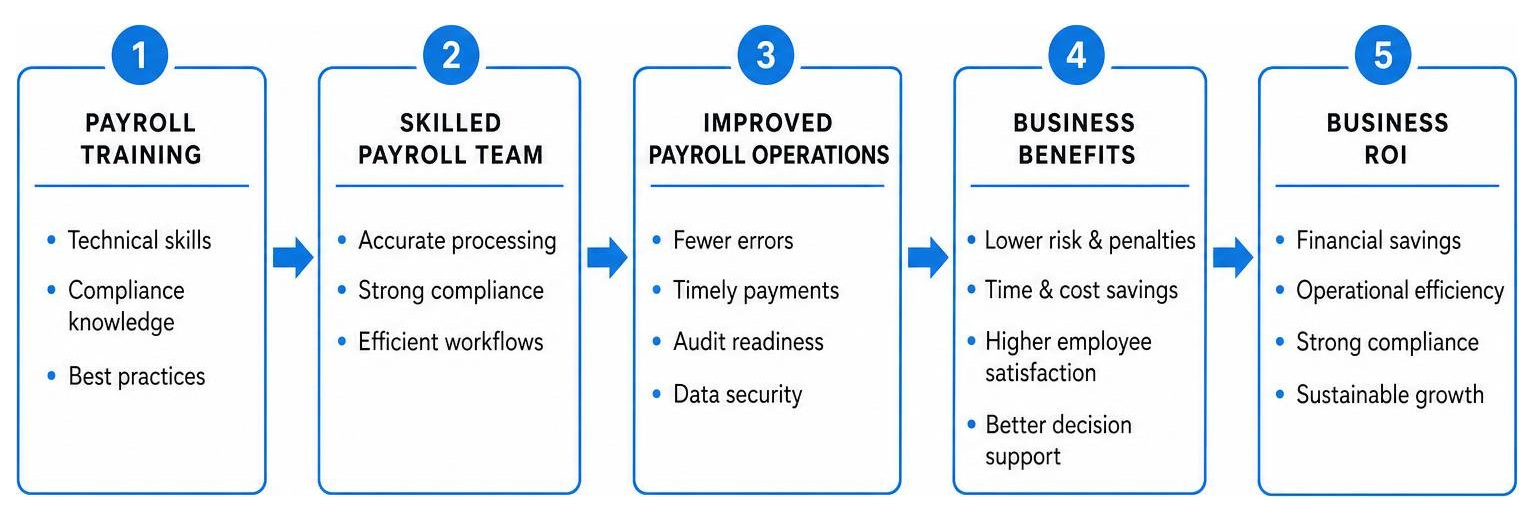
When business leaders in Gilbert, Arizona, look for ways to protect their bottom line, they often focus on sales pipeline optimization or supply chain efficiency. However, one of the most significant financial risks sits quietly in the payroll department. Investing in professional training services is not just an educational perk for your staff; it is a critical risk mitigation strategy. When a team operates without structured education, they default to guesswork, which inevitably leads to compliance infractions, incorrect tax filings, and disgruntled employees. By empowering your workforce with formal training, you build an internal defense system against audits and costly penalties.
The regulatory landscape is notoriously unforgiving, and even honest mistakes can result in steep fines from the Internal Revenue Service or the Arizona Department of Revenue. To keep operations running smoothly, leaders must understand how to Fix Payroll Errors Fast and Stay Compliant before minor discrepancies snowball into major liabilities. Proper training educates your staff on how to reconcile reports, run audits, and identify payroll exceptions before the final paychecks are distributed. This proactive approach saves thousands of dollars in penalties and hours of administrative stress.
Furthermore, worker classification has become a primary target for state and federal auditors. Distinguishing between independent contractors and regular employees requires a deep understanding of behavioral control, financial control, and the nature of the working relationship. Without proper instruction, your team might misclassify workers, triggering back taxes, interest, and wage claims. For businesses seeking a comprehensive solution, reviewing a CPA Payroll Services Complete Guide can clarify how professional accounting expertise aligns with internal education to establish a foolproof system.
Many growing businesses eventually reach a crossroads where they must decide whether to train an in-house team or outsource the function entirely. Making this decision requires a clear evaluation of your internal resources and long-term goals. Learning How to Choose the Right CPA Payroll Service for Your Business can help you weigh the financial benefits of external oversight against the cost of training internal staff. For organizations that prefer to maintain an in-house department, partnering with local experts to deliver targeted training ensures that your team remains aligned with local regulations and state-specific compliance standards.
Core Types of Payroll Training Programs

Selecting the right educational pathway requires an understanding of the different training formats available in the marketplace. Structured certification pathways are highly regarded because they provide a standardized curriculum that covers everything from basic calculations to complex regulatory rules. Many businesses leverage resources from established platforms like the Payroll Training | Online Payroll Courses | Payroll Classes | Payroll Certifications to access a broad catalog of classes tailored to different skill levels. These programs allow individuals to learn at their own pace while earning recognized credentials that elevate the professional standing of your entire department.
For organizations looking to upskill several team members simultaneously, group programs offer a highly collaborative and cost-effective approach. Utilizing Group Payroll Training | PAYO- PayrollOrg allows businesses to align their staff under a unified training methodology, ensuring that everyone speaks the same professional language. Group training can be customized to match the specific operating procedures of your business while taking advantage of volume discounts. This collective learning experience fosters better internal communication and standardizes processing workflows across your HR and finance departments.
Modern professional development has evolved beyond traditional, multi-day seminars that often lead to information overload. Progressive organizations are shifting toward continuous learning journeys that blend theoretical knowledge with daily business operations. Exploring options like Payroll Training – Flexible Learning for HR & Payroll Teams reveals how structured, multi-week programs with integrated coaching sessions can lead to much higher information retention. For Arizona businesses looking for local classroom settings or regional workshops, searching for Payroll Training Courses in Phoenix, AZ – TrainUp.com provides excellent opportunities for hands-on instruction and professional networking close to home.
Product-Specific and Software Payroll Training Services
Implementing a state-of-the-art software platform is only half the battle; your team must also know how to use it. Product-specific training focuses on turning system users into confident platform owners who understand the upstream and downstream impacts of their data entry decisions. Rather than simply memorizing which buttons to click, comprehensive software training teaches administrators how database configurations, event sequencing, and business processes drive the final calculations. This deep systemic knowledge prevents processing delays and reduces your reliance on expensive external software consultants.
To maximize your technology investment, it is helpful to consult The Ultimate Guide to Payroll Processing Solutions to understand how different systems handle automation, tax filings, and reporting. Specialized training programs help separate the responsibilities of system administrators from those of transactional processors. This division of training ensures that your staff is educated on the exact tasks required for their specific roles, resulting in streamlined workflows, faster onboarding, and stronger audit readiness.
When your team understands the inner workings of your chosen Payroll Processing Software, they can optimize integrations with other business systems, such as time-tracking tools and enterprise resource planning software. This seamless integration eliminates the need for manual data entry, which is one of the primary sources of processing errors. Software training also equips your team to build custom reports, run prior-period comparisons, and identify outliers before processing is finalized, turning your payroll department into a hub of analytical efficiency.
Compliance-Focused Payroll Training Services
Compliance training is the bedrock of any successful payroll operation because tax laws and labor regulations are constantly changing. A robust educational program must cover federal mandates, state-specific rules, and local tax requirements to ensure that your business remains in good standing. For professionals seeking a comprehensive, foundational education that prepares them for industry-recognized exams, enrolling in the Payroll Practice and Management course is an excellent way to master the intricacies of the Fair Labor Standards Act, federal employment taxes, and payroll administration.
To protect your business from wage and hour disputes, it is highly beneficial to invest in specialized resources like the Payroll Wage & Hour Training & Certification Program w/ Procedures Manual and E-Alerts . This type of training provides your team with a clear, plain-English reference manual and real-time regulatory alerts, ensuring that they are never caught off guard by sudden legislative shifts. This continuous stream of information is crucial for managing complex issues such as travel pay, expense reimbursements, and final paychecks for terminating employees.
In Arizona, businesses engaged in public works or construction projects must also navigate specialized state reporting mandates. For example, understanding the guidelines for Certified Payroll Reporting – Arizona Department of Transportation is essential for contractors who must submit weekly compliance reports on state-funded projects. Compliance-focused training ensures that your staff knows how to accurately classify labor types, calculate prevailing wages, and submit error-free documentation to government agencies, protecting your state contracts and business reputation.
Key Skills and Topics Covered in Payroll Education
A comprehensive payroll curriculum must build a diverse set of technical and analytical skills within your team. At the core of this education are gross-to-net calculations, which require a precise understanding of regular hours, overtime rules, salary structures, and statutory deductions. Your team must also master the administration of voluntary and involuntary deductions, including retirement plan contributions, health insurance premiums, and court-ordered child support payments. Understanding these calculations in detail ensures that every paycheck issued is accurate and compliant.
Beyond basic wage calculations, modern payroll professionals must have a firm grasp of employee benefits administration and tax withholdings. This includes managing tax-preferred health accounts, deferred compensation structures, and complex fringe benefits like company vehicles or educational assistance. For teams looking to expand their capabilities to support regional or international operations, enrolling in Payroll Training Programs | Global Payroll Upskilling provides valuable insights into multi-jurisdictional compliance, tax equalization, and data security standards like GDPR and SOC 2.
To streamline the payment process and improve employee satisfaction, your team should also be trained in modern disbursement methods. Reviewing The Ultimate Guide to Setting Up Payroll Direct Deposit can help your staff implement secure, electronic payment workflows that reduce administrative overhead. For businesses utilizing a PEO Company for Payroll, training helps internal HR teams coordinate seamlessly with the co-employer, ensuring that employee benefits, worker classification, and tax reporting are perfectly synchronized.
Frequently Asked Questions About Payroll Administration
What are the most common errors in payroll administration?
The most frequent mistakes in payroll departments stem from manual data entry, misinterpreting labor laws, and poor communication between HR and finance. Worker misclassification, specifically treating true employees as independent contractors, remains a top error that attracts regulatory audits. Additionally, failing to calculate overtime correctly for non-exempt employees, missing tax filing deadlines, and mismanaging garnishments or child support levies can lead to severe penalties. Organizations can explore HR Payroll Benefits and partner with experienced HR Payroll Companies to establish standard operating procedures that eliminate these common operational risks.
How do payroll training programs address changing tax regulations?
Reputable training programs are revised annually to reflect the latest updates to the Internal Revenue Code, state minimum wage increases, and local tax requirements. These programs teach administrators how to track legislative changes, utilize digital updates, and leverage tax technology to automate compliance. By providing continuous learning opportunities, businesses ensure that their staff is prepared for shifts in multi-state taxation and non-resident tax enforcement. Business owners can review our comprehensive Services and dedicated Services Payroll options to see how professional oversight keeps internal systems perfectly aligned with the latest regulatory changes.
What is the average salary of a certified payroll professional?
Investing in professional certification pays off significantly for both employers and practitioners. According to industry data, the average salary of a payroll specialist is $46,462, with typical ranges spanning between $34,000 and $61,000 depending on experience and location. For leadership roles, a payroll manager earns an average of $86,397 annually, while a payroll administrator averages $55,114. Earning recognized certifications not only boosts career growth and earning potential for individuals but also provides employers with greater confidence in their team’s ability to maintain absolute compliance.
Conclusion
Building a highly skilled, compliant, and efficient payroll department is one of the smartest investments a business owner can make. By empowering your team with specialized educational services, you protect your company from costly processing errors, minimize tax audit risks, and ensure that your most valuable asset — your employees — are paid accurately and on time. Whether you choose to upskill your current staff through professional certification pathways or leverage external expertise, establishing a strong educational foundation is key to long-term operational success.
At Spitz CPA, led by Michael J. Spitz, we believe that financial clarity and structured processes are the cornerstones of business growth. We help businesses in Gilbert, Arizona, and across the state clean up their accounting records, optimize their workflows, and achieve significant growth through personalized guidance. If you are ready to elevate your business operations, explore our comprehensive HR Payroll Services to discover how we can partner with your team to deliver peace of mind and professional compliance.