


Why New Business Expenses Can Make or Break Your Startup
New business expenses are the costs you incur to get a company off the ground — and managing them well is one of the most critical things you can do before you open your doors.
Here’s a quick breakdown of the most common startup costs to plan for:
| Expense Category | Typical Cost Range |
|---|---|
| Equipment | $2,000 – $100,000 |
| Office space | $200 – $5,000 per employee/month |
| Inventory | $2,000 – $20,000 |
| Marketing | $500 – $3,000 |
| Website | $12 – $40/month |
| Software | $20 – $150/month |
| Insurance | $1,750 – $2,575/year |
| Incorporation fees | $150 – $450 |
| Professional consultants | $150 – $500/hour |
| Utilities | $430 – $750/month |
The stakes are real. 38% of startups fail because they run out of money. That’s not bad luck — that’s often a planning problem.
Most new entrepreneurs underestimate what it actually costs to launch. They miss hidden recurring costs, skip the contingency fund, and leave tax deductions on the table. The result? Cash flow problems that hit fast and hurt hard.
This guide walks you through how to calculate, categorize, and control your startup costs — so you can launch with confidence instead of anxiety.
I’m Michael J. Spitz, a CPA with 15+ years of corporate accounting experience helping businesses of all sizes get a clear picture of their new business expenses from day one. I’ve guided companies through seed rounds, financial modeling, and startup budgeting across industries from SaaS to health services.
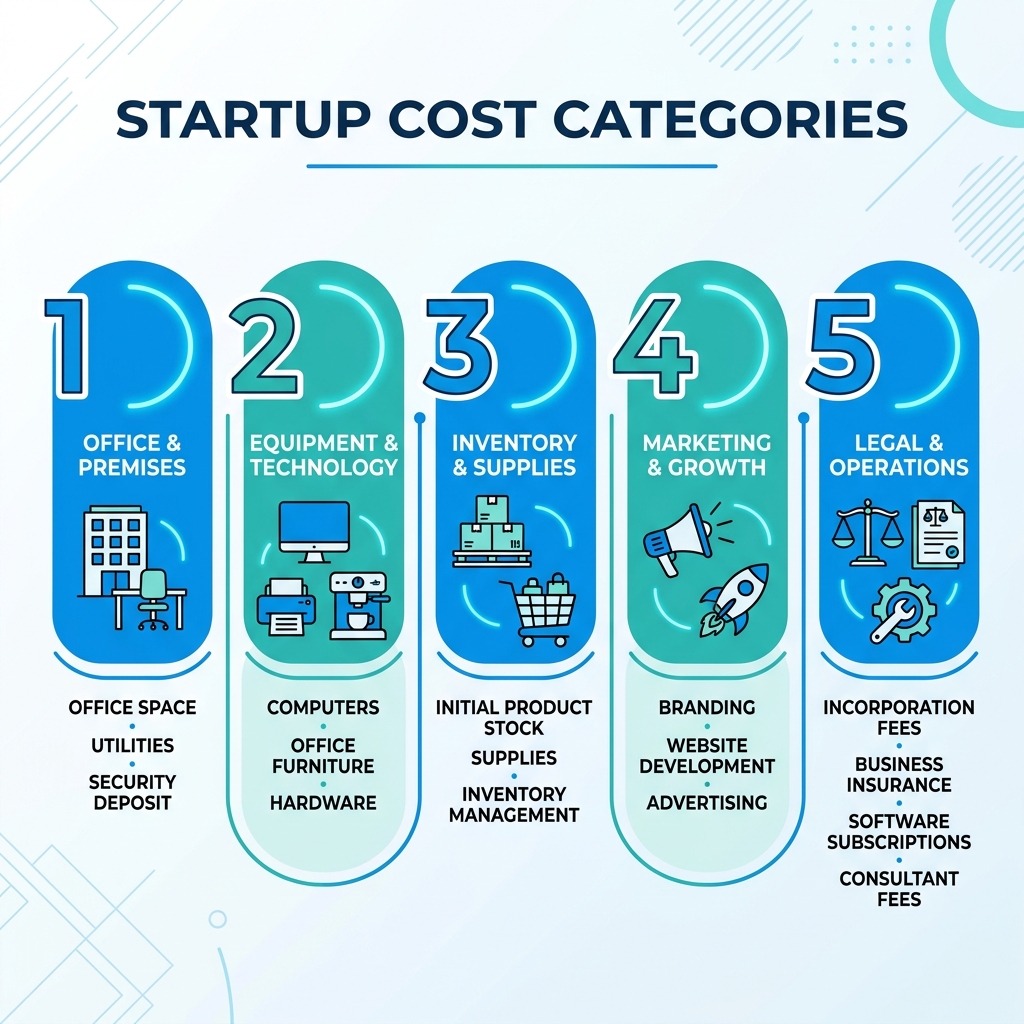
Simple new business expenses glossary:
Categorizing Your New Business Expenses: One-Time vs. Recurring
When we sit down with new business owners in Gilbert, AZ, the first thing we do is help them stop seeing their spending as one giant, terrifying pile of receipts. To keep your sanity, you must separate your new business expenses into two main buckets: capital expenditures (one-time startup costs) and operating expenses (recurring costs).
One-time costs are the “hurdle” you have to jump over to get started. These include things like your initial incorporation fees, which in Arizona can range from $150 to $450 depending on your structure and filing speed. You’ll also face big-ticket items like office equipment, furniture, and initial signage.
Recurring costs are the “treadmill” you’ll be running on every month. These include:
- Monthly utilities (averaging $430 to $750)
- Recurring software subscriptions (CRM, accounting tools, email marketing)
- Rent and insurance premiums
Understanding this distinction is the cornerstone of effective business tax strategies. One-time startup costs are often treated as capital investments that you recover over time, while recurring operating costs are generally deductible in the year you pay them.
Distinguishing Fixed and Variable Costs
Within your recurring expenses, we need to look at fixed vs. variable costs. Fixed costs are the “predictable” ones. Whether you sell one widget or one thousand, your rent and insurance premiums stay the same.
Variable costs, however, fluctuate with your business volume. If you’re an e-commerce brand, your shipping fees and payment processing fees will rise as you get more customers. In Arizona, you’ll also need to account for sales tax, which varies depending on your specific city and county within the state. Keeping a close eye on these prevents “success” from accidentally draining your bank account because you didn’t budget for the costs of fulfillment.
Hiring Costs: Employees vs. Contractors
One of the biggest forks in the road for new business expenses is the “Who” behind the work. Hiring a direct employee is significantly more expensive than their sticker salary suggests. A good rule of thumb is the 1.25x to 1.4x rule: an employee with a $50,000 salary will actually cost you between $62,500 and $70,000 once you factor in additional employer-side expenses like Social Security, Medicare, and unemployment taxes.
Contractors (1099s) might have a higher hourly rate, but they don’t carry the same tax or benefits burden. However, the IRS has strict requirements about who qualifies as a contractor. If you control when, where, and how they work, the IRS might consider them an employee, leading to back taxes and penalties. We always recommend getting professional guidance before making your first hire to ensure you’re compliant with both federal and Arizona labor laws.
How to Calculate Startup Costs for Different Business Models
Your “launch number” depends heavily on your business model. We see three primary profiles in the Arizona market:
| Business Type | Primary Cost Drivers | Typical Entry Barrier |
|---|---|---|
| Online/E-commerce | Website, hosting, digital marketing, initial inventory | Low to Medium |
| Brick-and-Mortar | Rent, storefront renovations, utilities, heavy equipment | High |
| Service-Based | Professional tools, work vehicles, certifications, insurance | Medium |
For a brick-and-mortar shop in Gilbert, your new business expenses will be dominated by physical space. You might spend $2,000 to $100,000 on equipment alone, not to mention the “tenant improvements” needed to make a leased space fit your brand.
Service providers, like landscapers or consultants, often trade high rent for high equipment or vehicle costs. Online businesses have the lowest barrier, often starting with just a domain and hosting ($12–$40/month), though they must spend more on digital marketing to be found in a crowded internet. Regardless of the model, having solid tax planning strategies in place from day one ensures you aren’t overpaying as you scale.
Estimating Costs Through Market Research
Don’t guess. We’ve seen too many entrepreneurs “guesstimate” their way into a hole. Instead, perform deep market research:
- Get Vendor Quotes: Call three providers for every major service (insurance, internet, renovations).
- Mentor Interviews: Ask other local business owners what they actually spent in their first six months.
- Industry Benchmarks: Use SBA website resources to find average cost-of-goods-sold for your specific sector.
- Competitor Analysis: Look at what your competitors are doing. If they all have expensive storefronts, you might need to budget for one too—or find a way to disrupt them online.
Building a 10-20% Contingency Fund
If there is one piece of advice Michael J. Spitz gives every client, it’s this: The “Unexpected” is a line item.
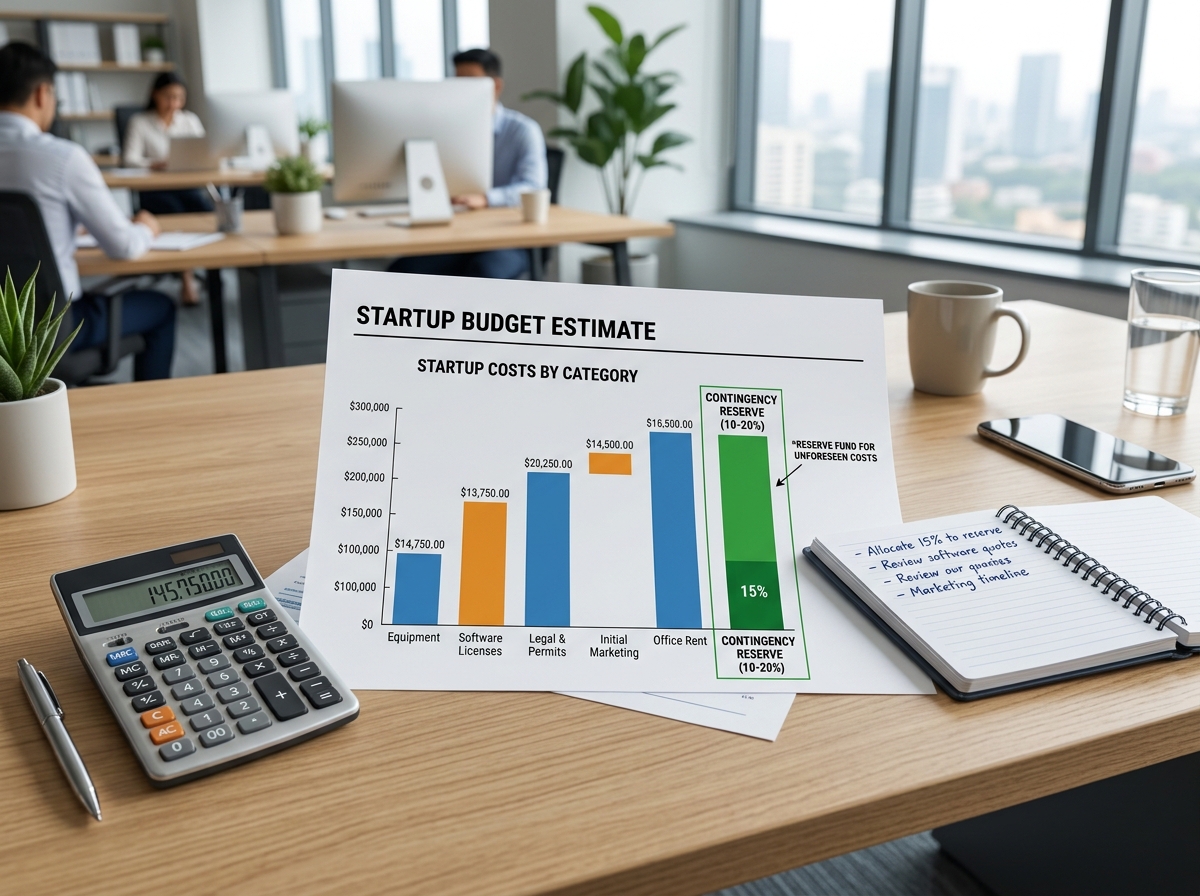
Prices fluctuate, equipment breaks on day two, and your first marketing campaign might flop. We recommend a safety cushion of 10% to 20% of your total estimated startup costs. If your spreadsheet says you need $50,000 to launch, you actually need $60,000. This reserve isn’t “extra” money; it’s the insurance policy that keeps you from becoming part of that 38% failure statistic.
Navigating the Tax Landscape for Startups
The IRS actually wants you to succeed (mostly because successful businesses pay more taxes later), so they offer some “breaks” for new business expenses. However, you have to follow their rules on what is “ordinary and necessary.”
The most important rule? Keep your personal and business lives completely separate. Mixing a grocery run with a business supply purchase is the fastest way to lose your deductions during an audit. Detailed record-keeping—storing digital receipts and using accounting software—is non-negotiable. The IRS provides guidance on how to handle these pre-launch costs, but the terminology can be dense.
Qualifying New Business Expenses for the $5,000 IRS Deduction
Under IRC Section 195, you can’t just deduct all your startup costs the moment you spend the money. Instead, the IRS sees these as “capital costs.”
However, you can elect to deduct up to $5,000 in startup costs and another $5,000 in organizational costs in your first year of business. There’s a catch: this $5,000 deduction starts to phase out dollar-for-dollar if your total startup costs exceed $50,000. If you spend $55,000 or more, you get $0 in immediate deductions and must amortize everything.
Qualifying expenses include:
- Market research and surveys
- Pre-opening advertising and marketing
- Salaries for training employees before you open
- Travel costs to secure suppliers or distributors
Understanding these small business tax deductions can save you thousands in your first year when cash is tightest.
Depreciation and Amortization of Capital Assets
What happens to the costs you can’t deduct immediately? You recover them through amortization or depreciation.
- Amortization: For intangible costs (like legal fees to set up your LLC or pre-launch marketing), you typically spread the deduction over 15 years (180 months).
- Depreciation: For physical assets (like computers, desks, or vehicles), you use Form 4562 to write off the cost over the asset’s “useful life” (usually 3, 5, or 7 years).
While 15 years sounds like a long time, it provides a steady tax shield as your business grows and moves into higher tax brackets.
Securing Funding and Performing a Break-Even Analysis
When you walk into a bank or meet with an investor, they want to see that you’ve done the math. Your list of new business expenses shouldn’t just be a list; it should be integrated into a formal business plan.
Whether you are pursuing SBA loan programs, looking for investors, or “bootstrapping” with your own savings, you need to know your Break-Even Point. This is the moment where your total revenue equals your total expenses. Every dollar after that point is actual profit.
We also help clients explore S-corporation tax planning, which can be a powerful way to save on self-employment taxes once your business becomes profitable enough to pay you a “reasonable salary.”
Tracking New Business Expenses for Long-Term Profitability
Launching is just the beginning. To stay profitable, you need to move from “startup mode” to “growth mode.” This requires:
- Cash Flow Forecasting: Predicting when money will come in and go out.
- Profit Margin Analysis: Ensuring you’re actually making money on every sale after all costs are considered.
- Accounting Software: Tools like QuickBooks or Xero are essential for tracking itemized deductions.
Using a break-even analysis tool allows you to see how a small change—like raising your prices by 5% or cutting a recurring software cost—can dramatically speed up your path to profitability.
Frequently Asked Questions about Startup Costs
What happens to my deductions if the business never launches?
This is a tough one. If you spend $10,000 researching a business but decide not to open it, those costs are generally considered personal expenses and are not deductible as startup costs. However, if you were already in a similar line of business, you might be able to claim them as business expansion costs.
Can I deduct the cost of buying an existing business?
Yes, but the rules are different. You can still deduct up to $5,000 in “investigative” costs (like doing due diligence on the company). However, the actual purchase price of the business assets is treated as a capital investment and must be depreciated or amortized over time.
How do I separate personal and business expenses for taxes?
The best way is to open a dedicated business bank account and credit card the day you decide to start. Never use your personal card for a business box of paper, and never use the business card for a personal lunch. If you do make a mistake, document it immediately and “reimburse” the correct account to keep your books clean.
Conclusion
Planning your new business expenses doesn’t have to be a source of burnout. By categorizing your costs, building a contingency fund, and understanding the IRS rules for deductions, you are already ahead of the majority of new entrepreneurs.
Financial organization isn’t just about surviving tax season; it’s about giving your business the “runway” it needs to reach long-term growth. At Spitz CPA, we specialize in helping Arizona business owners gain that clarity. Whether you need an accounting clean-up or a strategic partner to help you 10x your business value, Michael J. Spitz and our team are here to provide the personalized guidance you deserve.
Don’t leave your startup’s future to chance. Get expert help with your tax services today and let us help you build a business that lasts.


