


Why Project Finance and Consulting Matters for Large-Scale Ventures
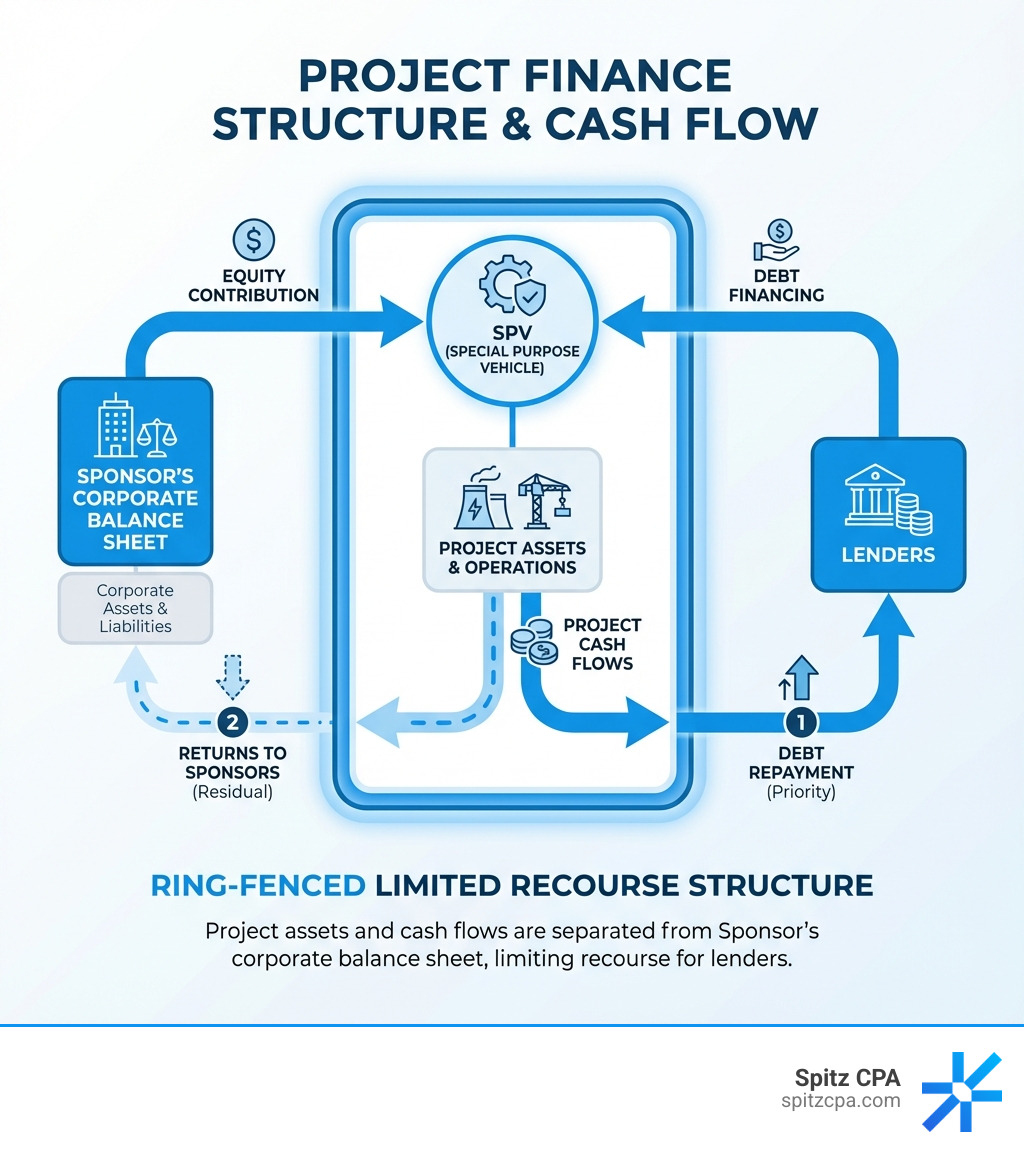
Project finance is a specialized funding approach for capital-intensive ventures where financing is based on the project’s future cash flows, not the sponsor’s balance sheet. This method uses a dedicated legal entity (an SPV) and relies on project revenues to repay debt, with project assets as collateral.
Key Characteristics of Project Finance:
- Non-Recourse or Limited Recourse Financing: Lenders have limited or no claim on the sponsor’s other assets.
- Special Purpose Vehicle (SPV): A standalone legal entity is created to own and operate the project.
- Cash Flow-Based Repayment: Project revenues, not corporate profits, service the debt.
- Off-Balance Sheet Structure: Project liabilities are kept off the sponsor’s financial statements.
- High Minimum Project Size: Typically $50-$100 million due to high structuring costs.
- Complex Contractual Framework: Requires multiple interlocking agreements (EPC, O&M, PPAs).
- Expert Advisory Services: Consultants are essential for feasibility, financial modeling, and negotiation.
This structure allows companies to fund major projects without risking their core business. However, it is complex; McKinsey research shows that 90% of infrastructure developments in Africa never reach financial close. Success often hinges on proper structuring, rigorous financial modeling, and expert guidance.
As Michael J. Spitz, with over 15 years of corporate accounting and FP&A experience, I’ve seen how critical financial structuring is. My work in project finance, including fundraising due diligence and complex financial modeling, has shown me that the right advisory support is the key to attracting capital and moving a project forward.
Simple project finance word guide:
Understanding Project Finance: The Off-Balance-Sheet Powerhouse
At its core, project finance is a specialized method for funding large, capital-intensive projects like a massive solar farm or a new water pipeline. Because traditional corporate financing can heavily burden a company’s balance sheet, project finance offers a clever solution.
The fundamental idea is to create a financially and legally independent entity—a Special Purpose Vehicle (SPV)—solely for the project. This SPV secures debt and equity based on the project’s projected cash flows, with the project’s assets as secondary collateral. Lenders look to the project’s future revenues for repayment, not the parent company’s financial strength. This non-recourse or limited recourse structure is a game-changer, allowing the sponsoring company to keep the project’s substantial debt off its own balance sheet. This protects the parent company’s credit rating and preserves its borrowing capacity.
What is Project Finance Consulting?
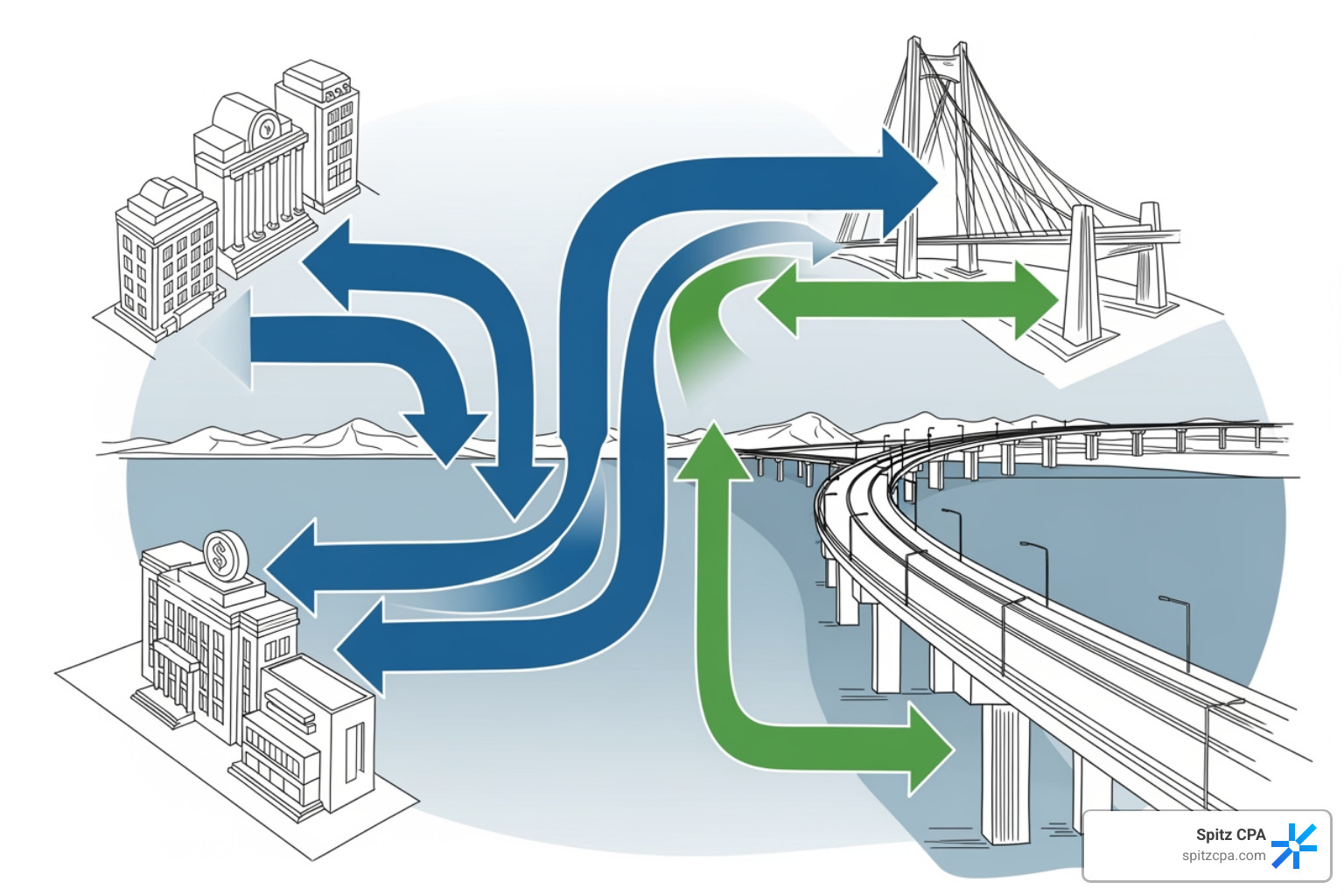
Project finance consulting is a specialized advisory service that steers the intricate world of large-scale project funding. It’s about structuring success, not just finding money. As consultants, we provide expert guidance to ensure projects secure funding and are completed successfully.
Our core services include:
- Financial Planning and Strategy: Developing comprehensive financing plans, often starting with a Business Financial Health Check.
- Funding Source Identification: Pinpointing suitable debt, equity, and alternative funding sources.
- Financial Model Development: Preparing robust financial models to demonstrate project viability to investors.
- Risk Assessment and Mitigation: Identifying, assessing, and developing strategies to manage project risks.
- Negotiation Support: Assisting clients in negotiating favorable financing terms with lenders.
- Due Diligence Coordination: Overseeing the extensive due diligence processes required by financiers.
- Regulatory Compliance: Ensuring the project adheres to all relevant legal and regulatory frameworks.
We act as an intermediary, bridging the gap between project developers and financial institutions and translating complex project details into bankable proposals.
Key Benefits for Sponsors and Businesses
Why choose the complex path of project finance? The benefits are compelling for massive undertakings:
- Off-Balance Sheet Funding: The project’s debt doesn’t appear on the sponsor’s financial statements, preserving their borrowing capacity.
- Risk Sharing: Risks are allocated among multiple parties (sponsors, lenders, contractors) to those best equipped to manage them.
- Higher Leverage: Projects can often secure higher debt-to-equity ratios than with traditional corporate financing, maximizing the return on equity.
- Protection of Parent Company Assets: The non-recourse nature means that if the project fails, lenders’ claims are generally limited to the project’s assets, protecting the sponsor’s core business.
- Tax Benefits: Structures can be optimized to capitalize on tax benefits, especially in sectors like renewable energy. We help clients develop effective Business Tax Strategies to maximize these advantages.
- Maximizes Equity Returns: By leveraging debt, sponsors can achieve higher returns on their invested equity.
How It Differs from Traditional Financing
The distinction between project finance and traditional corporate financing is fundamental:
| Feature | Project Finance | Corporate Finance |
|---|---|---|
| Basis of Credit | Project’s future cash flows and assets | Borrower’s overall balance sheet, profitability, and creditworthiness |
| Recourse | Non-recourse or limited recourse to sponsor | Full recourse to the borrower (parent company) |
| Leverage | Dependent on project cash flows, often high | Dependent on borrower’s balance sheet strength |
| Collateral | Project-specific assets, contracts, and revenue streams | All assets of the borrowing company |
| Key Metrics | Debt Service Coverage Ratio (DSCR), Loan Life Coverage Ratio (LLCR) | Debt-to-Equity, Interest Coverage Ratio, EBITDA |
| Entity | Special Purpose Vehicle (SPV) – standalone | Parent company (borrower) |
As highlighted in A Guide To Project Finance, the key difference is the reliance on the project’s viability as a standalone entity, rather than the creditworthiness of the sponsoring company.
The Project Finance Lifecycle: A Step-by-Step Guide to Bankability
Starting on a project finance journey is a marathon. The path to securing funding is rigorous, and as noted, 90% of infrastructure developments in Africa never reach financial close. This statistic highlights the global challenge of achieving “bankability”—the point where a project is attractive enough for lenders to commit financing. Our role in project finance consulting is to guide clients through each stage, turning a concept into a funded reality.
Stage 1: Initial Assessment and Feasibility
This initial stage rigorously tests the project concept’s viability. We work with clients to:
- Define the Project: Clearly outline the scope, objectives, and expected outcomes.
- Conduct Feasibility Studies: Assess technical, operational, commercial, and environmental feasibility.
- Analyze the Market: Evaluate market demand, pricing, competition, and the regulatory environment.
- Build Preliminary Financial Models: Estimate costs, revenues, and potential profitability, which can include early Business Valuation Services.
- Make a Go/No-Go Decision: Help clients decide whether to proceed, pivot, or abandon the project before significant investment.
Stage 2: Structuring and Planning
Once a project is deemed feasible, the structuring work begins to attract investors and lenders.
- Legal Structure (SPV): Advise on forming an SPV to isolate project risks.
- Contractual Framework: Design the web of agreements (construction, operation, supply, off-take) to allocate risk and ensure bankability.
- Financing Plan: Craft a detailed strategy for securing debt and equity, aligning with Strategic Business Growth objectives.
- Risk Allocation: Distribute risks among participants based on who is best positioned to manage them.
- Appoint Advisors: Assemble a team of legal, technical, and financial experts.
Stage 3: Due Diligence and Becoming ‘Shovel-Ready’
This is where the project becomes a tangible, ready-to-build proposition. Lenders demand extensive proof that the project is sound, or ‘shovel-ready.’
- Technical, Legal, and Environmental Due Diligence: Independent experts scrutinize the project’s design, contracts, permits, and environmental impact. The costs for technical and legal reviews can be substantial and must be budgeted.
- ‘Shovel-Ready’ Requirements: A project is considered ‘shovel-ready’ when it has:
- A defined site with secured land rights.
- Advanced engineering design (e.g., FEL-3).
- A detailed cost estimate (+/- 10-15% accuracy) and construction schedule.
- Secured equity and grant commitments.
- All necessary permits and licenses (lenders do not take permitting risk).
- A comprehensive financial model and Project Information Memorandum (PIM).
- At this stage, Accounting Clean Up Services are crucial to ensure all financial records are impeccable for financiers.
Stage 4: Financing and Financial Close
With due diligence complete, the focus shifts to securing definitive financing.
- Market Outreach: The PIM is presented to potential lenders and investors.
- Negotiating Term Sheets: Intense negotiations on key financing terms like interest rates, repayment schedules, and covenants.
- Securing Commitments: Obtaining formal commitments from lenders and equity providers.
- Finalizing Agreements: Drafting and executing complex loan and legal documents.
- Financial Close: The moment all conditions are met, funds are drawn, and the project officially commences. The typical timeline from initiation to financial close is 12 to 24 months.
The Financial Core: Modeling, Funding, and Strategic Negotiation
At the heart of every successful project finance deal is a robust financial strategy. This is where our expertise as CFO Consulting Services shines, helping clients steer financial complexities and secure capital.
The Crucial Role of Financial Models and Projections
A financial model is the cornerstone of project finance, serving as a dynamic representation of the project’s entire financial life. We build these models to:
- Identify Key Assumptions: Pinpoint drivers of success like energy prices, construction costs, and operational efficiencies.
- Perform Scenario and Sensitivity Analysis: Test how the project performs under various economic conditions and how changes in key variables impact profitability.
- Calculate Key Ratios: Determine critical metrics like the Debt Service Coverage Ratio (DSCR) and Loan Life Coverage Ratio (LLCR). Lenders typically require a minimum DSCR (e.g., 1.25x) to ensure a comfortable buffer for debt repayment.
- Project Cash Flows: Forecasting cash inflows and outflows is paramount. We develop detailed Cash Flow Calculation models, similar to an Example of Cash Flow Projection for 12 Months, to illustrate project liquidity.
A flexible financial model allows for informed decision-making and helps identify and mitigate potential risks when seeking external finance.
Identifying and Securing Funding Sources
Securing capital is often the most challenging aspect. We help clients tap into a diverse range of funding sources:
- Debt Sources: Commercial banks, development banks, export credit agencies, and institutional investors. Lenders are often reluctant to fund projects under US$50 million, preferring deals of US$100 million or more due to high transaction costs.
- Equity Sources: Project sponsors, private equity funds, and venture capital. A typical capital structure includes at least 30-40% equity to provide a risk buffer for lenders.
- Other Sources: Public-Private Partnerships (P3s), government grants, and multilateral agencies like the World Bank.
How Project Finance Consulting Helps in Negotiations
Negotiating financing terms is a high-stakes process. Our project finance consulting team acts as a strategic advisor to secure the most favorable terms possible, including:
- Interest Rates and Fees: Working to achieve competitive rates and minimize fees.
- Repayment Schedules: Structuring repayments to align with the project’s anticipated cash flows.
- Covenants: Negotiating manageable financial and operational covenants (like DSCR and LLCR) that are acceptable to lenders.
- Security Package: Ensuring the collateral package is robust for lenders without unduly restricting project operations.
- Our negotiation expertise aims to optimize the financing structure and Improve Business Profitability by reducing financing costs.
Leveraging Tax Credits and Subsidies
Government incentives are vital for many capital-intensive projects, especially in renewable energy. We guide clients through:
- Identifying Programs: Understanding federal and state programs, such as those in the Inflation Reduction Act (IRA).
- Tax Credits: Utilizing Investment Tax Credits (ITC) and Production Tax Credits (PTC), which are crucial for renewables. Our expertise in the R and D Tax Credit Rules Complete Guide informs these strategies.
- Monetization Strategies: For developers who cannot use tax benefits, we advise on strategies like ‘partnership flips’ or ‘sale-leasebacks’ to transfer benefits to investors.
Building a Resilient Framework: Risk, Contracts, and the SPV
The success of a project funded through project finance hinges on a carefully crafted legal and contractual framework designed to manage risk and define responsibilities. Our Business Consulting Gilbert services guide clients through this intricate web.
Mitigating Key Project Risks
Large-scale projects are inherently risky. In project finance consulting, we identify, assess, and mitigate these risks, allocating each to the party best equipped to manage it.
- Construction Risk: Delays or cost overruns. Mitigated by fixed-price, turn-key EPC contracts and performance bonds.
- Operational Risk: Equipment failure or lower-than-expected output. Mitigated by robust O&M agreements and comprehensive insurance.
- Market Risk: Fluctuations in demand or price for the project’s output. Mitigated by long-term off-take agreements or Power Purchase Agreements (PPAs).
- Political/Regulatory Risk: Changes in government policy. Mitigated by political risk insurance or government support agreements.
- Permitting Risk: Delays in obtaining necessary permits. Mitigated by thorough due diligence and early engagement with regulators.
The Web of Project Finance Contracts
The SPV is bound by a complex matrix of contracts that form the project’s legal backbone:
- Special Purpose Vehicle (SPV): The legal entity that owns the project and enters into all contracts.
- EPC Contract (Engineering, Procurement, and Construction): A turn-key contract that shifts construction risk to a single contractor.
- O&M Agreement (Operations and Maintenance): Specifies who will operate and maintain the project, outlining performance standards.
- Power Purchase Agreement (PPA) / Off-take Agreements: Long-term contracts for the sale of the project’s output, providing a stable revenue stream.
- Supply Agreements: Contracts for the supply of raw materials or fuel.
- Loan Agreements: The primary contract between the SPV and lenders, detailing all financial terms.
Understanding Sponsor Roles and the SPV
The SPV structure is central to project finance.
Advantages of an SPV:
- Ring-fencing Liability: Isolates project risks from the sponsors’ other assets.
- Bankruptcy Remoteness: The SPV’s insolvency is designed not to trigger the insolvency of its sponsors.
- Standalone Bankability: Allows the project to be financed on its own merits.
Disadvantages of an SPV:
- Complexity and Cost: High legal and administrative costs make it unsuitable for smaller projects.
- Operating Restrictions: Lenders impose strict covenants, limiting sponsors’ flexibility.
Sponsor Types play distinct roles, and can include contractor, financial, industrial, or public sponsors. For all sponsors, forming the right legal entity is crucial, and our Business Entity Formation services ensure the SPV is structured correctly from the outset.
Modern Applications and Key Considerations in Project Finance
The landscape of project finance is constantly evolving, driven by global trends and new technologies. While core principles remain, their application adapts to new opportunities.
Common Industries and Project Types
Project finance is the go-to method for capital-intensive projects in several key industries:
- Energy: The largest user, spanning renewable energy (solar, wind, hydro), traditional power plants, and oil and gas pipelines.
- Infrastructure: Essential projects like roads, bridges, airports, water treatment plants, and telecommunications networks.
- Mining: Large-scale mining operations with high upfront costs.
- Industrial Projects: Manufacturing plants, petrochemical facilities, and other large industrial complexes.
- Cleantech Sector: Projects in recycling, alternative proteins, and other innovative environmental technologies.
These industries share characteristics ideal for project finance: long asset lives, predictable cash flows, and significant capital needs.
The Growing Influence of ESG Factors
Environmental, Social, and Governance (ESG) factors are now critical in project finance decisions. Lenders and investors demand projects that are not only financially sound but also sustainable and responsible.
- Lender Requirements: Many financial institutions incorporate ESG criteria into their lending decisions.
- Sustainability-Linked Financing: “Green loans” and sustainability-linked bonds offer favorable terms for projects meeting specific ESG targets.
- Impact on Viability: A project’s reputation and ESG performance are critical. Poor ESG credentials can make it difficult or more expensive to secure funding.
- Our project investment and financial advisory services integrate ESG assessments throughout the project lifecycle.
Unique Challenges in Emerging Markets and Renewable Energy
Emerging markets and the renewable energy sector present unique challenges for project finance:
- Emerging Markets:
- Higher Risk: Face greater political, regulatory, and currency risk, which contributes to why many projects fail to secure funding.
- Limited Local Financing: Often requires reliance on international lenders.
- High Growth Potential: Despite risks, these markets offer opportunities for high returns and strong government support for infrastructure.
- Renewable Energy (Cleantech):
- Technology Risk: Newer cleantech innovations can carry higher risk than mature technologies like wind and solar.
- Intermittency: The variable nature of solar and wind requires grid integration and energy storage solutions to ensure revenue stability.
- Merchant Risk: Projects selling power directly into the market without long-term contracts (PPAs) face greater price volatility.
- Evolving Regulations: Constantly changing regulations and incentive schemes require continuous monitoring.
Navigating these complexities demands specialized expertise in project finance consulting to structure robust deals.
Frequently Asked Questions about Project Finance
What’s the main difference between project finance and corporate finance?
The main difference is the source of repayment and recourse. Project finance relies on the project’s future cash flows for debt repayment, with non-recourse or limited recourse to the sponsor. This means if the project fails, lenders generally cannot pursue the sponsor’s other assets. Corporate finance, in contrast, relies on the entire balance sheet of the borrowing company, with full recourse to all its assets.
Why is a Special Purpose Vehicle (SPV) so common in project finance?
An SPV is crucial because it creates a legally and financially independent entity for the project. This separation achieves two key goals:
- Isolates Risk: It ring-fences the project’s financial and operational risks from the sponsors’ other businesses.
- Facilitates Financing: It allows lenders to underwrite the project based solely on its own merits, cash flows, and assets, making the project “bankable” on a standalone basis.
Without an SPV, the risks of large-scale projects would make them far less attractive to finance.
What is the minimum project size for project finance?
Due to the complexity and high transaction costs, project finance is typically for very large projects. Lenders are often reluctant to provide debt for less than US$50 million, and they prefer deals of US$100 million or more. The legal costs alone can be substantial (e.g., USD100,000-150,000 to reach financial close), making this structure cost-prohibitive for smaller ventures. For projects below this threshold, traditional corporate debt is generally more cost-effective.
Conclusion: Partnering for Project Success
The world of project finance is complex, involving intricate contracts, rigorous due diligence, and high-stakes negotiations. Yet, for large-scale ventures—from renewable energy projects in Arizona to vital infrastructure developments—it offers a unique path to funding, allowing ambitious visions to become reality without crippling a company’s core operations.
The difference between a project that flounders and one that thrives often lies in the quality of its financial structuring and expert guidance. As a trusted advisor, we help businesses improve cash flow, gain financial clarity, and achieve significant growth.
As Michael J. Spitz, and the team at Spitz CPA, we bring over 15 years of experience in corporate accounting, FP&A, and complex financial modeling to the table. We understand the nuances of fundraising due diligence and the strategic planning required in this specialized field. Our commitment is to provide personalized guidance, ensuring your project is not just funded, but structured for long-term success.
For comprehensive financial advisory and CFO for Startups, explore our financial services. We invite you to Check the background of investment professionals to see the rigorous standards we uphold. Partner with us to structure your next large-scale venture for success.


