


Why Small Business Accounting is Critical to Your Success
Effective small business accounting is the bedrock of success. With over half of all small businesses failing due to poor financial management, mastering your numbers isn’t optional. While 61% of owners find finances challenging, those who properly track them are 10% more likely to succeed.
This guide will walk you through the essentials:
- Setting up your financial foundation and choosing an accounting method.
- Tracking daily transactions, including income and expenses.
- Generating and understanding key financial reports.
- Managing cash flow by monitoring receivables and payables.
- Staying compliant with tax obligations.
While financial housekeeping may not be the most exciting part of your day, businesses using accounting software are 30% more likely to grow. The good news is you don’t need to be a numbers wizard. With the right systems, accounting becomes a powerful tool for growth.
I’m Michael J. Spitz, and with over 15 years of corporate accounting experience, I’ve helped countless businesses build solid small business accounting foundations. My expertise spans from daily bookkeeping to strategic financial planning, and I’m here to guide you through each step.
Getting Started: Setting Up Your Financial Foundation
A solid financial foundation is non-negotiable. Getting these fundamentals right from day one will prevent countless headaches later.
First, let’s clarify two often-confused terms:
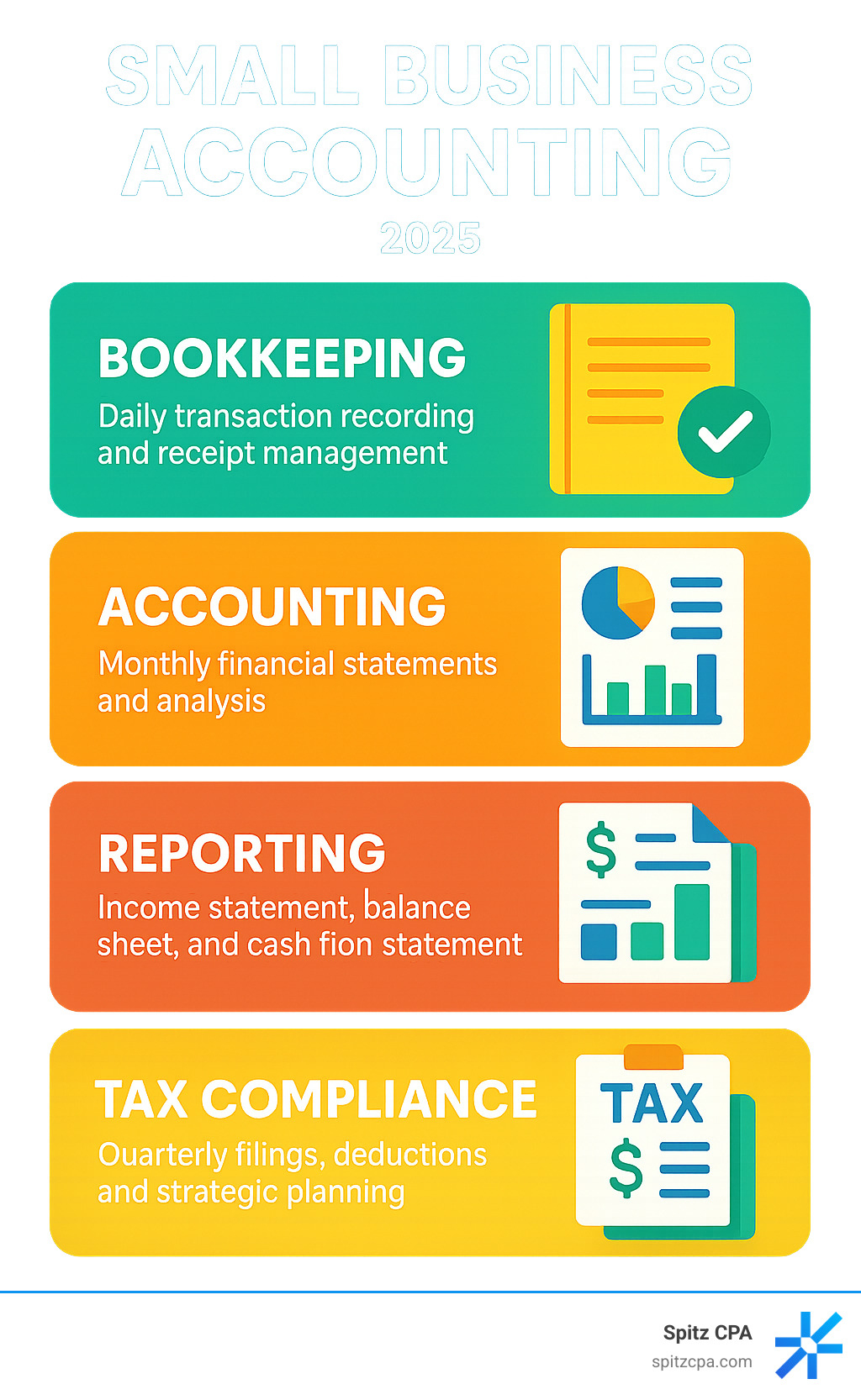
Bookkeeping is the daily process of recording every transaction, organizing receipts, and tracking expenses. It’s the methodical documentation of all money coming in and going out.
Accounting is the analysis of that bookkeeping data. It involves preparing financial reports and turning numbers into insights that help you make smart business decisions.
One of the smartest first moves is to open a dedicated business bank account. Mixing personal and business expenses creates confusion and makes tax preparation a nightmare. A separate account keeps records clean and adds credibility to your business.
Next, establish a Chart of Accounts. This is simply a categorized list of every type of transaction your business handles, from revenue and rent to software and travel expenses. This organization is crucial for accurate reporting.
Choosing Your Business Structure
Your business structure affects your small business accounting, taxes, and personal liability. For guidance on this decision, we can help you explore more on business structures.
- Sole Proprietorship: The simplest structure for a solo owner. You and the business are the same for tax purposes, with business income reported on your personal tax return.
- Partnership: For businesses with two or more owners. The business itself doesn’t pay taxes; profits and losses are passed through to the partners to report on their personal returns.
- Corporation: A separate legal entity that files its own tax returns. This offers limited personal liability but comes with more demanding accounting requirements.
Cash vs. Accrual Accounting
This choice determines when you recognize income and expenses.
- Cash Basis: Income is recorded when money is received, and expenses are recorded when money is paid. It’s simple and reflects your cash position directly. Most small businesses start here.
- Accrual Basis: Income is recorded when it’s earned (even if not yet paid), and expenses are recorded when they’re incurred (even if not yet paid). This method provides a more accurate picture of your business’s performance over a period and is recommended for growing businesses.
The Daily Grind: Mastering Your Small Business Accounting Tasks
With a solid foundation, your focus shifts to the daily habits that keep your finances in order. A consistent routine prevents bookkeeping from piling up and becoming an overwhelming weekend project.
Here’s a simple schedule to follow:
- Daily: Perform a quick cash position check. A five-second look at your business bank account balance prevents surprises with payroll or supplier payments.
- Weekly: Dedicate a specific time block (e.g., “Finance Friday”) to record all transactions, send invoices, and pay bills. Staying on top of accounts payable and receivable is crucial for cash flow and vendor relationships.
- Monthly: At month’s end, reconcile your bank statements, follow up on overdue invoices, and review your financial performance against your budget.
Best Practices for Tracking Expenses
Accurate expense tracking is vital for both tax compliance and understanding your business’s spending. The IRS requires proper documentation for all business expenses.
- Go Digital: Ditch the shoebox of receipts. Use your smartphone to snap a photo of each receipt and link it to the transaction in your accounting software. This saves space and simplifies audit preparation.
- Categorize Consistently: Assign every expense to the correct category in your Chart of Accounts. Diligent categorization ensures accurate financial reports and maximizes your tax deductions.
- Automate: Connect your accounting software to your bank and credit card accounts. This automates transaction imports and reduces manual data entry, saving time and minimizing errors.
To help establish these systems, you can download our bookkeeping template and start organizing your financial data.
Managing Payroll
When you hire employees, payroll becomes a critical and highly regulated small business accounting function. Mistakes can lead to significant penalties.
Payroll involves calculating gross pay, withholding taxes (federal and state), managing Social Security and Medicare contributions, and handling other deductions. Integrating payroll software with your accounting system automates these complex calculations and ensures seamless record-keeping. You must also track payments to independent contractors, as they have their own reporting requirements. You can learn more about payroll management to ensure you’re handling it correctly.
Avoiding Pitfalls: Tools and Tips for Accurate Records
Many well-intentioned business owners fall into common small business accounting traps. Over 50% of small businesses fail due to poor financial management, but most of these failures are preventable with the right systems.
Common mistakes include:
- Mixing personal and business funds: This creates a nightmare for tax preparation and obscures your true business performance.
- Inconsistent record-keeping: Falling behind on tracking expenses leads to lost data and missed tax deductions.
- Ignoring financial reports: Failing to review your reports is like driving blind; you have no data to guide your decisions.
The Benefits of Accounting Tools and Services
Technology can transform your accounting from a chore into a strategic advantage. Businesses using accounting software are 30% more likely to grow.
- Automation: Software connects to your bank to import and categorize transactions, saving you hours of manual data entry.
- Real-time Data: Get an up-to-the-minute view of your finances to make quick, informed decisions.
- Accuracy: Reduce human error from manual calculations, leading to more reliable reports.
- Accessibility: Cloud-based solutions let you access your financial data from anywhere, at any time.
At Spitz CPA, we specialize in helping businesses implement these tools with confidence. Explore our accounting solutions to see how we can streamline your financial processes.
Your Essential Small Business Accounting Checklist
Consistency is key. Focus on building sustainable habits with this checklist:
- Daily: Check your cash position.
- Weekly: Record transactions, send invoices, pay bills, and review cash flow.
- Monthly: Reconcile bank accounts, follow up on overdue receivables, process payroll, and review your Profit & Loss statement and Balance Sheet.
- Quarterly: Review profit estimates and pay estimated income and sales taxes.
- Annually: Conduct a full-year financial review and prepare tax returns.
From Data to Decisions: Understanding Reports and Managing Cash Flow
This is where small business accounting becomes a strategic tool. Financial reports turn raw data into a clear picture of your business’s health, enabling you to make smart decisions that drive growth. Ignoring them is like having a map but choosing to wander aimlessly.
The 3 Key Financial Reports
Familiarize yourself with these three essential reports:
Income Statement (P&L): This report shows your revenues and expenses over a specific period (month, quarter, year), culminating in your net profit or loss. It answers the question: “Is my business profitable?” It’s crucial for spotting trends and understanding your operational efficiency.
Balance Sheet: This is a snapshot of your financial position at a single point in time. It lists your assets (what you own), liabilities (what you owe), and owner’s equity (your stake). It answers the question: “Is my business financially stable?” Lenders and investors rely heavily on this report.
Cash Flow Statement: This report tracks the actual movement of cash into and out of your business. Profitability on your P&L doesn’t guarantee cash in the bank. This statement shows how cash is generated and used, answering the critical question: “Does my business have enough cash to operate?”
How to Effectively Manage Your Cash Flow
Effective cash flow management is about understanding the rhythm of money moving through your business.
- Forecast Your Cash Flow: Don’t just react to your current bank balance. Project your future cash inflows and outflows to anticipate shortfalls before they become emergencies. We can help you create a cash flow projection.
- Manage Receivables: Invoice promptly and follow up on overdue payments. The faster you collect money owed to you, the healthier your cash position.
- Control Payables: Pay your bills on time to maintain good vendor relationships, but use the full payment terms to keep cash in your business longer.
- Maintain a Cash Reserve: Build a financial safety net to cover unexpected expenses or seize opportunities without needing emergency funding.
Navigating Taxes and Knowing When to Call a Professional
While taxes are an unavoidable part of business, solid small business accounting and strategic planning can minimize your burden and stress. Think of tax compliance as a requirement, but tax planning as an opportunity to keep more of your hard-earned money.
Key Tax Obligations for Small Businesses
Your specific tax duties depend on your business structure and location, but most small businesses face these common obligations:
- Estimated Taxes: As a business owner, you are responsible for paying income taxes throughout the year in quarterly installments.
- Sales Tax: If you sell goods or certain services, you may need to collect and remit sales tax (like HST/GST in Canada) to the proper authorities.
- Self-Employment Tax: Sole proprietors and partners must pay this tax, which covers Social Security and Medicare contributions.
- Business Deductions: Your diligent expense tracking pays off here. Legitimate, documented business expenses—such as supplies, software, and travel—can significantly reduce your taxable income. The IRS provides a guide to deductible business expenses that can help you identify potential savings.
Effective tax planning for entrepreneurs is about strategy, not just compliance. If an audit finds an underpayment, tax authorities come to you for taxes, penalties, and interest—making accurate records essential.
When to Hire an Accountant
Knowing when to call a professional is a sign of smart leadership. Consider hiring an accountant if:
- You’re spending too much time on bookkeeping: Your time is better spent growing your business.
- You’re overwhelmed by tax deadlines: An expert can manage compliance and reduce your stress.
- Your cash flow is confusing: If you’re profitable but always short on cash, you need clarity.
- Your business is growing rapidly: Growth brings complexity that requires more sophisticated accounting.
- You need peace of mind: Professional help ensures your numbers are accurate and reliable.
An experienced accountant is more than a number-cruncher; they are a strategic partner. As Michael J. Spitz, I’ve seen how professional guidance transforms a business. We provide expert bookkeeping services custom to your growth stage.
Frequently Asked Questions about Small Business Accounting
Many business owners share similar concerns about managing their finances. Here are answers to the most common questions I hear. For more, visit our dedicated FAQs page.
How long should I keep business records?
The general rule is to keep financial documents and receipts for at least four tax years. This period covers the typical window for a tax audit. Modern digital storage makes this easy. Scan or photograph your receipts and store them securely in the cloud. Just ensure the digital copies are clear and legible. For major documents like contracts or loan agreements, it’s wise to keep them for longer.
What’s the difference between a bookkeeper and an accountant?
Though often used interchangeably, these roles are distinct in your small business accounting process.
- A bookkeeper is your financial record-keeper. They handle the daily tasks of recording transactions, paying bills, sending invoices, and reconciling accounts. They ensure your financial data is accurately documented.
- An accountant is your financial strategist. They analyze the data provided by the bookkeeper, prepare financial statements, handle tax planning and preparation, and offer strategic advice to help you interpret the numbers and grow your business.
As Michael J. Spitz, I often help businesses determine the right level of support they need, whether it’s bookkeeping, accounting, or both.
Can I do my own accounting as a small business owner?
Yes, many owners successfully manage their own books, especially in the early stages. Modern accounting software makes small business accounting more accessible than ever. Doing it yourself saves on professional fees and gives you an intimate understanding of your finances.
However, as your business grows, so does its financial complexity. The question isn’t can you do it, but should you? If you’re falling behind, feeling stressed about compliance, or spending more time on accounting than on your core business activities, it’s time to consider professional help. Outsourcing can be a smart investment that frees you up to focus on what you do best.
Conclusion
You now have a roadmap for small business accounting. From setting up a separate bank account to understanding your financial reports, each step builds a solid foundation for your business. This isn’t just about tax compliance; it’s about gaining the clarity to guide your business toward its goals.
Businesses that master their finances are more likely to succeed. When you make decisions based on real data instead of gut feelings, you gain a significant competitive advantage.
You don’t have to do it alone. Whether you handle bookkeeping yourself or bring in a professional, the key is to be consistent. As Michael J. Spitz, I’ve seen countless businesses transform once they get their financial house in order. Suddenly, the path to growth becomes clear.
Your business deserves the confidence and strategic advantage that comes from sound financial management.
Ready to turn your small business accounting into a powerful tool for growth? We’re here to help.
Get expert help with your accounting and build the financial foundation your business needs to thrive.


