


Why Small Business Tax Deductions Matter for Your Bottom Line
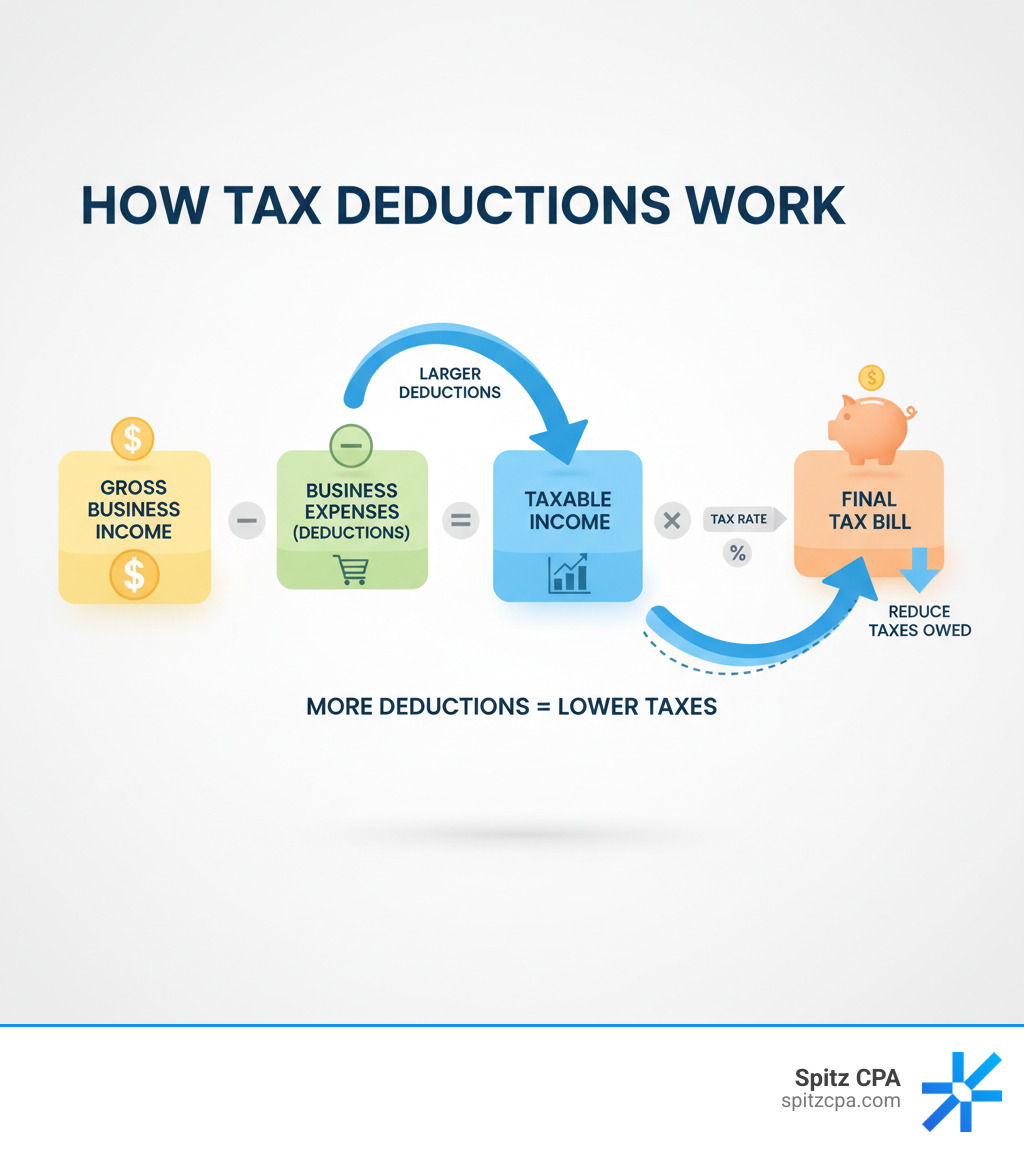
Small business tax deductions are business expenses that the IRS allows you to subtract from your income, reducing your taxable profit. Every dollar you deduct is a dollar you don’t pay taxes on. For a business in the 24% tax bracket, a $10,000 deduction saves $2,400 in taxes—money that stays in your business for growth, hiring, or better cash flow.
Common deductions include:
- Operating expenses like rent and office supplies
- Employee salaries and benefits
- Professional fees for legal or accounting services
- Vehicle and home office expenses
- Travel and qualifying meals
- Asset purchases and startup costs
The challenge is that many business owners leave thousands on the table because they don’t know what qualifies or how to document it. Some deductions are obvious, like office rent, while others—like bad debts or business-related education—are often overlooked.
As Michael J. Spitz, I’ve spent 15+ years helping businesses claim every legitimate deduction. Understanding these deductions isn’t just about compliance—it’s about keeping more of what you earn and building a stronger financial foundation.
Common Operating Expense Deductions
Daily business expenses are often your most valuable tax deductions. For an expense to qualify as a small business tax deduction, the IRS requires it to be both “ordinary” (common in your industry) and “necessary” (helpful for your business).
Office and Administrative Costs
The everyday costs of running your business are typically 100% deductible. These include:
- Office supplies: Pens, paper, printer ink, and other items used for business.
- Rent for business property: Lease payments for your office, storefront, or warehouse. The IRS offers guidance on deducting business rent expenses.
- Utilities: Electricity, water, heating, and garbage collection for your business space.
- Business insurance: Premiums for general liability, professional liability, or property insurance.
- Bank fees: Monthly service charges, transaction fees, and credit card processing fees.
- Telephone and internet: 100% deductible if dedicated to business. If you use a personal line, you can deduct the business-use portion.
Employee and Professional Service Costs
Costs related to your team and professional advisors are significant deductions.
- Salaries, wages, and bonuses: Compensation paid to employees is fully deductible.
- Contractor payments: Fees paid to independent contractors are deductible. Remember to issue a Form 1099-NEC for payments of $600 or more.
- Employee benefits: Premiums for employee health insurance and contributions to retirement plans like 401(k)s or SEP IRAs are deductible.
- Legal and accounting fees: Costs for business-related legal advice, tax preparation, and accounting are deductible. Spitz CPA offers expert CPA Services for Businesses to help manage these complexities.
Advertising and Marketing Expenses
Expenses to promote your business are generally 100% deductible.

Deductible marketing costs include:
- Website and hosting: Fees for creating and maintaining your site, domain registration, and hosting.
- Promotional materials: Costs for business cards, flyers, and brochures.
- Digital marketing: Expenses for social media ads, boosted posts, and SEO services to improve online visibility.
The IRS rules on advertising costs confirm that ordinary and necessary promotional expenses are deductible. The key is to keep detailed records and receipts for all marketing activities.
Asset and Travel-Related Small Business Tax Deductions
Deductions for assets like vehicles and home offices can be complex but offer significant savings. The key is knowing the rules and keeping excellent records.
Business Use of Your Vehicle
If you use your vehicle for business, you can deduct the costs using one of two methods. Meticulous record-keeping is essential.

- Standard Mileage Rate: This is the simpler method. For 2025, the rate is 70 cents per mile (67 cents for 2024). Multiply your business miles by this rate and add any parking fees and tolls.
- Actual Expense Method: This method involves tracking all vehicle-related costs: fuel, repairs, insurance, registration, and depreciation. You then deduct the business-use percentage of these total costs. This can yield a larger deduction for vehicles with high operating costs.
Regardless of the method, a detailed mileage log is non-negotiable. It must record the date, destination, purpose, and miles for each business trip. If you use your vehicle for both business and personal trips, you must calculate the business-use percentage to apply to your expenses, including depreciation.
The Home Office Deduction
If you use part of your home exclusively and regularly for business, you may qualify for the home office deduction, one of the most valuable tax write-offs. The space must be your principal place of business and not used for personal activities.
You can choose between two methods:
- Simplified Method: Deduct $5 per square foot of business space, up to a maximum of 300 square feet (a $1,500 maximum deduction). This method is quick and requires minimal paperwork.
- Actual Expense Method: Deduct a percentage of your actual home expenses, such as mortgage interest, rent, utilities, and insurance. The percentage is based on the ratio of your office’s square footage to your home’s total square footage.
For detailed rules, refer to the IRS’s Business Use of Your Home (Pub 587). As Michael J. Spitz, I’ve helped many Arizona business owners properly claim this deduction, but it must be done correctly to withstand scrutiny.
Travel, Meals, and Entertainment
The rules for these deductions have evolved, so it’s important to know what currently qualifies.
- Business Travel: Costs for overnight business travel, including airfare, hotels, and ground transportation, are generally 100% deductible. The IRS provides guidance on work-related travel.
- Meals: You can typically deduct 50% of the cost of business meals with clients or employees, as long as the expense is not lavish. The temporary 100% deduction for restaurant meals in 2021-2022, established by the Consolidated Appropriations Act, has expired.
- Entertainment: Costs for entertaining clients, such as tickets to sporting events or concerts, are now non-deductible.
- Employee Parties: An exception to the rule is office parties. The cost of a holiday party or summer picnic for your employees is 100% deductible.
Overlooked Deductions to Maximize Your Savings
Don’t leave money on the table. This section highlights valuable write-offs that many business owners miss, helping you maximize your tax deductions.
Startup and Organizational Costs
Expenses incurred before your business opens can be deducted. The IRS allows you to deduct up to $5,000 in startup costs in your first year. This covers market research, pre-launch advertising, employee training, and legal fees for business setup.
This immediate deduction is available if your total startup costs are $50,000 or less. If you spend more, the deduction is reduced. Any costs above the initial deduction must be amortized over 15 years (180 months), meaning you deduct them gradually over time.
Other Valuable Small Business Tax Deductions
Beyond the basics, several other deductions are frequently overlooked.
- Bad debts: If a customer or client fails to pay you for goods or services you’ve already reported as income, you can deduct the loss as a bad debt.
- Charitable contributions: Depending on your business structure (e.g., a corporation), you may be able to deduct donations to qualified charities.
- Business-related education: Costs for workshops, training, and certifications that maintain or improve skills for your current business are fully deductible.
- Depreciation and Section 179: Instead of deducting the cost of large assets like equipment or machinery over many years, Section 179 allows many small businesses to deduct the full purchase price in the year of purchase (up to $1,220,000 for 2024). This is a powerful tool for reducing taxable income after significant investments.
These deductions require careful documentation. For help with these and other write-offs, explore our Advanced Business Tax Strategies.
Staying Compliant: Documentation and Non-Deductibles
Claiming deductions correctly is as important as finding them. Without proper documentation and an understanding of what’s off-limits, you risk penalties or a disallowed deduction during an audit.
Essential Record-Keeping for Your Deductions
The IRS requires proof for every deduction. Without it, even a valid expense can be disallowed.
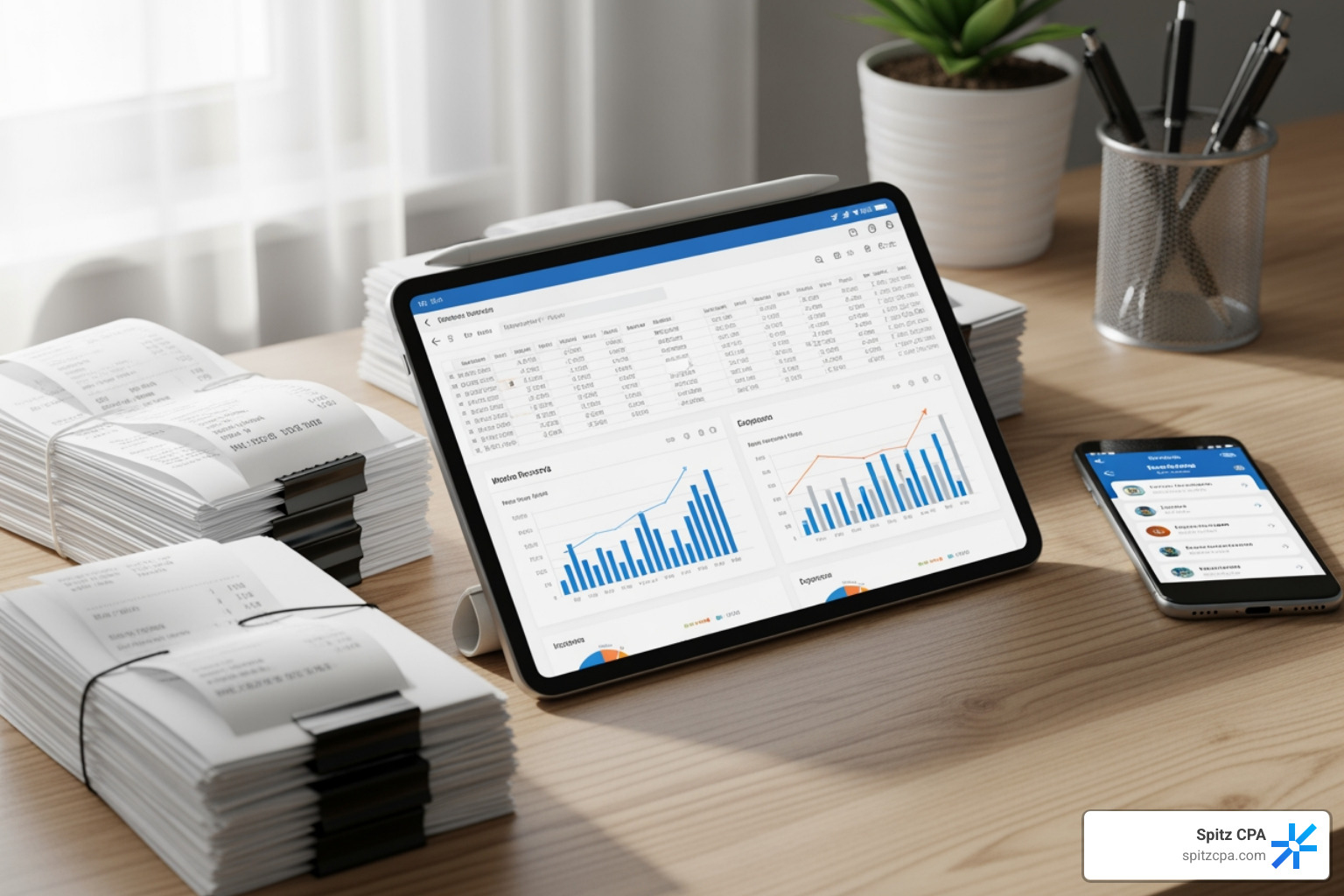
- What to keep: Keep original invoices, receipts, bank statements, and canceled checks. For vehicles, maintain a detailed mileage log. For a home office, keep photos and records of home expenses.
- How long to keep records: The IRS generally suggests three years, but this can extend to six years or more in certain situations. To be safe, we advise clients to keep records for seven years.
- Separate accounts: The single best record-keeping strategy is to use a separate business bank account and credit card. This creates a clear paper trail and simplifies tax preparation immensely.
Our Small Business Accounting services can help you establish robust systems to make tax time less stressful.
Common Non-Deductible Expenses
Knowing what you can’t deduct is just as important. Claiming these can trigger IRS scrutiny.
- Personal living expenses: Groceries, personal clothing, and your daily commuting costs from home to your main workplace are not deductible.
- Fines and penalties: Parking tickets, late tax payment penalties, and fines for breaking the law are not deductible.
- Political contributions: Donations to political campaigns or parties cannot be deducted as business expenses.
- Capital improvements: While you can deduct repair costs, capital improvements that add value or prolong the life of a property (like a major renovation) must be depreciated over time, not deducted at once.
- Federal income taxes: You cannot deduct the federal income tax you pay on your business profits.
Frequently Asked Questions
How do tax deductions differ for a sole proprietorship vs. an S-Corp?
Your business structure significantly impacts your taxes.
- Sole Proprietorship: You report business income and expenses on Schedule C of your personal tax return. All net profit is subject to self-employment tax (Social Security and Medicare).
- S-Corporation: You must pay yourself a “reasonable salary,” which is subject to payroll taxes. Any remaining profit can be taken as a distribution, which is not subject to self-employment tax. This can lead to significant tax savings for profitable businesses, though S-Corps have more administrative requirements.
Choosing the right structure is a critical decision. We can help you analyze which option is best for your Arizona business.
Can I claim business expenses without a receipt?
It is extremely risky. The IRS requires adequate records to prove your deductions. Without proof like a receipt or invoice, an expense can be disallowed in an audit, leading to back taxes, penalties, and interest.
While a bank statement shows a payment was made, it doesn’t prove the business purpose of the purchase. The best practice is to get a receipt for every expense and use digital tools or accounting software to keep them organized. Don’t risk your deductions—document everything.
How does depreciation work as a tax deduction?
Depreciation allows you to deduct the cost of large assets (like equipment, vehicles, or furniture) over time as they wear out. However, small businesses have powerful tools to accelerate these deductions:
- Section 179: This allows you to deduct the full purchase price of qualifying equipment in the year you buy it, up to a generous limit ($1,220,000 for 2024). This can dramatically lower your taxable income in a year with large purchases.
- Bonus Depreciation: This is another accelerated method that lets you deduct a large percentage (60% for 2024) of an asset’s cost in the first year.
Using these strategies correctly is key to maximizing your deductions after a major capital purchase.
Conclusion
You now have a roadmap to essential small business tax deductions, from daily operating costs to major asset purchases. Mastering these deductions is not just about compliance; it’s a powerful tool for improving cash flow and fueling growth. Every dollar you legally deduct is money you can reinvest in your business.
However, tax laws are complex and constantly changing. Going it alone often means leaving money on the table or making costly errors. Proactive tax planning throughout the year is the key to maximizing your savings.
As Michael J. Spitz, I have over 15 years of experience helping Arizona business owners achieve financial clarity. At Spitz CPA, we do more than just file returns—we act as strategic partners. We specialize in identifying every available deduction, ensuring your books are accurate, and making tax-smart decisions that support your goals. We’ve helped businesses achieve remarkable growth by focusing on strong financials and strategic tax planning.
Don’t leave your hard-earned money on the table. If you need help with record-keeping, business structure, or maximizing your deductions, we’re here to help. Get expert help with your business taxes today and let’s build a stronger financial future for your business.


