


Streamlining Your Operations: Understanding HR, IT, and Payroll Spend
Quick Answer: Optimizing your spend company hr it payroll services involves:
- Centralizing HR and payroll tasks to simplify administration.
- Automating workflows to boost productivity and cut down on errors.
- Integrating HR, IT, and payroll functions on one platform for better savings and smarter decisions.
- Using technology to stay compliant and make employees happier.
For any business, managing people, technology, and finances is crucial. The area of spend company hr it payroll services can be complex. It involves everything from hiring new staff and managing their benefits to making sure they get paid correctly and their IT access is set up.
Many companies struggle with these tasks. They often use separate systems that don’t talk to each other. This can lead to wasted time, costly mistakes, and a lot of headaches.
Imagine if all these processes worked together smoothly. This is where integrated solutions come in. They aim to bring HR, IT, and payroll under one roof. The goal is to make your operations simpler, more efficient, and more cost-effective.
As Michael J. Spitz, I bring over 15 years of corporate accounting experience, helping businesses strategically manage their spend company hr it payroll services for optimized financial performance. My expertise spans from high-level financial strategy and modeling to hands-on payroll management, ensuring compliance and efficiency.
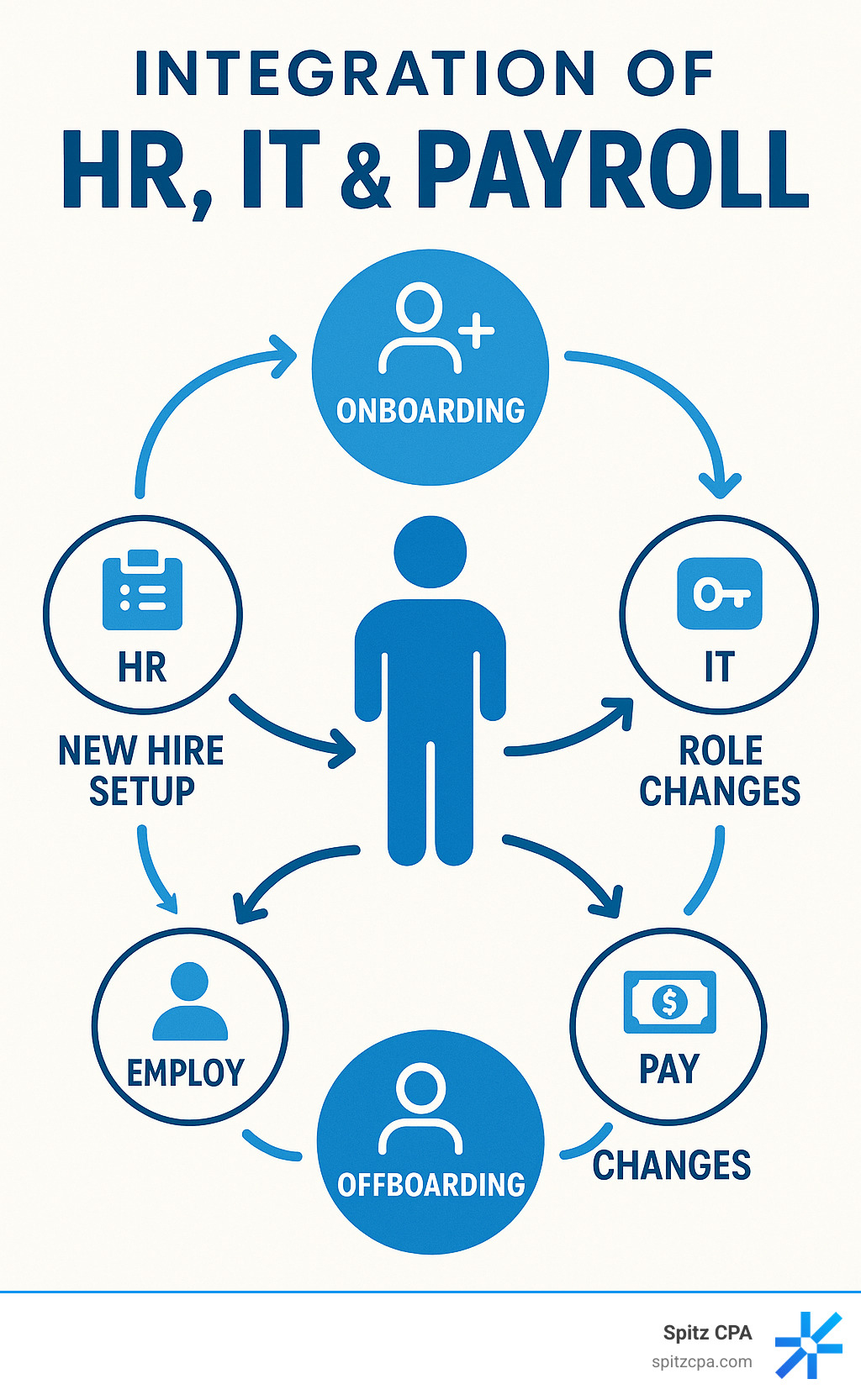
The Power of a Unified System: How Integration Works
At Michael J. Spitz, CPA, we’ve seen the amazing power of bringing your core business functions together. When you combine HR, IT, and payroll onto one platform, you’re not just getting new software. You’re building a smooth system that makes everything more efficient and cuts down on all that paperwork.

This kind of system relies on smart automation and centralized employee data. Think about it: when you hire a new team member, just one data entry can start a chain reaction. Their info goes right to payroll, so they get paid on time and correctly. At the same time, IT permissions are set up, giving them access to the right systems and tools. And HR records are updated, kicking off onboarding tasks and benefits enrollment. This means less manual work for your team, fewer errors, and more time for important projects. It truly simplifies your workflow.
Technology plays a huge role in modern HR and payroll. From workflow simplification that makes admin tasks easier to smart dashboards that show you important employee data, these tools help you make informed decision-making. You get powerful data analytics right at your fingertips. Imagine a system that not only saves money but also speeds up your daily operations. These all-in-one platforms really streamline everything, from tracking time to offering full HR support. They help you get more value from your spend company hr it payroll services.
The benefits of using one all-in-one HR and payroll platform instead of many separate ones are huge. It’s more than just convenience; it’s a smart business move. By putting all employee files and onboarding steps in one place, you create a single, reliable source for all your employee information. This kind of simplicity is key to running a successful business, as we often talk about in our guide, Small Business Accounting 101: A Guide for New Entrepreneurs. A unified system makes sure that whether you’re managing an employee’s journey from their first day to their last, or just updating their address, the information is always correct across all departments. This also enables easy employee self-service.
Enhancing the Employee Experience
Beyond making things easier for your business, an integrated HR and payroll system makes a big difference for your employees. Today’s employees expect easy, digital tools, much like the apps they use every day.
These platforms offer digital tools and mobile access. This means your team can easily get to important info and handle tasks. Think viewing their paystub access, checking tax details, signing up for benefits enrollment, or putting in time-off requests. And for new hires? These systems make onboarding efficiency a breeze, often letting new team members complete their own paperwork smoothly.
This employee self-service is a win-win. It lightens the load on your HR team, letting them focus on bigger-picture tasks. More importantly, it empowers your employees. They get control over their own data and processes. When employees can easily access their payroll history, vacation time, and benefits, it builds trust and makes things clear. This helps create a positive work environment and can truly boost employee happiness and keep them around longer. To see how these features can help your team, learn more about our comprehensive Payroll and HR Solutions from Michael J. Spitz, CPA.
Navigating Compliance and Regulations
One of the toughest parts of managing a team is keeping up with all the changing rules and regulations. This is where integrated HR, IT, and payroll solutions truly shine. They act like your trusted co-pilot, helping you stay on the right side of the law.
These platforms can automate tax filing and make sure you pay your government contributions on time. They are built to automatically incorporate the latest labor laws and tax regulations. This greatly reduces the chance of expensive mistakes and penalties. For businesses with team members in different places, these systems can even handle complex multi-country payroll and tax rules. They can simplify tax registration across various states or regions.
Furthermore, these systems provide robust reporting and audit trails. This is super helpful during compliance checks or audits. They keep a clear record of all transactions and employee data, showing you are following all the rules. This proactive approach to compliance gives you immense peace of mind, letting you focus on your main business goals. As Michael J. Spitz often shares in How Working with a Professional Like Michael J. Spitz Can Transform Your Business, using expert solutions can really lower your risks. Specialized organizations can also help manage employment-related compliance, helping businesses avoid costly legal issues by staying on top of rule changes.
How to Optimize Your Spend on Company HR IT Payroll Services
Smart financial management isn’t about cutting corners—it’s about getting the most bang for your buck. When it comes to optimizing your spend company hr it payroll services, you’re looking at a strategic investment that can transform how your business operates.
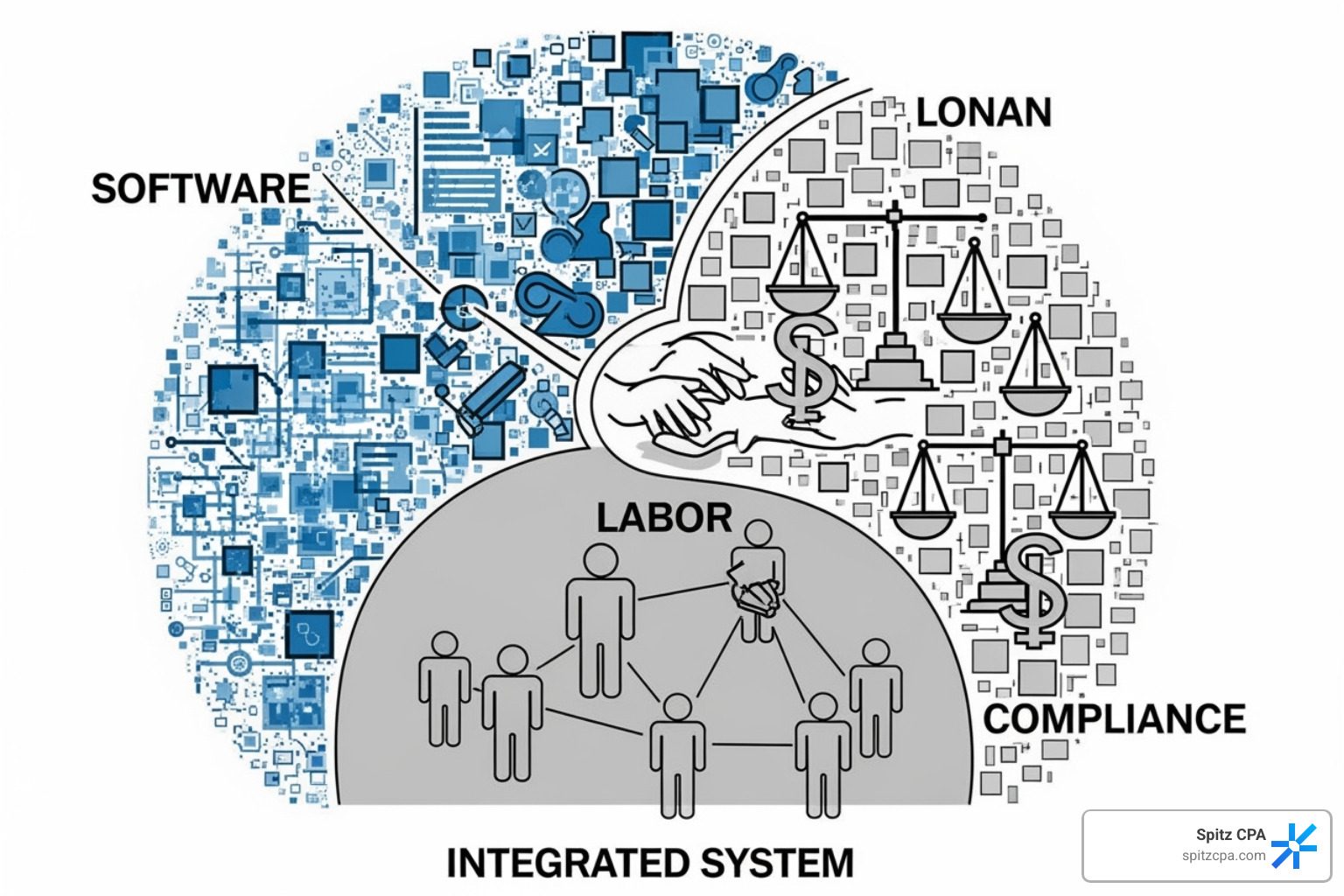
Most providers structure their pricing around per-employee-per-month (PEPM) models or bundled service packages. This makes budgeting predictable, but the real magic happens when you calculate your return on investment. Think about it: how many hours does your team currently spend wrestling with payroll calculations, updating employee records across multiple systems, or scrambling to stay compliant with ever-changing regulations?
The beauty of integrated solutions lies in their ability to reduce administrative overhead dramatically. When everything talks to each other seamlessly, you’re not just saving money—you’re freeing up your people to focus on what actually grows your business. One of the biggest hidden benefits is avoiding costly penalties. A single compliance mistake can cost thousands in fines, not to mention the time spent fixing it.
This strategic approach to managing operational costs aligns perfectly with sound financial planning principles we discuss in our Example of Cash Flow Projection for 12 Months. When you can predict and control these expenses, you gain the financial clarity needed to make confident business decisions.
Evaluating the cost of your company HR IT payroll services
Here’s where many business owners get tripped up: they focus solely on the monthly subscription fee and miss the bigger picture. Direct software costs matter, but they’re just the tip of the iceberg.
You’ll want to factor in implementation fees and training expenses for your team. These upfront costs can feel daunting, but they’re typically one-time investments. The real question is: what are the indirect costs of your current system? How much is that manual data entry actually costing you when your office manager spends two days every month reconciling payroll discrepancies?
The time savings value is often the most significant return on investment. Businesses report cutting their payroll processing time from hours to minutes. That’s not just efficiency—that’s your team getting back to revenue-generating activities instead of administrative busywork.
Error reduction savings represent another major benefit that’s easy to overlook. Every payroll mistake creates a ripple effect: corrections, employee frustration, potential compliance issues, and lost productivity. When you eliminate these errors through automation, you’re not just saving money—you’re improving your entire operation’s reliability.
This comprehensive view of costs and benefits is essential for effective Tax Planning for Entrepreneurs, where every dollar saved on administration can be reinvested in growth.
Scaling solutions for your company HR IT payroll services
Your business won’t stay the same size forever (at least, we hope not!), which makes scalability crucial when choosing your spend company hr it payroll services solution. The last thing you want is to outgrow your system just as you’re hitting your stride.
Small businesses with 1-49 employees need simplicity above all else. You’re probably wearing multiple hats already, so your HR and payroll solution should make life easier, not more complicated. The focus here is getting the fundamentals right: accurate paychecks, proper tax withholdings, and basic compliance without breaking the bank.
Mid-sized businesses with 50-999 employees face more complexity. You might be dealing with multiple departments, various benefit plans, and more sophisticated reporting needs. This is where advanced features like performance management tools and detailed analytics become valuable investments rather than nice-to-haves.
Large enterprises with 1000+ employees require robust, customizable systems that can handle complex organizational structures and potentially global workforce management. If you’re managing employees across different countries, you’ll need solutions that handle multi-country payroll, local tax compliance, and currency conversion seamlessly.
The key is choosing a platform that grows with you. Switching systems every few years is expensive and disruptive. A scalable solution prevents those growing pains and keeps your team focused on what matters most. Our Outsourcing Services can help you evaluate which approach best fits your business’s trajectory and growth plans.
All-in-One vs. Modular Solutions: A Strategic Comparison
When it comes to managing your spend company hr it payroll services, you’ll eventually face a big question: Should you go for an all-in-one platform that does everything, or piece together different “best-of-breed” tools? Both paths have their upsides and downsides, and the right choice truly depends on your business’s unique needs and how you like to operate.
To help you visualize the differences, here’s a quick comparison:
| Criteria | All-in-One Platforms | Modular Solutions |
|---|---|---|
| Integration | High; built-in, seamless data flow across all functions. | Variable; requires careful planning and API connections. |
| User Experience | Consistent interface, single login, unified dashboard. | Potentially varied interfaces, multiple logins, learning curves. |
| Feature Depth | May offer broad, but sometimes less specialized, features. | Can offer deep, highly specialized features for each function. |
| Vendor Management | Simplified; single vendor relationship. | Complex; managing multiple vendors and contracts. |
| Scalability | Often scales well across functions, but may be less flexible for niche needs. | Highly flexible for scaling individual functions, but integration can become complex with growth. |
Let’s dive a little deeper into what each option brings to the table.
All-in-One Benefits:
Think of all-in-one platforms like a Swiss Army knife for your business operations. Many leading providers champion this model, and for good reason! Their main strength is seamless integration. All the different pieces – HR, payroll, benefits, IT, time & attendance, and even spend management – are designed from scratch to work together. This means less manual data entry, fewer errors, and no more wrestling with systems that just don’t want to talk to each other.
You get a unified user experience, often with a single login and a consistent dashboard. This makes training easier and day-to-day tasks smoother. Plus, vendor management is simplified because you’re dealing with just one company for most of your core operational needs. The promise of these platforms is more savings and less busywork when everything’s under one roof.
Modular Solution Advantages:
Now, if the all-in-one sounds like a jack-of-all-trades, modular solutions are like specialized experts. With this approach, you pick the very best software for each specific function. Maybe you love one system for HR, a different one for payroll, and a third for IT management. The big win here is feature depth. You can grab highly specialized tools that perfectly fit any unique or super complex needs you might have in a particular area. This gives you tons of flexibility and customization.
However, there’s a catch: integration. Since these systems aren’t built together, you’ll need strong connections (often called API connections) between them. If these connections are flaky or need constant tweaking, any savings from having specialized tools can quickly disappear into IT headaches and lost time. You’ll also find vendor management gets more complex, as you’re juggling multiple contracts and support teams.
Integration Considerations:
The real heart of this decision lies in how well your chosen systems “talk” to each other. With an all-in-one, that conversation is usually built right in. But with modular systems, you’re relying on those API connections. If these aren’t robust, you might end up with data discrepancies, workflows that break down, and a whole lot of frustration. It’s like trying to get two people who speak different languages to work together without a translator – it can be done, but it’s much harder!
Making the Right Choice for Your Business:
There’s no one-size-fits-all answer. The best choice for your business depends on your current setup, your future growth plans, and how much complexity you’re comfortable managing.
At Michael J. Spitz, CPA, Michael J. Spitz guides businesses through these important strategic decisions. He helps you weigh the pros and cons, dig into your specific operational workflows, and make sure your technology choices perfectly align with your financial goals. It’s a precise process, much like the detailed attention Michael J. Spitz gives to his Bookkeeping Services.
Frequently Asked Questions about Integrated HR Platforms
When you’re considering how to optimize your spend company hr it payroll services, you likely have some pressing questions about security, implementation, and functionality. Let me address the most common concerns I hear from business owners in Gilbert, AZ, and beyond.
How secure is my data on an integrated HR platform?
I completely understand why data security keeps business owners up at night. You’re entrusting these platforms with your employees’ most sensitive information social security numbers, bank details, salary data, and personal records. The good news is that reputable integrated HR platforms take security incredibly seriously.
Data encryption is the foundation of their security approach. Your information is scrambled into unreadable code both when it’s traveling between your computer and their servers, and when it’s sitting in their databases. Think of it like having your data locked in a vault that requires multiple keys to open. To learn more about the concept, see encryption.
Access controls ensure that only the right people can see specific information. These platforms use multi-factor authentication (requiring something like a password plus a text message code) and role-based permissions. This means your payroll manager can access salary information, but your IT coordinator cannot.
The physical security of data centers is equally impressive. We’re talking about facilities with biometric scanners, 24/7 surveillance, and security protocols that would make a bank jealous. Many providers also maintain compliance certifications like SOC 2, which means independent auditors regularly verify their security practices.
Regular security audits and continuous monitoring help identify potential vulnerabilities before they become problems. As Michael J. Spitz, I’ve worked with numerous platforms over my 15+ years in corporate accounting, and I can tell you that established providers invest heavily in security often more than most individual businesses could afford on their own.
How long does it take to implement a new HR and payroll system?
The implementation timeline really depends on your business’s complexity and size. For a small business with straightforward needs, you might be up and running in just a few weeks. However, if you’re managing a larger team with complex benefits or multiple locations, plan for several months.
Data migration is often the most time-consuming phase. This involves transferring all your existing employee records, payroll history, and benefits information from spreadsheets or old systems into the new platform. The good news is that many providers will handle this heavy lifting for you, often pulling data directly from your previous systems.
System configuration comes next, where the platform is customized to match your specific payroll rules, benefits plans, and approval workflows. This is followed by staff training to ensure your team feels confident using the new tools. Don’t underestimate this phase proper training prevents headaches down the road.
Most implementations follow a phased rollout approach. You might start with basic payroll functionality, then gradually add HR features, benefits administration, and advanced reporting. This staged approach helps prevent overwhelming your team and allows you to work out any kinks along the way.
While the process requires patience and planning, a well-executed implementation sets the foundation for years of streamlined operations. The temporary investment in time pays dividends in efficiency and accuracy.
Can these platforms handle a remote or global workforce?
Absolutely, and this capability has become essential in today’s business environment. Modern integrated platforms are built with distributed teams in mind, offering features that would have seemed impossible just a decade ago.
Multi-country payroll capabilities mean you can hire talent from around the world without getting bogged down in local tax regulations and currency conversions. These platforms automatically handle the complexity of different countries’ employment laws, statutory deductions, and reporting requirements.
Remote onboarding has been perfected to the point where new hires can complete their entire setup process digitally. They can upload documents, complete tax forms, enroll in benefits, and gain system access all before their first day. This creates a smooth experience for both the employee and your HR team.
For businesses expanding internationally, many platforms offer Employer of Record services. This means they can legally employ workers in countries where you don’t have a business entity, handling all the legal and compliance requirements on your behalf. Learn more about this model here: Employer of record.
The cloud-based accessibility of these platforms ensures that whether your employee is working from a coffee shop in Denver or their home office in Dublin, they have secure access to their payroll information, benefits, and HR tools. As someone who has helped businesses steer complex growth scenarios, I can tell you that having the right global workforce management capabilities can be the difference between successful expansion and regulatory nightmares.
These platforms have evolved to support the modern reality of work that talent doesn’t recognize geographic boundaries, and your spend company hr it payroll services shouldn’t either.
Gaining Financial Clarity and Control
The journey to optimize your spend company hr it payroll services culminates in achieving greater financial clarity and control for your business.

Think about where you started. Maybe you were juggling multiple spreadsheets, chasing down timesheets, and staying up late to make sure payroll was correct. Or perhaps you were dealing with the headache of systems that didn’t talk to each other, creating more work instead of less.
By embracing integrated HR, IT, and payroll solutions, you’re not just simplifying administrative tasks—you’re fundamentally changing how your business operates. The change touches every corner of your organization. Efficiency improves as manual processes become automated. Errors decrease dramatically when data flows seamlessly between systems. Compliance becomes manageable rather than overwhelming. And your employees? They’re happier because they can access what they need, when they need it.
This shift allows your team to move away from mundane, repetitive tasks and focus on what really matters: strategic initiatives that drive growth. Instead of spending hours reconciling payroll discrepancies, your team can work on expanding your customer base or improving your services.
The real magic happens when you step back and see the bigger picture. When your operational systems are streamlined and interconnected, you gain a clearer, real-time view of your financial landscape. Suddenly, you’re not guessing about labor costs or scrambling to understand where your money is going. The data is right there, accurate and accessible.
This insight empowers you to make informed decisions quickly. You can spot trends in overtime costs before they spiral out of control. You can see which departments are over or under budget. You can plan for seasonal hiring with confidence because you understand the true cost of bringing on new employees.
Strategic growth becomes possible when you’re not drowning in administrative tasks. It’s about turning HR, IT, and payroll from cost centers into strategic assets that actually contribute to your company’s bottom line.
Here’s the thing though: having the right technology is just part of the equation. The right technology partner is key for managing operational spend and gaining financial clarity, but navigating the financial implications requires expertise.
As Michael J. Spitz, CPA, I’ve seen businesses transform when they get this balance right. It’s not just about the software—it’s about aligning your operational systems with your financial strategy for maximum growth. We help businesses improve cash flow, gain financial clarity, and achieve significant growth through personalized guidance that goes beyond just keeping the books.
Ready to take control of your spend company hr it payroll services and open up new levels of efficiency and financial clarity?
Learn more about our Payroll Services


